
Our Short List of 3

- Best for: a slim, light 27-inch desk monitor for everyday work and casual gaming.

- Best for: sharp 4K text, photo work, and a fully adjustable stand in a thin-bezel design.

- Best for: laptop users who want 4K, thin bezels, and single-cable USB-C charging.
All 4 Picks at a Glance
| Product | Specs | Action |
|---|---|---|
| 1. Samsung 27-Inch S30GD Essential Monitor — The Slimmest Everyday 27-Inch Pick |
| Check price on Amazon |
| 2. Dell S2721QS 27-Inch 4K Monitor — The Best Thin-Bezel 4K Pick |
| Check price on Amazon |
| 3. Dell S2722QC 27-Inch 4K USB-C Monitor — The Best Thin Monitor for Laptops |
| Check price on Amazon |
 4. Samsung 32-Inch LC32R500 Curved Monitor — The Best Large Thin Curved Pick |
| Check price on Amazon |
Key takeaways
- Find the best thin monitors for a slim desk setup in 2026. Compare four super-slim Samsung and Dell displays on size, resolution, ports, stands, and design.
The best thin monitors do more than save space. They make a desk feel calm, leave room for a keyboard, notebook, and coffee, and sit neatly against a wall or on a monitor arm without a bulky back panel getting in the way. Thin can mean two different things, and it helps to know which one you want: a slim chassis that is shallow from front to back, and thin bezels that shrink the black border around the screen. The monitors in this guide offer at least one of those traits, and most offer both.
This guide compares four slim displays from Samsung and Dell, in 27-inch and 32-inch sizes, with Full HD and 4K options. We focus on the facts that decide whether a thin monitor works on a real desk: screen size and resolution, panel type, refresh rate, ports, stand adjustment, VESA mounting, and how the slim design affects everyday use. A thin monitor is not automatically a better monitor, so we also flag the trade-offs — a tilt-only stand, a basic port selection, or a lower resolution on a large screen — before you buy.
Before you choose, measure your desk. A 27-inch monitor suits most desks and most viewing distances, while a 32-inch screen needs more depth so you are not sitting too close to the panel. Check the stand footprint too: a slim screen on a wide, deep stand can take up more desk space than a slightly thicker screen on a compact arm. If you plan to wall-mount or use an arm, confirm the VESA pattern in the listing, because not every slim monitor includes VESA holes.
How to Choose a Thin Monitor
Slim chassis versus thin bezels
Makers use the word thin in two ways. A slim chassis means the panel itself is shallow, which matters if the monitor sits close to a wall, in a shallow alcove, or on a narrow desk. Thin bezels mean the frame around the image is narrow, which makes the screen look larger, helps in a dual-monitor setup, and reduces the visual gap between two side-by-side displays. For a clean desk, bezels often matter more than chassis depth, because you look at the front of the monitor all day. For a tight space, chassis depth matters more. Decide which constraint you actually have, then compare the right figure.
Size and resolution together
Size and resolution should be chosen together, not separately. Full HD at 27 inches is fine for office work, streaming, and casual gaming, but text is less sharp than on a 4K panel of the same size. A 27-inch 4K screen shows crisp text and fine detail, which helps for writing, coding, photo work, and spreadsheets. A 32-inch Full HD screen gives you a large, immersive image, but individual pixels are easier to see at close range, so it suits a living-room desk, a media setup, or a workstation where you sit further back. If you work with text all day, favour resolution. If you want presence and immersion, favour size.
Panel type and colour
Most thin monitors in this guide use IPS panels, which offer wide viewing angles and consistent colour when you move your head or share the screen. The curved Samsung pick uses a VA panel, which gives deeper blacks and stronger contrast, at the cost of narrower viewing angles. For office work and photo editing, IPS is usually the safer choice. For films and games in a dim room, VA contrast can look more dramatic. Check the colour coverage in the listing — 99 percent sRGB is a useful baseline for everyday work — and remember that a slim design does not tell you anything about colour accuracy on its own.
Refresh rate and response time
A 60Hz refresh rate is enough for office work, browsing, and video. A 100Hz panel feels smoother when you scroll, move windows, or play casual games, and a 75Hz curved panel sits between the two. Response time, usually quoted in milliseconds, affects how clean fast motion looks. The figures in listings are measured in different ways, so treat them as a rough guide rather than a precise ranking. If you play fast competitive games, look for a dedicated gaming monitor instead; the thin monitors here are built for everyday use first, with light gaming as a bonus.
Ports, USB-C, and speakers
A thin monitor often has fewer ports, because there is less room in the chassis. Check the list before you buy: HDMI is standard, DisplayPort is common on Dell models, and VGA appears only on older or budget curved models. USB-C is the most useful single port on a modern desk, because one cable can carry video, data, and laptop charging. Only one pick in this guide offers USB-C power delivery, so laptop users should pay close attention to that section. Built-in speakers save desk space, but they are small and best for video calls and casual viewing, not for music or films.
Stand, VESA, and eye comfort
A slim screen is wasted if the stand is awkward. Height, tilt, swivel, and pivot adjustments let you set the screen at eye level, which reduces neck strain. Some slim monitors offer tilt only, which is fine if your desk and chair are already at the right height, but limiting if they are not. A 100 by 100 mm VESA mount lets you use a monitor arm or wall mount, which is often the best way to reclaim desk space with a thin display. Eye-care features such as flicker-free backlighting and a low blue-light mode are worth having if you work long hours, though they do not replace regular breaks and good lighting.
Top Picks
1. Samsung 27-Inch S30GD Essential Monitor — The Slimmest Everyday 27-Inch Pick
- Best for: a slim, light 27-inch desk monitor for everyday work and casual gaming.
a slim, light 27-inch desk monitor for everyday work and casual gaming.
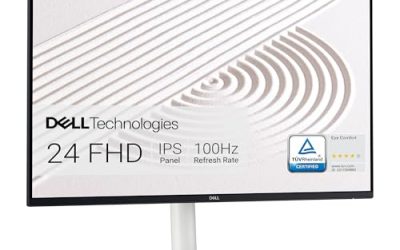
The Samsung 27-inch S30GD Essential Monitor is the most clearly slim pick in this guide. Samsung describes it as a super-slim design with ultra-thin border bezels, and independent roundups single it out for its slim profile and light weight. It uses a 27-inch Full HD IPS panel with a 100Hz refresh rate, Game Mode, AMD FreeSync, and Advanced Eye Care with reduced blue light and flicker-free operation. The model number is LS27D300GANXZA, and the panel weighs about 6.4 pounds, which makes it easy to move and reposition.
In everyday use, the 100Hz refresh rate is the feature you will notice first. Scrolling and window movement feel smoother than on a standard 60Hz office screen, and casual games benefit too. IPS colour stays consistent across wide viewing angles, so the screen looks right even when you lean back or share it with someone beside you. The three-sided thin bezels make the display look larger than its frame, and they help a lot if you later add a second monitor. Ports are simple — HDMI and VGA — and the stand tilts only, with no height, swivel, or pivot adjustment.
The trade-offs are clear. Full HD at 27 inches is less sharp for text than 4K, and the port selection is basic, with no DisplayPort or USB-C. The tilt-only stand means you may need a monitor riser or arm to get the height right. If your priority is a light, slim, modern-looking 27-inch screen for office work, study, and casual play, and you do not need USB-C or 4K sharpness, this is the pick that best matches the word thin.
Check the Samsung S30GD on Amazon
2. Dell S2721QS 27-Inch 4K Monitor — The Best Thin-Bezel 4K Pick
- Best for: sharp 4K text, photo work, and a fully adjustable stand in a thin-bezel design.
sharp 4K text, photo work, and a fully adjustable stand in a thin-bezel design.
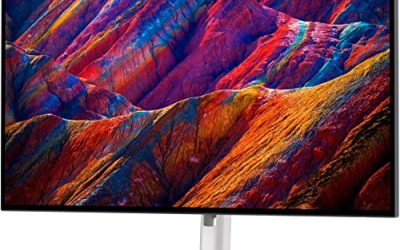
The Dell S2721QS pairs a slim look with the sharpest image in this guide. It is a 27-inch 4K UHD monitor with a 3840 by 2160 IPS display, a three-sided ultrathin bezel design, HDR support, and AMD FreeSync. The pixel density is about 163 pixels per inch, so text, code, and fine detail look crisp, and the panel covers 99 percent of the sRGB colour space, with brightness rated at 350 candelas per square metre. Ports include two HDMI 2.0 ports, DisplayPort 1.2, and a USB hub, plus an audio line-out.
The stand is a real advantage over the Samsung above. It adjusts for height, tilt, swivel, and pivot, so you can set the screen at eye level, turn it for a colleague, or rotate it into portrait mode for long documents and code. That flexibility makes the S2721QS a better long-term desk monitor, especially if more than one person uses the desk or if your chair and desk heights are not ideal. The silver finish and textured back give it a clean, modern look that suits a home office.
The limits are modest. The refresh rate is 60Hz, so motion is less smooth than on the 100Hz Samsung, and there is no USB-C port, so laptop users still need a separate charger and a video cable. The response time is rated at 4 milliseconds grey-to-grey, which is fine for office work and casual games but not built for competitive play. If you want the sharpest text and the most adjustable stand in a thin-bezel 27-inch monitor, this is the strongest choice here.
Check the Dell S2721QS on Amazon
3. Dell S2722QC 27-Inch 4K USB-C Monitor — The Best Thin Monitor for Laptops
- Best for: laptop users who want 4K, thin bezels, and single-cable USB-C charging.
laptop users who want 4K, thin bezels, and single-cable USB-C charging.
The Dell S2722QC takes the S2721QS formula and adds the one feature laptop users ask for most: USB-C. It is a 27-inch 4K UHD IPS monitor with a three-sided ultrathin bezel design, 99 percent sRGB coverage, 350 nits brightness, and AMD FreeSync at 60Hz. The USB-C upstream port supports DisplayPort 1.4 and Power Delivery up to 65 watts, so a single cable can carry video and charge a compatible laptop. It also has two HDMI 2.0 ports, two USB-A ports, an audio line-out, and built-in dual 3-watt speakers.
That single-cable connection changes how a desk feels. You plug in one cable and your laptop charges, connects to the large screen, and reaches the USB accessories on the monitor hub. The platinum silver finish and textured back look neat from the front and the rear, and the stand adjusts for height, tilt, swivel, and pivot, just like the S2721QS. Picture-by-picture and picture-in-picture modes let you show two sources side by side, which is useful if you work with a laptop and a desktop or a console.
The trade-offs mirror the S2721QS. The refresh rate is 60Hz, the response time is slower than a gaming panel, and the display is tuned for productivity rather than colour-critical work, despite the good sRGB coverage. The 65-watt USB-C charge is enough for most ultrabooks and everyday laptops, but not for a large, power-hungry workstation laptop under heavy load. If you use a laptop as your main computer and want a slim, sharp, single-cable desk setup, this is the pick to buy.
Check the Dell S2722QC on Amazon
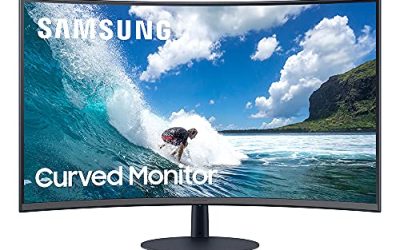
4. Samsung 32-Inch LC32R500 Curved Monitor — The Best Large Thin Curved Pick
- Best for: a large, slim curved screen for films, casual gaming, and immersive everyday use.
a large, slim curved screen for films, casual gaming, and immersive everyday use.
The Samsung 32-inch LC32R500 is the largest and most immersive pick in this guide, and the one that most clearly sells itself on a slim profile. The listing describes an ultra-slim design with a three-sided bezel-less display, a 1500R curve, Full HD resolution, a 75Hz refresh rate, a 4-millisecond response time, and AMD FreeSync. It uses a VA panel, which gives stronger contrast and deeper blacks than IPS, and the curved screen wraps the image slightly around your field of view. Ports include HDMI, DisplayPort, and VGA, plus a headphone jack.
On a desk, the size is the point. A 32-inch curved screen fills your view, which suits films, casual games, and large spreadsheets, and the curve helps the edges feel closer and more even. The slim profile and simple circular stand keep the look clean, and the monitor is wall-mountable, which is useful if you want to free the desk entirely. FreeSync helps keep motion smooth when the frame rate varies, and the VA contrast makes dark scenes look richer than on a typical IPS office panel.
The trade-offs are important to understand. Full HD stretched across 32 inches is less sharp than Full HD at 27 inches or 4K at 27 inches, so text work at close range is not its strength. The stand tilts only, with no height adjustment, and the listing for this model has carried mixed specification details across retailers, so confirm the refresh rate, curvature, and VESA support on the exact listing you buy. If you want a large, slim, curved screen for media and immersion, and you sit a little further back, this is the most dramatic option here.
Check the Samsung LC32R500 on Amazon
Comparison Table
| Monitor | Size and resolution | Panel | Refresh rate | Thin design | Key ports | Stand |
|---|---|---|---|---|---|---|
| Samsung S30GD | 27-inch Full HD | IPS | 100Hz | Super-slim chassis, ultra-thin bezels | HDMI, VGA | Tilt only |
| Dell S2721QS | 27-inch 4K UHD | IPS | 60Hz | Three-sided ultrathin bezel | HDMI, DisplayPort, USB hub | Height, tilt, swivel, pivot |
| Dell S2722QC | 27-inch 4K UHD | IPS | 60Hz | Three-sided ultrathin bezel | USB-C 65W, HDMI, USB-A | Height, tilt, swivel, pivot |
| Samsung LC32R500 | 32-inch Full HD curved | VA | 75Hz | Ultra-slim, three-sided bezel-less | HDMI, DisplayPort, VGA | Tilt only |
Frequently Asked Questions
What does thin mean when you buy a monitor?
Thin usually means one of two things: a slim chassis that is shallow front to back, or thin bezels that shrink the border around the screen. Both make a desk look cleaner, but they solve different problems. A slim chassis helps in a tight space or against a wall, while thin bezels help the screen look larger and work better in a dual-monitor setup. Check the listing for both, and do not assume one implies the other.
Is a 27-inch or 32-inch thin monitor better?
A 27-inch monitor suits most desks, because it fits the viewing distance and keeps text sharp, especially at 4K. A 32-inch monitor feels more immersive for films and games, but it needs more desk depth and a Full HD 32-inch panel shows softer text up close. If you work mainly with text, choose 27-inch 4K. If you want presence and you sit further back, a 32-inch curved screen is a good fit.
Do thin monitors have worse image quality?
No, thinness on its own does not decide image quality. Resolution, panel type, brightness, and colour coverage matter far more. A thin 4K IPS monitor can look sharper than a thick Full HD monitor, and a thin VA curved monitor can show deeper blacks than a thick IPS panel. Compare the panel specifications first, then treat thinness as a design and space benefit, not as a quality score.
Do I need USB-C on a thin monitor?
USB-C is worth having if you use a laptop as your main computer, because one cable can carry video and charge the laptop, which keeps a slim desk tidy. If you use a desktop PC, HDMI and DisplayPort are enough, and USB-C adds little. Check the wattage: 65 watts suits most everyday laptops, while larger workstation laptops may need a separate charger even when connected over USB-C.
Can I mount a thin monitor on an arm or on the wall?
Many thin monitors support a 100 by 100 mm VESA mount, which lets you use a monitor arm or wall bracket and free the desk surface. Some slim models, especially curved budget models, have limited or no VESA support, or use a different pattern, so confirm the VESA details on the exact listing before you buy an arm. An arm is often the best partner for a thin monitor, because it removes the stand footprint entirely.
Conclusion
The best thin monitors balance slim design with the specifications you will live with every day. The Samsung S30GD is the lightest, most clearly slim everyday pick, with a smooth 100Hz IPS screen. The Dell S2721QS is the sharpest thin-bezel choice, with 4K detail and a fully adjustable stand. The Dell S2722QC adds single-cable USB-C charging for laptop users, and the Samsung LC32R500 gives you a large, curved, immersive screen in a slim frame. Measure your desk, choose resolution and ports first, and let thinness be the finishing touch — that way you get a setup that looks clean and still works well after the first week.
Disclosure: As an Amazon Associate, we earn from qualifying purchases.
More from Amazon
Programs that pair well with the guide above. Offers and eligibility are set by Amazon and may change.
Free shipping on eligible items, Prime Video and more. Eligible new members can start with a free trial.
Start a Prime free trialAd-free music streaming. Eligible new subscribers can start with a free trial.
Try Music Unlimited freeA Prime membership for ages 18-24 with a trial period. Eligibility is set by Amazon.
See Prime for Young AdultsAudiobooks and podcasts to listen to on the go. Eligible new members can start with a free trial.
Try Audible freeAs an Amazon Associate we earn from qualifying purchases.
Write Your Review
No reviews yet. Be the first to share your experience!