
Our Short List of 3

- Best for: Competitive players who want native G-SYNC at 1440p
- 27-inch WQHD panel, 2560 x 1440 resolution
- Fast IPS with 240Hz refresh rate
- 1ms (GTG) response time
- NVIDIA G-SYNC processor

- Best for: Ultrawide immersion with native G-SYNC support
- 34.18-inch curved QD-OLED panel, 1800R curve
- 3440 x 1440 resolution at 175Hz
- 0.1ms gray-to-gray response time
- Adaptive Sync listed as G-Sync
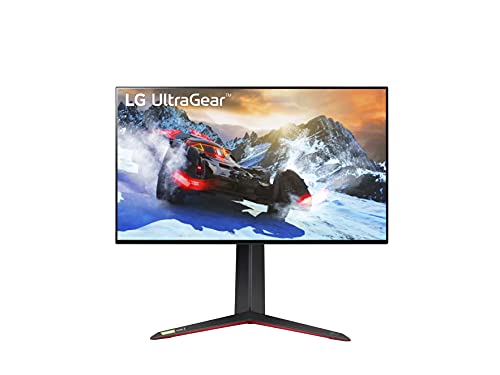
- Best for: 4K gaming on a 27-inch screen with strong color
- 27-inch UHD Nano IPS panel, 3840 x 2160 resolution
- 144Hz refresh rate
- 1ms response time
- NVIDIA G-SYNC Compatible and AMD FreeSync Premium Pro
All 5 Picks at a Glance
| Product | Specs | Action |
|---|---|---|
| ASUS ROG Swift PG279QM |
| Check price on Amazon |
| Alienware AW3423DW |
| Check price on Amazon |
| LG UltraGear 27GP950-B |
| Check price on Amazon |
 Samsung Odyssey G7 G70D |
| Check price on Amazon |
 LG UltraGear 27GS95QE-B |
| Check price on Amazon |
Key takeaways
- Five G-SYNC and G-SYNC Compatible monitors for NVIDIA graphics cards, from 240Hz esports panels to 4K and ultrawide OLED, with the specs that matter most.
Buying a monitor for an NVIDIA graphics card starts with one decision: how the display handles variable refresh. A panel with a native G-SYNC module or NVIDIA-validated G-SYNC Compatible support syncs its refresh rate to your GeForce GPU, which removes tearing and stutter when frame rates rise and fall. Beyond that badge, resolution, refresh rate, and panel type decide whether the screen suits fast shooters, story-driven games, or a mix of play and desktop work.
This guide is for GeForce owners who want that sync support confirmed on the listing before anything else. The picks below cover a 240Hz esports panel with a hardware G-SYNC processor, a curved QD-OLED ultrawide, two 4K options at 27 inches, and a 1440p OLED built for speed. Every specification comes from the Amazon product page for that model, including its stated adaptive sync support.
Quick Picks
As an Amazon Associate we earn from qualifying purchases
| Product | Best for | Key spec from title |
|---|---|---|
| ASUS ROG Swift PG279QM | Competitive 1440p play | 240Hz Fast IPS with G-SYNC |
| Alienware AW3423DW | Immersive ultrawide gaming | 34-inch QD-OLED at 175Hz |
| LG UltraGear 27GP950-B | 4K detail on a 27-inch desk | UHD Nano IPS at 144Hz |
| Samsung Odyssey G7 G70D | 4K gaming plus smart features | 4K IPS at 144Hz, G-Sync Compatible |
| LG UltraGear 27GS95QE-B | Fast OLED response at 1440p | QHD OLED at 240Hz, 0.03ms |
How to Choose
Native G-SYNC Versus G-SYNC Compatible
Native G-SYNC monitors carry a dedicated NVIDIA processor inside the display, as the ROG Swift PG279QM and Alienware AW3423DW do in this guide. That hardware approach supports variable refresh across the panel’s full range and adds features such as variable overdrive. G-SYNC Compatible monitors have no module; NVIDIA has validated them to deliver a baseline variable refresh experience over DisplayPort, and listings state that status directly. Both remove tearing with a GeForce card, so check which type a listing names, then weigh price class, panel, and resolution rather than treating one label as automatically better for every player.
Resolution Matched to Your GPU
Resolution decides how hard your graphics card works. A 4K panel such as the 27GP950-B or Odyssey G70D shows fine detail but demands far more from the GPU than 1440p, especially at high refresh rates. The 2560 x 1440 panels here, including the PG279QM and 27GS95QE-B, are easier to drive past 144 frames per second, which suits competitive play. The AW3423DW sits between the two at 3440 x 1440, spreading the load across an ultrawide image. Match the panel to the frame rates your card realistically sustains in the games you play most.
Refresh Rate and Response Time
Refresh rate caps how many frames the panel can show each second, and response time describes how quickly pixels change. The PG279QM and 27GS95QE-B reach 240Hz, which rewards players whose systems can feed them very high frame rates. The 144Hz and 175Hz picks still feel fluid for mixed libraries and single-player titles. OLED panels list response times as low as 0.03ms or 0.1ms on their product pages, far below the 1ms figures quoted for the Fast IPS models here, which is one reason OLED suits fast camera movement.
Panel Type, HDR, and Connections
Panel technology shapes contrast and color. The QD-OLED and OLED picks produce deep blacks and carry VESA DisplayHDR True Black 400 certification, while the Nano IPS and IPS models list DisplayHDR 600 or DisplayHDR 400 and wider brightness for lit rooms. Check the color gamut figures on each listing if you edit photos between sessions. Finally, confirm the ports: G-SYNC over DisplayPort is the standard route on these monitors, HDMI 2.1 appears on the LG models for high-refresh console use, and built-in USB hubs vary, so count the connections your desk actually needs.
The 5 Best Options
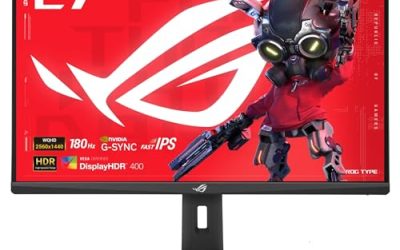
ASUS ROG Swift PG279QM
- Best for: Competitive players who want native G-SYNC at 1440p
- 27-inch WQHD panel, 2560 x 1440 resolution
- Fast IPS with 240Hz refresh rate
- 1ms (GTG) response time
- NVIDIA G-SYNC processor
Competitive players who want native G-SYNC at 1440p
HDMI connections are version 2.0, so full 240Hz output runs over DisplayPort
The PG279QM is the esports-leaning pick in this group, built around a 27-inch Fast IPS panel with a native G-SYNC processor rather than software validation alone. Its 240Hz refresh rate and 1ms response suit competitive players running a GeForce card that can push high frame rates at 1440p. The listing also highlights the NVIDIA Reflex Latency Analyzer, which lets players measure system latency with a compatible mouse, plus DisplayHDR 400 and an adjustable stand. Three HDMI ports alongside DisplayPort make it easy to keep a console and PC connected at once.
Alienware AW3423DW
- Best for: Ultrawide immersion with native G-SYNC support
- 34.18-inch curved QD-OLED panel, 1800R curve
- 3440 x 1440 resolution at 175Hz
- 0.1ms gray-to-gray response time
- Adaptive Sync listed as G-Sync
Ultrawide immersion with native G-SYNC support
The 21:9 image needs more GPU power than standard 1440p, and some games lack ultrawide support
The AW3423DW wraps a 34.18-inch Quantum Dot OLED panel in an 1800R curve, giving GeForce owners an ultrawide native G-SYNC option. Its 3440 x 1440 resolution and 175Hz refresh rate pair the wide field of view with smooth motion, and the listing’s 0.1ms gray-to-gray response reflects the speed OLED is known for. The product page quotes a 1,000,000:1 contrast ratio and 1.07 billion colors, which suits atmospheric games with dark scenes. A three-year warranty is listed, and the Lunar Light finish stands apart from the black designs elsewhere in this guide.
LG UltraGear 27GP950-B
- Best for: 4K gaming on a 27-inch screen with strong color
- 27-inch UHD Nano IPS panel, 3840 x 2160 resolution
- 144Hz refresh rate
- 1ms response time
- NVIDIA G-SYNC Compatible and AMD FreeSync Premium Pro
4K gaming on a 27-inch screen with strong color
Driving 4K at high refresh rates takes a powerful graphics card to stay smooth
For players who want 4K sharpness without moving to a larger desk footprint, the 27GP950-B pairs a 27-inch UHD Nano IPS panel with G-SYNC Compatible validation. The listing states a 144Hz refresh rate and 1ms response time, so motion stays composed when a strong GeForce card drives it, and HDMI 2.1 inputs allow high-refresh signals from newer consoles as well. Color coverage is quoted at DCI-P3 98 percent, and the panel carries VESA DisplayHDR 600 certification, the strongest HDR grade among the IPS picks here. Tilt, height, and pivot adjustment round out the stand.
Samsung Odyssey G7 G70D
- Best for: 4K gaming with smart TV style extras built in
- 27-inch 4K UHD IPS panel, 3840 x 2160 resolution
- 144Hz refresh rate
- 1ms (GtG) response time
- G-Sync Compatible per the listing title
4K gaming with smart TV style extras built in
The listing’s adaptive sync field names FreeSync Premium Pro, so confirm G-Sync settings in the menu after setup
The Odyssey G70D is a 27-inch 4K IPS monitor whose listing names G-Sync compatibility alongside AMD FreeSync Premium, so GeForce owners get validated variable refresh at 144Hz. It adds smart monitor features the others here do not list, including built-in speakers and Samsung’s Gaming Hub for streaming play without a PC or console attached. The product page quotes 350 candela per square meter of brightness, DisplayHDR 400, and a 99 percent color gamut figure. Two HDMI ports and two USB 3.0 ports cover a PC, a console, and peripherals without constant cable swapping.
LG UltraGear 27GS95QE-B
- Best for: Fast 1440p play with OLED contrast and response
- 27-inch OLED panel, 2560 x 1440 resolution
- 240Hz refresh rate
- 0.03ms response time
- Adaptive Sync listed as FreeSync Premium Pro and G-Sync Compatible
Fast 1440p play with OLED contrast and response
OLED panels need sensible habits with static desktop elements left on screen for long periods
The 27GS95QE-B brings OLED speed to 1440p, with a 240Hz refresh rate and a 0.03ms response time quoted on its product page. The listing’s product information names both FreeSync Premium Pro and G-Sync Compatible under adaptive sync, so GeForce cards get validated variable refresh over DisplayPort and HDMI 2.1. Contrast is listed at 1.5 million to one, and the panel carries DisplayHDR True Black 400 certification for HDR games with deep shadow detail. The matte finish helps in brighter rooms, and the stand adjusts for tilt, height, and swivel.
Which One Fits Your Situation
You Play Competitive Shooters at 1440p
Choose between the PG279QM and the 27GS95QE-B. The ASUS uses a hardware G-SYNC processor and adds the Reflex Latency Analyzer for players measuring input delay, while the LG counters with OLED response times and deeper contrast. Both run at 240Hz, so the deciding factors are panel preference and whether your GeForce card can feed either screen enough frames to matter.
You Want One Screen for Games and Movies
The Alienware AW3423DW fits a mixed library best. Its curved 34-inch QD-OLED panel fills your view in racing and adventure games, the 21:9 shape suits films shot in wide formats, and the listed contrast and color figures support HDR playback. Native G-SYNC keeps frame pacing smooth when a demanding scene drops your frame rate mid-game.
You Have a High-End Card and Want 4K
Pick the 27GP950-B for color accuracy and DisplayHDR 600, or the Odyssey G70D if built-in speakers and streaming apps reduce the gear on your desk. Both are 27-inch 4K IPS panels at 144Hz with G-SYNC Compatible support stated on the listing. A flagship GeForce card is the realistic partner for either screen at native resolution.
Your Desk Space Is Limited
A 27-inch panel is the practical ceiling for shallow desks, which covers four of the five picks here. The 27GS95QE-B and PG279QM keep footprints modest while still delivering 240Hz, and the G70D removes the need for separate speakers. Measure your desk depth before considering the ultrawide Alienware, whose stand and curve need noticeably more room.
Common Mistakes
- Assuming every FreeSync monitor works the same with GeForce cards, instead of checking the listing for G-SYNC or G-SYNC Compatible wording
- Buying a 4K high-refresh panel for a mid-range GPU that cannot sustain smooth frame rates at that resolution
- Connecting over HDMI when the listing’s full refresh rate with G-SYNC is specified over DisplayPort
- Ignoring the difference between native G-SYNC hardware and G-SYNC Compatible validation when comparing two listings
- Forgetting to enable G-SYNC in the NVIDIA control panel after setup, which leaves variable refresh switched off
Frequently Asked Questions
Does G-SYNC Compatible work as well as native G-SYNC?
Native G-SYNC uses a dedicated processor in the monitor, which supports variable refresh across the full range and adds variable overdrive. G-SYNC Compatible monitors are validated by NVIDIA to meet a baseline standard over DisplayPort. Both approaches remove tearing and stutter with GeForce cards, and many players find the practical difference small next to panel quality and refresh rate.
Which cable should I use for G-SYNC?
DisplayPort is the standard connection for G-SYNC on desktop monitors, and every pick in this guide includes it. Use the DisplayPort cable supplied in the box where one is listed, then enable G-SYNC in the NVIDIA control panel. Some newer LG models also support G-SYNC Compatible over HDMI 2.1 with GeForce RTX 30 Series and higher cards, as their listings state.
Is 1440p or 4K better for an NVIDIA card?
It depends on the card and the games. A 1440p panel at 240Hz suits competitive play because mid-range and high-end GeForce cards can sustain very high frame rates there. A 4K panel shows finer detail and suits slower, cinematic games, but it needs a stronger GPU to hold smooth frame rates, especially with demanding settings enabled in modern titles.
Can these monitors work with consoles too?
Most can, within limits. The LG models list HDMI 2.1, which accepts high-refresh signals from current consoles, while the PG279QM’s HDMI 2.0 ports cap console refresh rates lower than its DisplayPort peak. Variable refresh behavior also differs by console, since G-SYNC itself is an NVIDIA PC technology. Check the listing’s port versions against what your console outputs before buying.
More from Amazon
Programs that pair well with the guide above. Offers and eligibility are set by Amazon and may change.
Free shipping on eligible items, Prime Video and more. Eligible new members can start with a free trial.
Start a Prime free trialAd-free music streaming. Eligible new subscribers can start with a free trial.
Try Music Unlimited freeA Prime membership for ages 18-24 with a trial period. Eligibility is set by Amazon.
See Prime for Young AdultsAudiobooks and podcasts to listen to on the go. Eligible new members can start with a free trial.
Try Audible freeAs an Amazon Associate we earn from qualifying purchases.
Write Your Review
No reviews yet. Be the first to share your experience!