

Key takeaways
- USB or XLR for your stream? Compare five dynamic microphone picks, from the Shure SM7B and RØDE PodMic to the hybrid Shure MV7+ and Samson Q2U pack.
Choosing a streaming microphone is really a decision about the chain between your voice and your computer. An XLR microphone sends an analogue signal out of the mic, so it needs an audio interface or mixer to convert that signal before the PC can use it. A USB microphone does that conversion inside the mic itself and plugs straight into the computer. Every pick below is a dynamic microphone, the type that suits close talking and untreated rooms.
This guide compares five dynamic microphones covering both sides of the question. Three are XLR only: the Shure SM7B, the RØDE PodMic and the Elgato Wave DX with Cable bundle. Two are hybrids offering USB and XLR on the same microphone: the Shure MV7+ and the Samson Q2U pack. No purely USB-only microphone made this final five: if you want USB convenience today without closing the door on an interface later, a hybrid is the honest middle path.
As an Amazon Associate, we earn from qualifying purchases.
Quick answer
Choose XLR if you already own an audio interface, or plan to buy one, and want a microphone that can stay put while the rest of your setup changes; the SM7B, PodMic and Wave DX with Cable bundle cover that side. Choose a hybrid if you want USB simplicity today with an XLR upgrade path later; the MV7+ and the Q2U pack do both jobs.
Shure SM7B Dynamic Studio Microphone
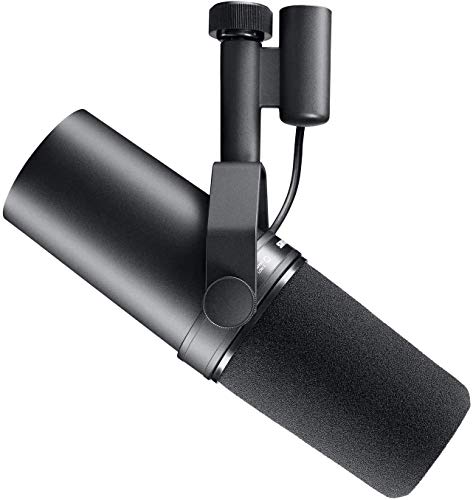
The SM7B is the reference point for the XLR side of this comparison. It is a dynamic microphone with a unidirectional, cardioid pickup pattern, a wide 50 Hz to 20 kHz frequency range and a metal enclosure built for daily studio use. It connects by XLR only, so an interface or mixer is a required part of the purchase, and it does not require phantom power. The box includes a close-talk windscreen, a foam windscreen and a locking yoke mount.
For streamers, the appeal is consistency. The SM7B is voiced for close spoken word, suiting commentary, podcast-style streams and voice recording at a desk. Because it holds no digital conversion, its lifespan is tied to the capsule and connector rather than to any software or port standard. Pair it with an interface that offers clean gain and keep it close to your mouth.
| Brand | Product | ASIN | Key specs |
|---|---|---|---|
| Shure | Shure SM7B Dynamic Studio Microphone | B0002E4Z8M | Dynamic; unidirectional (cardioid); XLR; 150 Ohms; 50 Hz – 20 kHz; no phantom power required; includes close-talk windscreen, foam windscreen, locking yoke mount; metal enclosure; 2-year limited warranty |
RØDE PodMic Cardioid Dynamic Broadcast Microphone

The PodMic is RØDE’s broadcast-style dynamic microphone, again XLR only, with a cardioid pickup pattern aimed at podcasting, streaming, gaming and voice recording. It arrives with an integrated swing mount, ready to hang from a boom arm without a separate mount purchase, and the listing highlights an internal pop filter and internal shock mounting, which help keep a close-talking setup tidy. The metal enclosure gives it a solid build, backed by a 2-year warranty.
In practice, the PodMic suits streamers who want the XLR route with fewer add-ons. The cardioid pattern focuses on the voice in front of it while rejecting sound from the sides and rear, which helps in untreated rooms. Like the SM7B, it needs an interface, and a boom arm or stand is still part of the plan.
| Brand | Product | ASIN | Key specs |
|---|---|---|---|
| RØDE | RØDE PodMic Cardioid Dynamic Broadcast Microphone | B07MSCRCVK | Dynamic; cardioid (unidirectional); XLR; integrated swing mount; internal pop filter and shock mounting; metal enclosure; 937 g; 2-year warranty |
Elgato Wave DX with Cable – Dynamic XLR Microphone with 10ft/3m XLR Cable
This pick needs its full name stated plainly: the verified listing is the Elgato Wave DX with Cable bundle, containing two items, the Wave DX dynamic XLR microphone and an Elgato XLR cable measuring 10ft/3m. It is not a mic-only package. The Wave DX itself is a dynamic microphone with a unidirectional, cardioid pattern and speech-optimised voicing for podcasting, streaming and broadcasting, and it works with any interface on PC or Mac.
The useful detail for streamers is that the listing states no signal booster is required. Some dynamic microphones are quiet enough that buyers end up adding an inline booster; Elgato positions the Wave DX to run without one, keeping the chain shorter. With the cable included, this bundle covers the mic-to-interface link in one purchase, leaving only the interface to source. It is the most self-contained of the three XLR picks.
| Brand | Product | ASIN | Key specs |
|---|---|---|---|
| Elgato | Elgato Wave DX with Cable – Dynamic XLR Microphone with 10ft/3m XLR Cable | B0BN91PGK3 | Bundle of 2 items: Wave DX dynamic XLR microphone plus Elgato XLR cable (10ft/3m); unidirectional (cardioid); XLR; no signal booster required; works with any interface, PC/Mac |
Shure MV7+ Podcast Dynamic Microphone (Black, mic-only)

The MV7+ leads the hybrid side. This pick is the mic-only Black version, offering both USB-C and XLR outputs on the same dynamic microphone, so it can plug straight into a computer today and move to an interface later without being replaced. Its frequency range runs from 50 Hz to 16 kHz, the pickup pattern is unidirectional and cardioid, and the listing notes OBS certification, an LED panel and a mute function. Shure’s MOTIV Mix app support adds software control on the USB side.
What is in the box matters with this variant: the mic-only package includes a foam windscreen and a 3m USB-C to USB-C cable, and no stand. A stand belongs to a different bundle, so plan on a boom arm or a stand you already own. That aside, the MV7+ is the most complete answer to the USB versus XLR question here, because it postpones the decision rather than forcing it.
| Brand | Product | ASIN | Key specs |
|---|---|---|---|
| Shure | Shure MV7+ Podcast Dynamic Microphone (Black, mic-only) | B0CTJ7PVN1 | Dynamic; unidirectional (cardioid); USB Type-C and XLR; 50 Hz – 16 kHz; LED panel, mute function; OBS Certified; MOTIV Mix app; includes foam windscreen and 3m USB-C cable (no stand); metal enclosure; 2-year limited warranty |
SAMSON Technologies Q2U USB/XLR Dynamic Microphone Recording and Podcasting Pack

The Q2U pack is the long-running budget-friendly hybrid, and a pack in the true sense: alongside the handheld dynamic microphone you get a mic clip, a desktop tripod stand, a tripod stand extension, a windscreen, a 2.25m USB cable and a 3m XLR cable. The microphone offers both USB and XLR outputs, and the current listing describes the USB side as USB-C. Its cardioid pattern, 16-bit, 48kHz conversion and 50Hz to 15kHz frequency response cover the streaming basics, and a 1/8 inch (3.5mm) headphone output allows direct monitoring.
Because the stand and both cables are included, the Q2U is the fastest route from box to first stream in this guide, and its handheld format also suits interviews. The hybrid outputs carry the same logic as the MV7+: begin on USB with everything provided, then move the same microphone onto an interface over XLR when the setup grows.
| Brand | Product | ASIN | Key specs |
|---|---|---|---|
| Samson | SAMSON Technologies Q2U USB/XLR Dynamic Microphone Recording and Podcasting Pack | B001R747SG | Dynamic handheld; cardioid (unidirectional); USB and XLR outputs; 16-bit, 48kHz A/D; 50Hz – 15kHz; 1/8 inch (3.5mm) headphone output; pack includes mic clip, tripod stand, stand extension, windscreen, 2.25m USB cable, 3m XLR cable; Silver; 2-year warranty |
How to Choose
Begin with the interface question, because it decides everything else. If an audio interface or mixer already sits on your desk, the XLR picks are open to you. If there is no interface and no plan to buy one, only the two hybrids make sense, since XLR-only microphones cannot connect to a computer on their own.
Next, count what is in the box. The Wave DX with Cable bundle includes its XLR cable; the Q2U pack includes a stand and both cables; the MV7+ mic-only version includes no stand; and the PodMic builds its swing mount into the microphone. A fair comparison covers the whole working setup, including any boom arm or stand still needed.
Then think about the room. All five picks are dynamic microphones with cardioid-family patterns, which favour a close talking position and reject off-axis room sound. Plan to work close to the microphone and set gain accordingly.
Finally, decide how much the future matters. A hybrid costs nothing in flexibility: USB covers the simple setup and XLR the upgraded one. A dedicated XLR microphone commits you to the interface route from day one, which is fine if that route is already chosen.
Who Should Skip
Skip all five picks if you want a condenser microphone for quiet, detailed sources such as acoustic instruments or soft singing voices; every pick here is a dynamic model chosen for close spoken word. Skip the XLR-only three if your budget has no room for an audio interface, because none can connect to a computer alone. Skip the MV7+ mic-only version if you need a stand in the same box, and skip the hybrid route if an interface-based desk is your fixed destination.
FAQ
Do XLR microphones need an audio interface?
Yes. An XLR microphone outputs an analogue signal, so an audio interface or mixer is needed to convert it for the computer. That applies to the SM7B, PodMic and Wave DX here. The MV7+ and Q2U can also run over XLR through an interface, but their USB outputs let them work without one.
Do these dynamic microphones need phantom power?
Dynamic microphones of this type do not require phantom power, and the SM7B listing states that plainly for that model. Phantom power is an interface feature used mainly with condenser microphones. If your interface has it, follow the interface maker’s directions, but none of the five picks depends on it to work.
Is the Elgato Wave DX in this guide sold on its own?
No. The verified pick is the Wave DX with Cable bundle, containing the Wave DX microphone and a 10ft/3m Elgato XLR cable as two items in one package. If you see the microphone listed alone elsewhere, that is a different listing, so check the contents before ordering.
Does the Shure MV7+ come with a stand?
Not in this version. The pick here is the mic-only Black MV7+, which includes a foam windscreen and a 3m USB-C to USB-C cable, with no stand in the box. A version bundled with a stand exists as a separate package, so confirm which variant you are ordering or plan to use a boom arm you already own.
Final Verdict
There is no single winner in the USB versus XLR question, only a right order of decisions. If an interface is already part of your desk, the SM7B is the established broadcast choice, the PodMic trims the accessory list with its swing mount, and the Wave DX with Cable bundle adds its own cable and needs no signal booster. If the setup is still simple, the hybrids are the smarter first purchase: the MV7+ brings USB-C convenience and an XLR output for later, while the Q2U pack includes the stand and both cables. Choose the connection that matches the desk you have.
More from Amazon
Programs that pair well with the guide above. Offers and eligibility are set by Amazon and may change.
Free shipping on eligible items, Prime Video and more. Eligible new members can start with a free trial.
Start a Prime free trialAd-free music streaming. Eligible new subscribers can start with a free trial.
Try Music Unlimited freeA Prime membership for ages 18-24 with a trial period. Eligibility is set by Amazon.
See Prime for Young AdultsAudiobooks and podcasts to listen to on the go. Eligible new members can start with a free trial.
Try Audible freeAs an Amazon Associate we earn from qualifying purchases.




Write Your Review
No reviews yet. Be the first to share your experience!