

Key takeaways
- TVs for PS4 Pro compared: LG C5 OLED, Hisense U8QG, TCL QM7K and QM6K, all 55-inch 4K sets with HDR support matched to what the console outputs.
The PS4 Pro asks less of a television than current consoles do, and that shapes this whole guide. The console outputs a 4K signal with HDR10, and it does not send Dolby Vision gaming, variable refresh or 120Hz output. So the right TV is a 4K set with strong HDR10 handling, a proper game mode with low input lag, and enough brightness or contrast to make HDR worth switching on. Every pick below is a 55-inch 4K model whose listing states HDR support, chosen for how its picture suits the console rather than for features the PS4 Pro cannot use.

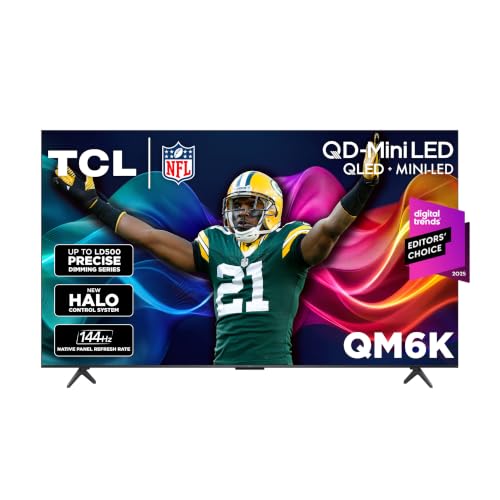
That focus frees the budget. Money spent chasing console features the Pro never outputs is wasted, while money spent on panel quality — OLED contrast or a Mini LED backlight with real local dimming — shows up in every game. The four sets here span that range: one OLED, two high-end Mini LED models, and a more affordable Mini LED set that still covers the console’s full output.
Quick Picks
As an Amazon Associate we earn from qualifying purchases.
| Product | Best for | Key spec |
|---|---|---|
| LG C5 OLED evo 55 | The best picture for the console | OLED evo 4K, HDR10 and Dolby Vision |
| Hisense U8QG 55 | Bright rooms and HDR impact | Mini-LED, up to LD5600 dimming |
| TCL QM7K 55 | Anti-glare Mini LED value | 144Hz panel, up to LD2500 zones |
| TCL QM6K 55 | A 4K HDR set on a tighter budget | QLED Mini LED, 144Hz, Google TV |
How to Choose
Match the TV to What the Console Actually Outputs
The PS4 Pro renders games up to 4K resolution and adds HDR10 on supported titles. A TV therefore needs a native 4K panel and HDR10 support as the baseline, both stated on every listing in this guide. Features beyond that split into two groups: some, like Dolby Vision, still help with films and streaming apps on the TV itself; others, like variable refresh, do nothing for this console at all. Buy the panel for the Pro’s signal first, then let streaming features break ties. Reading listings with that filter stops you paying for badges the console cannot feed.
Prioritise Contrast and Local Dimming for HDR
HDR lives or dies on contrast. An OLED controls every pixel individually, so a night scene in a game keeps true blacks beside bright highlights. Mini LED sets approach that with local dimming zones: the Hisense below lists up to LD5600 dimming, the TCL QM7K up to LD2500, and more zones generally mean tighter control of halos around bright objects. A basic edge-lit 4K set may accept an HDR10 signal yet show washed-out dark scenes. Since the Pro’s HDR is a headline feature, the dimming specification on the listing is the single most useful line to compare.
Check the Game Mode and Input Lag Story
Every modern TV in this class carries a game mode that trims picture processing to cut input lag, the delay between a controller input and the screen’s response. Listings state game features in their own language — refresh figures, VRR ranges, gaming modes — and the honest reading for a PS4 Pro owner is simple: the console outputs 60Hz, so a 120Hz or 144Hz panel’s extra speed mainly benefits other devices you may connect later. What matters today is that game mode exists and that the set handles a 4K 60Hz signal cleanly over HDMI, which all four picks do.
Size the Screen to the Room, Then Check the Stand
All four picks here are 55-inch models, a size that suits a typical living room viewing distance for 4K gaming and shows the Pro’s resolution advantage over a 1080p set clearly. Before ordering any large TV, measure the furniture: check the listing’s stated dimensions and stand width against your unit, and confirm the VESA pattern if you plan to wall-mount. Delivery and returns on a 55-inch box are a hassle nobody wants twice. Also count HDMI ports against your other devices, because a soundbar on the eARC port can quietly consume the input you planned for a second console.
The 4 Best Options
1. LG C5 OLED evo 55
The C5 is the picture-quality pick. Its listing describes a 55-inch class OLED evo AI 4K television, model OLED55C5PUA, with Dolby Vision, HDR10, Dolby Atmos, Filmmaker Mode, Wow Orchestra and Alexa built in, driven by LG’s alpha 9 AI Processor Gen8. For the PS4 Pro, the OLED panel is the story: per-pixel light control gives HDR games their deepest blacks and cleanest highlight detail, and dark titles gain the most. The console cannot use everything this set offers, but nothing about that diminishes the panel itself, which is the finest display technology in this group for a light-controlled room.
- Specs:
- Screen size: 55 inches
- Panel: OLED evo, 4K
- HDR: Dolby Vision and HDR10, as stated in the listing title
- Audio: Dolby Atmos and Wow Orchestra
- Processor: alpha 9 AI Processor Gen8
- Model: OLED55C5PUA, 2025
- Best for: Players who want the strongest HDR picture for the console in a dim or controlled-light room
- Watch out for: OLED panels prefer varied content and moderate brightness in bright rooms; a sunlit space may suit the Mini LED picks better
2. Hisense U8QG 55
The U8QG is the brightness-and-dimming pick. The listing for the 55-inch model, the 55U8QG, states a ULED Mini-LED 4K UHD panel with QLED colour, a native 165Hz refresh rate, VRR up to 288, local dimming up to LD5600, HDR10+, Dolby Vision IQ, Dolby Atmos, IMAX Enhanced and 4.1.2 channel audio on Google TV. For PS4 Pro gaming, the headline is that dimming figure: it promises tight control of bright HDR highlights in mixed scenes, and the panel’s brightness suits rooms where an OLED would fight the windows. The high refresh ceiling is spare capacity the console leaves unused, ready for other hardware.
- Specs:
- Screen size: 55 inches
- Panel: ULED Mini-LED 4K UHD with QLED
- Native refresh rate: 165Hz
- Local dimming: up to LD5600, as stated by the listing
- HDR: HDR10+ and Dolby Vision IQ
- Audio: 4.1.2 channel with Dolby Atmos
- Platform: Google TV
- Model: 55U8QG
- Best for: Bright living rooms where HDR impact matters more than perfect blacks
- Watch out for: The console outputs 60Hz, so the 165Hz panel and VRR range are headroom for other devices, not a PS4 Pro benefit
3. TCL QM7K 55
The QM7K sits a step below the flagship Mini LED sets while keeping the features that matter here. Its listing, model 55QM7K, states a QD-Mini LED panel with 4K HDR, a 144Hz refresh rate, up to LD2500 precise dimming zones, Dolby Vision, HDR10+ and HLG support, Dolby Atmos with Onkyo audio, Google TV and an anti-reflective CrystGlow HVA panel, across four HDMI ports. For a PS4 Pro in a room with lamps and windows, that anti-glare panel plus real local dimming is a practical combination: HDR scenes hold up in the evening, and reflections stay controlled during daytime play sessions.
- Specs:
- Screen size: 55 inches
- Panel: QD-Mini LED, 4K HDR
- Refresh rate: 144Hz
- Local dimming: up to LD2500 precise dimming zones
- HDR: Dolby Vision, HDR10+ and HLG
- Audio: Dolby Atmos with Onkyo audio
- Ports: four HDMI, as stated by the listing
- Platform: Google TV
- Model: 55QM7K
- Best for: Mixed-light rooms needing anti-glare coating and strong dimming at a mid-level price tier
- Watch out for: Dimming zone counts are series maximums in listings; the figure describes the range’s ceiling, so read it as a class indicator rather than a per-size promise
4. TCL QM6K 55
The QM6K is the value route into Mini LED for this console. The listing for the 55-inch 55QM6K states a QLED Mini LED panel with 4K HDR, a 144Hz refresh rate and Google TV, and the fuller listing title adds high brightness, IMAX Enhanced, HDR10, Dolby Vision and Dolby Atmos audio with a voice remote. Against the Pro’s actual output, nothing essential is missing: the console’s 4K HDR10 signal is fully covered, local dimming lifts HDR scenes above basic LED sets, and the money saved versus the QM7K can go to games or a soundbar. It is the sensible default for a second room or a first 4K upgrade.
- Specs:
- Screen size: 55 inches
- Panel: QLED Mini LED, 4K HDR
- Refresh rate: 144Hz
- HDR: Dolby Vision and HDR10, as stated by the listing
- Audio: Dolby Atmos
- Platform: Google TV with voice remote
- Model: 55QM6K
- Best for: A first 4K HDR TV for the console, or a second-room set, without flagship pricing
- Watch out for: It sits below the QM7K on dimming and brightness specification, so very bright rooms and HDR showcase scenes favour the step-up model
Which One Fits Your Situation
Your Games Room Has Controlled Light
Take the LG C5. The PS4 Pro’s catalogue leans on atmospheric, HDR-graded titles, and an OLED shows those games at their best: true blacks, precise highlights and no blooming around bright objects in dark scenes. If the room can be dimmed and the TV also serves film nights, the C5’s Dolby Vision support earns its keep beyond the console. It is the most expensive route here, but it is the one purchase in this guide that visibly upgrades every hour the console is switched on.
Your Living Room Is Bright
Choose between the Hisense U8QG and the TCL QM7K. The Hisense brings the higher dimming specification and the stronger brightness story, suiting a room with big windows. The QM7K answers with its anti-reflective panel, which can matter more than raw brightness when a window sits opposite the screen. Either set covers the console’s 4K HDR10 output completely; the decision is about your room’s light, not the console. Stand width and port count, both on the listings, make a practical tiebreaker.
You Are Upgrading From a 1080p Set on a Budget
The QM6K is your step. Moving from a 1080p screen to a 4K Mini LED panel with local dimming is the largest single jump available to a PS4 Pro owner, and this model makes it without flagship cost. The console’s checkerboard and native 4K titles will look plainly sharper, and HDR10 support means the upgrade is not resolution alone. If the budget later grows, the set remains a capable streaming TV for another room, so the purchase does not dead-end.
You Also Watch a Lot of Streaming and Sport
Any of the four works, so choose by panel taste. The C5’s Dolby Vision and Filmmaker Mode flatter films; the Mini LED sets’ brightness and high refresh panels flatter daytime sport, and their smart platforms cover the major apps without extra hardware. The PS4 Pro becomes one input among several in this scenario, and the TV’s own streaming features matter as much as its gaming ones. In that case the listings’ platform and HDR format lines deserve as much attention as the gaming specifications.
Common Mistakes
- Paying for variable refresh or 120Hz gaming features specifically for a PS4 Pro, which outputs neither; buy those for other devices or not at all.
- Choosing a 4K TV with no real local dimming and expecting HDR to look dramatically better than SDR.
- Assuming Dolby Vision improves PS4 Pro games; the console’s HDR format is HDR10, and Dolby Vision helps with streaming content instead.
- Forgetting to enable the TV’s game mode and the console’s HDR output settings, then judging the picture on default processing.
- Ordering a 55-inch set without checking the stand width and the listing’s dimensions against the furniture it will sit on.
Frequently Asked Questions
Does the PS4 Pro need an HDMI 2.1 TV?
No. The console’s 4K HDR output at 60Hz fits within the HDMI generation these TVs have carried for years, and every set in this guide accepts that signal comfortably. HDMI 2.1 matters for newer consoles that output 120Hz at 4K. If you plan to add such a console later, a set with higher refresh support, like the Mini LED models above, leaves that door open, but for the PS4 Pro alone it is not a requirement and should not drive the purchase.
Is OLED or Mini LED better for PS4 Pro gaming?
Both serve the console well, along different strengths. OLED gives perfect blacks and the cleanest HDR in a dim room, which flatters the Pro’s many dark, atmospheric games. Mini LED brings higher brightness and strong local dimming for bright rooms, with no concerns about static HUD elements over long sessions. The listings in this guide state each set’s dimming approach, so match the panel to your room lighting first; that choice matters more than the technology label.
What size TV suits the PS4 Pro?
A 55-inch 4K set, the size of all four picks here, is the common sweet spot for a living room: large enough that the Pro’s resolution advantage over the base console is obvious, and manageable to house and mount. Smaller rooms can step down a size within the same series, and larger rooms can step up, but keep the panel technology and HDR specification the same when you change size, because those drive picture quality more than a few extra inches do.
How do I switch on HDR for the console?
On the TV, enable the enhanced or deep colour setting for the HDMI port the console uses, and select game mode for that input. On the console, set resolution and HDR to automatic in the video output settings, then launch an HDR-supported title and confirm in its display options. If the picture looks washed out afterwards, the usual cause is a mismatch: HDR enabled on one device but not the other, or a cable that cannot carry the full signal.
More from Amazon
Programs that pair well with the guide above. Offers and eligibility are set by Amazon and may change.
Free shipping on eligible items, Prime Video and more. Eligible new members can start with a free trial.
Start a Prime free trialAd-free music streaming. Eligible new subscribers can start with a free trial.
Try Music Unlimited freeA Prime membership for ages 18-24 with a trial period. Eligibility is set by Amazon.
See Prime for Young AdultsAudiobooks and podcasts to listen to on the go. Eligible new members can start with a free trial.
Try Audible freeAs an Amazon Associate we earn from qualifying purchases.

Write Your Review
No reviews yet. Be the first to share your experience!