

Our Short List of 3
All 5 Picks at a Glance
| Product | Specs | Action |
|---|---|---|
 Canon PIXMA TS8820 | Check price on Amazon | |
 Canon PIXMA PRO-200S | Check price on Amazon | |
 Epson Expression Photo XP-970 | Check price on Amazon | |
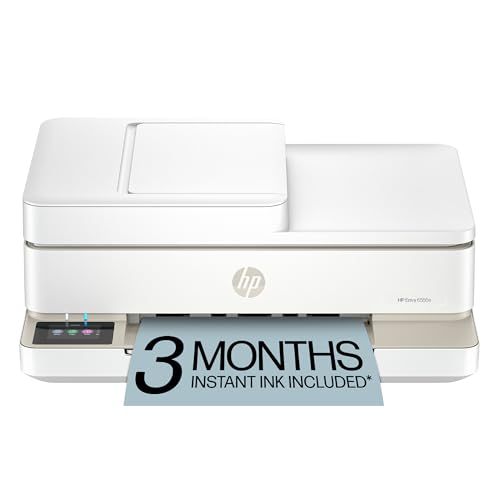 HP ENVY 6555e | Check price on Amazon | |
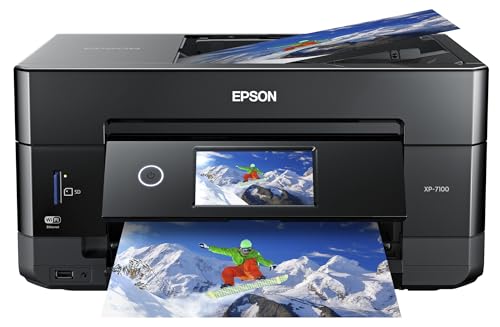 Epson Expression Premium XP-7100 | Check price on Amazon |
Key takeaways
- Five printers for greeting cards checked on the specs that decide card work: maker cardstock weight limits, rear feed paths, custom card sizes and envelopes.
As an Amazon Associate, we earn from qualifying purchases made through links on this page.
A greeting card is a harder printing job than it looks. The sheet is thick, often textured, and much smaller than office paper. It has to fold cleanly, carry artwork right up to the trimmed edge, and come back through the printer a second time if the inside carries a message. A printer that breezes through documents can still refuse a heavy card blank, skew it sideways, or leave a white frame around artwork meant to run edge to edge.
That is why this roundup is built on paper handling rather than headline print speeds. Every model below was checked against its maker’s own documentation for three things: the maximum paper weight or thickness the maker states, the feed path that heavy stock travels, and the supported sizes, including custom sizes that match common card blanks and their envelopes. Two of the five carry greeting card media in the maker’s own compatibility list by name; the others state card or specialty media limits that cover card work directly.
The five picks split into clear roles. The Canon PIXMA TS8820 is the balanced home all-in-one. The Canon PIXMA PRO-200S is the heavy-stock specialist for large cards and art-led designs. The Epson Expression Photo XP-970 adds wide output and a card-building app. The HP ENVY 6555e is the household machine with a stated card capacity. The Epson Expression Premium XP-7100 pairs a specialty rear feed with a document feeder.
What to look for in a printer for greeting cards
The maker’s stated weight or thickness ceiling. Card blanks are far heavier than plain paper. Common folded-card stock sits roughly between 216 and 300 grams per square metre, and textured papers can be thicker than their weight suggests. Each maker publishes a ceiling: Canon states grams per square metre for its trays, Epson states a maximum thickness in mil for its rear feeds, and HP states a card weight in pounds and grams. Match your heaviest blank against that published ceiling before anything else; a blank above it is outside the maker’s support.
The feed path. Heavy stock dislikes tight bends. A rear tray or manual feed slot gives a stiff sheet a flatter route through the machine, reducing skew and feed failures. A front cassette forces the sheet around a turn, which is why several makers route specialty media through a rear slot one sheet at a time. For card work, a rear feed is close to a requirement once blanks get thick; for lighter stock, a front tray with a stated card capacity can still do the job.
Card sizes and custom sizes. Greeting cards use their own formats: A2 cards fold from a 5.5 by 8.5 inch blank, A7 cards from a 5 by 7 inch blank, and square cards are common too. Few printers list these by name, so the figure that matters is the custom size range. A printer whose custom range covers 5 by 7 and 5.5 by 8.5 inches can print the blanks card makers actually buy. Envelopes matter as well: the common No. 10 size should appear in the maker’s supported list if you plan to print addresses on them.
Borderless output at card sizes. A card design often runs color to the edge. Borderless printing is size-dependent, though: a machine may print edge to edge at 4 by 6 inches yet leave margins at larger sizes. Confirm the borderless sizes in the maker’s specification include the card sizes you use.
Printing the inside. A folded card usually needs a second pass for the inside message. Automatic two-sided printing figures from makers apply to plain paper; for cardstock, plan on printing one side, letting the sheet dry, and feeding it again by hand. Epson states this plainly for its specialty feeds, where two-sided work is manual only.
Ink setup. Full-coverage card fronts use a lot of color. Individual ink tanks let you replace one color at a time; a combined tri-color cartridge is replaced as a unit when any single color runs out. Pigment black gives crisper text for inside messages, while dye colors are the usual choice for photos and illustration work.
Canon PIXMA TS8820
The TS8820 is the most direct fit for home card making in this group, because Canon’s own media compatibility list for the machine names both Cardstock and Greeting Card among the papers it accepts. That is not marketing language from a retailer; it is the maker’s published paper list for this exact model.
The paper path backs that up. The rear tray holds up to 100 sheets and accepts Canon paper up to approximately 265 grams per square metre, covering most folded card blanks sold for home printing. The front cassette is for plain paper weights, so card stock belongs in the rear tray, where it travels a flatter path. A single-sheet multipurpose tray adds a manual bypass for one-off heavy pieces. Supported sizes include 4 by 6, 5 by 7, 7 by 10 and 8 by 10 inches, square formats, and custom sizes beginning at 2.17 by 3.5 inches, so A7 and A2 blanks both fit. Borderless printing runs up to letter size, and U.S. No. 10 envelopes are supported.
Around the paper handling sits a full all-in-one: print, scan and copy, a six-ink system with a pigment black for text and a gray dye ink that helps monochrome artwork, 4800 by 1200 dpi maximum resolution, automatic two-sided printing for plain paper, Wi-Fi and a 4.3-inch touchscreen.
Who it fits: home card makers who print A2 and A7 cards in small batches and want one machine that also handles household scanning and documents.
Limits to know: the 265 grams per square metre figure is Canon’s ceiling for its own genuine paper in the rear tray; third-party stock heavier than that sits outside the stated support. The cassette will not take card weights, so every card job runs through the rear tray, and long runs of full-coverage card fronts cycle through the cartridges quickly.
Canon PIXMA PRO-200S
Canon PIXMA PRO-200S on Amazon
The PRO-200S is the heavyweight option, built for makers whose cards lean toward art prints. It is a print-only machine with an eight-color dye ink system, output up to 13 by 19 inches, and borderless printing at sizes up to A3+. Canon’s media list for the PRO-200 series includes Inkjet Greeting Card and Cardstock, and the paper handling is the strongest here: the top tray accepts Canon genuine paper up to approximately 380 grams per square metre, and a rear manual feed tray takes a single sheet from 0.1 to 0.6 millimetres thick at the same approximate weight ceiling.
That manual feed is the reason to buy this printer for card work. Thick matte cover stock, fine art papers and textured blanks travel one sheet at a time along a straight path. Custom sizes run up to 13 by 39 inches from the top tray, covering oversized cards and folded pieces printed flat. Envelopes in DL and Com-10 sizes are supported from the top tray. A 3-inch color screen, Wi-Fi and Ethernet round out a machine aimed at a desk or studio.
Who it fits: artists and small sellers printing large-format cards, heavyweight matte stock and fine art blanks, where the card itself is the product.
Limits to know: the manual feed tray has a minimum sheet width of 8 inches, so small blanks such as 5 by 7 go through the top tray instead of the straight path. Canon recommends wide margins of 25 millimetres when the fine art paper media setting is used, which constrains edge-to-edge designs on those papers. There is no scanner or copier, and the manual feed takes one sheet at a time, so a long run of heavy cards is slow, deliberate work.
Epson Expression Photo XP-970
Epson Expression Photo XP-970 on Amazon
The XP-970 is a six-color photo all-in-one that prints borderless up to 11 by 17 inches, and its card credentials come from the rear paper feed. Epson specifies that feed for specialty paper up to 23 mil in thickness, loaded one sheet at a time; the user guide adds that the slot accepts thick paper up to 0.6 millimetres that cannot go in the cassettes. For card makers, that is the path for stiff blanks, while two front cassettes hold plain and photo paper for everyday jobs.
Sizes run from 3.5 by 5 inches up to 11 by 17, with 4 by 6, 5 by 7 and 8 by 10 photo sizes covered, and envelopes in No. 10, DL and C6 sizes are supported, covering most card envelope formats. Epson’s Creative Print app is a genuine card-specific extra: Epson documents it as a way to build custom cards and stationery from phone photos. The six-color Claria Photo HD ink set adds light cyan and light magenta for smooth photo gradations on card fronts. Print, scan and copy, a 4.3-inch touchscreen and Wi-Fi are all present.
Who it fits: photo-led card makers who print family photos on cards, want larger card formats up to 11 by 17 inches, and like designing from a phone app.
Limits to know: Epson’s tested paper list for this machine tops out at its own Ultra Premium Presentation Paper Matte at 10.3 mil thick; heavier third-party cover stock beyond that is outside Epson’s tested range, even though the feed itself is specified to 23 mil. The rear feed loads a single sheet, and two-sided printing on specialty media is manual only, so inside messages mean a second hand-fed pass.
HP ENVY 6555e
The ENVY 6555e takes a different route to card work: no rear feed, but a maker-stated card capacity in a mainstream household all-in-one. HP’s datasheet lists supported media weight for HP cards at up to 53 pounds, also stated as up to 200 grams per square metre, and the input tray holds up to 40 cards. Custom sizes run from 3 by 5 inches to 8.5 by 12 inches, covering A2 and A7 blanks, and borderless printing reaches 8.5 by 12 inches. The tray takes up to 10 No. 10 envelopes.
HP leans into card use in its own materials for this model, describing two-sided photo printing for personalized cards, and the automatic two-sided function helps with lighter stocks used for simple folded pieces. The machine prints, scans and copies, includes a 35-sheet automatic document feeder, and uses two cartridges: a pigment-based black for text and a tri-color dye cartridge. Print speeds reach 10 pages per minute in black and 7 in color by ISO measurement, and the HP app plus AirPrint cover phone printing.
Who it fits: households that print modest batches of cards on light to mid-weight stock, alongside school and home office work, and want the fewest possible loading steps.
Limits to know: the 200 grams per square metre card ceiling is the lowest in this group, so heavy cover blanks are out. There is no rear or manual feed, which means every sheet of card stock bends through the front tray path; stiff blanks are the weak point of this design. When one color in the tri-color cartridge runs out, the cartridge is replaced as a single unit.
Epson Expression Premium XP-7100
Epson Expression Premium XP-7100 on Amazon
The XP-7100 is the compact all-rounder of the group. Like its larger sibling above, it routes specialty paper through a rear feed that Epson specifies at up to 23 mil in thickness, one sheet at a time, with manual two-sided printing on that path. That gives it a genuine thick-stock route in a small body that also carries a 30-page automatic document feeder, automatic two-sided printing for plain paper, and print, scan and copy functions.
The ink set is a five-color Claria Premium system with a dedicated photo black alongside the pigment black for documents, suiting cards that mix a photo front with a text inside. Borderless printing runs up to 8 by 10 inches, covering A7 cards and the common photo sizes, and supported sizes include 4 by 6, 5 by 7 and 8 by 10 inches plus letter, with envelopes supported as well. A front photo tray holds smaller media, a 4.3-inch touchscreen handles standalone work from memory cards, and the machine can also print on inkjet-compatible discs.
Who it fits: card makers with limited desk space who want a rear feed for card blanks plus office features such as the document feeder for everyday paperwork.
Limits to know: output stops at letter size, so oversized cards are out, and borderless printing stops at 8 by 10 inches. Specialty media through the rear feed is one sheet at a time with manual two-sided handling. This is an older model line, so check the exact listing contents and condition before ordering.
Comparison table
| Printer | Maker-stated card limit | Feed path for card stock | Largest output | Borderless up to | Ink system |
|---|---|---|---|---|---|
| Canon PIXMA TS8820 | Rear tray: Canon paper to approx. 265 g/m²; Cardstock and Greeting Card named in Canon’s media list | Rear tray plus single-sheet multipurpose tray | Letter / legal | Letter | 6 individual inks |
| Canon PIXMA PRO-200S | Top tray and manual feed: Canon paper to approx. 380 g/m², 0.1–0.6 mm via manual feed | Top tray plus rear manual feed, one sheet | 13 x 19 in | 13 x 19 in | 8 individual dye inks |
| Epson Expression Photo XP-970 | Rear feed: specialty paper to 23 mil thick | Rear feed, one sheet, plus two cassettes | 11 x 17 in | 11 x 17 in | 6 individual inks |
| HP ENVY 6555e | HP cards to 53 lb / 200 g/m²; up to 40 cards in tray | Front tray only | Letter (borderless 8.5 x 12 in) | 8.5 x 12 in | 2 cartridges |
| Epson Expression Premium XP-7100 | Rear feed: specialty paper to 23 mil thick | Rear feed, one sheet, plus front trays | Letter | 8 x 10 in | 5 individual inks |
Frequently asked questions
What weight of cardstock should I buy for greeting cards?
Most folded card blanks for home printing sit between roughly 216 and 300 grams per square metre. Match the blank to the printer’s published ceiling: the TS8820 states approximately 265 grams per square metre for Canon paper in its rear tray, the PRO-200S states approximately 380, the two Epson models state a 23 mil thickness limit for the rear feed, and the ENVY 6555e states 200 grams per square metre for cards. Buying blanks above your printer’s stated ceiling invites feed problems.
Why does a rear feed matter for cards?
A rear tray or manual feed slot gives a stiff sheet a flatter path with less bending, reducing skew and feed failures on thick stock. That is why Canon and Epson route their heaviest supported media through rear paths, usually one sheet at a time. Front cassettes force the sheet around a tighter turn.
Can these printers print the envelopes for my cards?
Yes, within each maker’s stated sizes. The TS8820 supports U.S. No. 10 envelopes, the XP-970 supports No. 10, DL and C6, the PRO-200S supports DL and Com-10 from its top tray, and the ENVY 6555e takes up to 10 No. 10 envelopes in its tray. Check your card envelope size against the maker’s list before buying envelopes in quantity.
Can I print the inside of the card as well?
Yes, but plan the second pass by hand for cardstock. Automatic two-sided printing is specified for plain paper on these machines, and Epson states manual two-sided handling for specialty media through the rear feed. Print the front, let it dry fully, then feed the sheet again for the inside, keeping the same edge leading so the fold lands where you expect.
Which of these is the pick for selling cards?
For volume on mid-weight blanks, the TS8820 pairs a named greeting card media listing with a 100-sheet rear tray. For heavyweight or large cards where the stock itself is the selling point, the PRO-200S and its manual feed handle the thickest material here, at the cost of one-sheet-at-a-time feeding. The XP-970 suits photo-led cards in larger sizes.
Conclusion
Greeting card printing is decided by paper handling, and the makers publish the numbers that settle it: a weight or thickness ceiling, a feed path that suits stiff sheets, and size support that covers real card blanks. The Canon PIXMA TS8820 is the default pick for home card makers, with greeting card media named in Canon’s own list and a rear tray rated to approximately 265 grams per square metre. Step up to the Canon PIXMA PRO-200S for the thickest stock and largest formats. The Epson Expression Photo XP-970 covers photo cards up to 11 by 17 inches with a card-building app, the HP ENVY 6555e keeps things simple for lighter card stock, and the Epson Expression Premium XP-7100 fits a specialty rear feed into the smallest footprint here. Choose by the heaviest blank you honestly plan to print.
More from Amazon
Programs that pair well with the guide above. Offers and eligibility are set by Amazon and may change.
Free shipping on eligible items, Prime Video and more. Eligible new members can start with a free trial.
Start a Prime free trialAd-free music streaming. Eligible new subscribers can start with a free trial.
Try Music Unlimited freeA Prime membership for ages 18-24 with a trial period. Eligibility is set by Amazon.
See Prime for Young AdultsAudiobooks and podcasts to listen to on the go. Eligible new members can start with a free trial.
Try Audible freeAs an Amazon Associate we earn from qualifying purchases.
Write Your Review
No reviews yet. Be the first to share your experience!