
Our Short List of 3

- Best for: Students and home users who need a dependable full-size laptop for documents, browsing, and video calls.
- 15.6-inch Full HD display, 1920 x 1080 resolution
- Intel Celeron N4500 processor, up to 2.8 GHz
- 8GB DDR4 RAM
- 128GB PCIe NVMe SSD plus 128GB eMMC storage

- Best for: Multitaskers who juggle many browser tabs and office apps and want generous memory in a low-cost machine.
- 15.6-inch HD display, 1366 x 768 resolution
- Intel N200 processor, 4 cores, up to 3.7 GHz
- 16GB DDR4 RAM
- 128GB UFS SSD storage

- Best for: Commuters and students who want a slim, portable laptop with a good screen and a privacy shutter for video calls.
- 15.6-inch Full HD display, 1920 x 1080 resolution
- AMD Ryzen 3 7320U quad-core processor
- 8GB LPDDR5 RAM
- 256GB SSD storage
All 4 Picks at a Glance
| Product | Specs | Action |
|---|---|---|
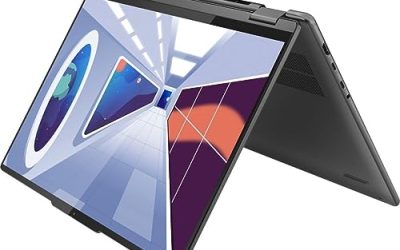
| Lenovo IdeaPad 1 15IJL7 |
| Check price on Amazon |
| HP 15 Laptop N200 |
| Check price on Amazon |
| ASUS Vivobook Go 15 E1504FA-AB34 |
| Check price on Amazon |
 HP 15-fc0499nr |
| Check price on Amazon |
Key takeaways
- Find the best cheapest laptops for study, office work and everyday browsing. Compare five affordable Windows laptops with screens, memory and storage.
Buying the lowest-cost laptop is a decision about trade-offs, not about chasing the biggest specification sheet. A machine that stutters through video calls, runs out of room after one semester of files, or strains your eyes on a dim panel will frustrate you every day, no matter how little it cost. The real question is which corners you can live with and which ones will slow down the work you actually do.
This guide suits students, home-office workers, and families who need a dependable machine for classes, documents, browsing, and light entertainment. Every laptop below was picked from its Amazon listing, looking at the processor, memory, storage, screen, and ports rather than the marketing headline, so you can match a machine to the way you will use it.
Quick Picks
As an Amazon Associate we earn from qualifying purchases
| Product | Best for | Key spec from title |
|---|---|---|
| Lenovo IdeaPad 1 15IJL7 | Everyday study and documents | 15.6-inch FHD display, 8GB RAM |
| HP 15 Laptop N200 | Heavy multitasking on a tight budget | 16GB RAM, Intel N200 processor |
| Acer Aspire 3 A315-24PT | Touchscreen use and large files | Ryzen 5 7520U, 512GB NVMe SSD |
| ASUS Vivobook Go 15 E1504FA | Portable work and video calls | Ryzen 3 7320U, 8GB LPDDR5 RAM |
| HP 15-fc0499nr | Touchscreen and generous storage | Ryzen 5 7520U, 512GB SSD |
How to Choose
Start With the Processor and Memory
The processor and memory decide whether a low-cost laptop feels smooth or sluggish in daily use. Eight gigabytes of memory is the realistic floor for Windows 11, because a browser with a dozen tabs, a word processor, and a video call running together will use most of it. A Celeron or Pentium chip handles documents and streaming fine, while a Ryzen 3 or Ryzen 5 gives you more headroom when you switch between apps often. Check the memory type as well: DDR4 and LPDDR5 both work, but soldered memory cannot be upgraded later, so buy the amount you will need for the next few years.
Check the Storage Type and Size
Storage decides how fast the laptop powers on, how quickly apps open, and how many files you can keep before it fills up. A solid-state drive is far quicker than the older eMMC storage found in the very lowest-cost machines, so prefer a laptop with a real SSD when you can. One hundred twenty-eight gigabytes sounds workable, yet Windows, updates, and a handful of apps can swallow half of it, leaving little room for photos and coursework. Two hundred fifty-six gigabytes is a comfortable minimum for most people, while five hundred twelve gigabytes suits anyone who stores videos, games, or large project folders locally.
Look Closely at the Screen
The screen is the part you look at for hours, so a weak panel ruins an otherwise decent laptop. Full HD resolution, at 1920 by 1080 pixels, keeps text sharp and spreadsheets readable, while a lower HD panel can look soft and make small fonts tiring to read. An IPS panel holds its colours and contrast when you view it from an angle, which matters when you share the screen during a study session or a meeting. Touchscreens add convenience for scrolling and tapping, though they can add glare and weight, so weigh that against the crisper image of a standard anti-glare display.
Weigh the Keyboard, Ports, and Battery
Everyday comfort comes from the keyboard, the ports, and how long the battery lasts away from a socket. A full-size keyboard with a numeric keypad speeds up data entry and coursework, while a backlit keyboard helps when you work late in a dim room. Look for at least one USB-C port, a full-size USB-A port, and an HDMI output, because those three cover chargers, external drives, and a second monitor without extra adapters. Battery life matters most for students and commuters, so favour machines rated for a full working day, and remember that a lighter chassis is easier to carry between classes.
The 5 Best Options
Lenovo IdeaPad 1 15IJL7
- Best for: Students and home users who need a dependable full-size laptop for documents, browsing, and video calls.
- 15.6-inch Full HD display, 1920 x 1080 resolution
- Intel Celeron N4500 processor, up to 2.8 GHz
- 8GB DDR4 RAM
- 128GB PCIe NVMe SSD plus 128GB eMMC storage
Students and home users who need a dependable full-size laptop for documents, browsing, and video calls.
The Celeron processor slows down with many heavy browser tabs open at once, and part of the storage is slower eMMC rather than a full SSD.
The IdeaPad 1 is the straightforward pick for anyone who wants a full-size laptop for classes and documents without paying for power they will never use. Its Celeron processor and eight gigabytes of memory handle web browsing, word processing, spreadsheets, and video calls without drama, while the Full HD screen keeps text crisp during long reading sessions. The combination of a solid-state drive and extra eMMC storage gives you room for coursework and media, and Wi-Fi 6 keeps wireless connections stable in crowded dorms and libraries.
Watch out for: The Celeron processor slows down with many heavy browser tabs open at once, and part of the storage is slower eMMC rather than a full SSD.
HP 15 Laptop N200
- Best for: Multitaskers who juggle many browser tabs and office apps and want generous memory in a low-cost machine.
- 15.6-inch HD display, 1366 x 768 resolution
- Intel N200 processor, 4 cores, up to 3.7 GHz
- 16GB DDR4 RAM
- 128GB UFS SSD storage
Multitaskers who juggle many browser tabs and office apps and want generous memory in a low-cost machine.
The HD screen is less sharp than a Full HD panel, and the 128GB of storage fills up quickly, so plan on external or cloud storage for large files.
This HP 15 stands out because it pairs sixteen gigabytes of memory with an efficient quad-core processor, a combination that keeps everyday multitasking smooth. You can keep a browser full of tabs, a spreadsheet, and a messaging app open together without the machine grinding to a halt, which is exactly where many low-cost laptops fall apart. The large memory also gives Windows 11 room to breathe, so the laptop stays responsive after months of updates and installed apps. Its numeric keypad and full-size layout make it a practical desk machine for coursework and home office work.
Watch out for: The HD screen is less sharp than a Full HD panel, and the 128GB of storage fills up quickly, so plan on external or cloud storage for large files.
Acer Aspire 3 A315-24PT-R0UX
The Aspire 3 is the strongest all-rounder in this lineup, combining a Ryzen 5 processor with sixteen gigabytes of fast memory and a roomy half-terabyte solid-state drive. That pairing handles demanding everyday work, from large spreadsheets to photo editing and dozens of browser tabs, without the hesitation you feel on weaker machines. The Full HD IPS touchscreen is bright and responsive, and the long battery life means you can work through classes or a full afternoon away from a socket. It is the laptop to pick when you want one machine to cover study, office work, and entertainment.
Specs
- 15.6-inch Full HD IPS touchscreen, 1920 x 1080 resolution
- AMD Ryzen 5 7520U quad-core processor
- 16GB LPDDR5 RAM
- 512GB NVMe SSD storage
- Wi-Fi 6 and Bluetooth
- Windows 11 Home
- Battery life up to 13 hours
Best for: Students and professionals who want a touchscreen, fast storage, and enough memory for demanding everyday workloads.
Watch out for: The memory is soldered, so the 16GB cannot be upgraded later, and the touchscreen adds a little weight and glare compared with a standard display.
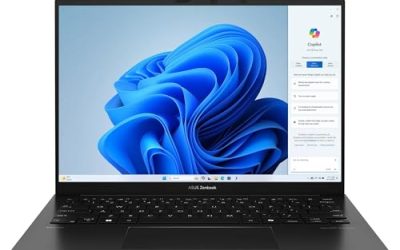
ASUS Vivobook Go 15 E1504FA-AB34
- Best for: Commuters and students who want a slim, portable laptop with a good screen and a privacy shutter for video calls.
- 15.6-inch Full HD display, 1920 x 1080 resolution
- AMD Ryzen 3 7320U quad-core processor
- 8GB LPDDR5 RAM
- 256GB SSD storage
Commuters and students who want a slim, portable laptop with a good screen and a privacy shutter for video calls.
The 8GB of memory is soldered and cannot be upgraded, so heavy multitaskers should consider one of the 16GB options in this guide instead.
The Vivobook Go 15 is built for people who carry their laptop everywhere and need it to survive the trip. Its slim chassis and lay-flat hinge make it easy to slip into a bag and share the screen during group work, while the webcam privacy shutter adds a small but welcome layer of security for video calls. Inside, the Ryzen 3 processor and eight gigabytes of fast LPDDR5 memory keep documents, browsing, and streaming running smoothly, and the Full HD display stays readable in bright rooms. It is a practical companion for lectures, libraries, and coffee-shop work sessions.
Watch out for: The 8GB of memory is soldered and cannot be upgraded, so heavy multitaskers should consider one of the 16GB options in this guide instead.
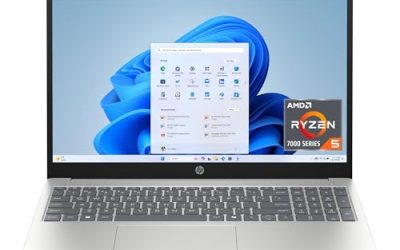
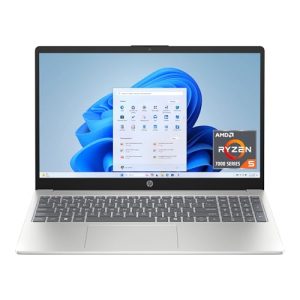
HP 15-fc0499nr
- Best for: Families and home users who want a touchscreen laptop with plenty of built-in storage for photos, videos, and documents.
- 15.6-inch HD touchscreen display
- AMD Ryzen 5 7520U processor, up to 4.3 GHz
- 8GB RAM
- 512GB SSD storage
Families and home users who want a touchscreen laptop with plenty of built-in storage for photos, videos, and documents.
The screen is HD rather than Full HD, so text looks softer than on the Full HD models in this guide, and the machine is a full-size 15.6-inch laptop rather than an ultraportable.
The HP 15-fc0499nr rounds out the list with a touchscreen and a generous half-terabyte of storage, a pairing that suits anyone who keeps a lot of files on the machine itself. Its Ryzen 5 processor and eight gigabytes of memory handle office apps, research with many tabs open, and streaming without fuss, while the touchscreen makes scrolling through documents and web pages feel natural. The large SSD leaves plenty of room for photos, videos, and coursework, so you will not be deleting files to make space after a few months. It is a comfortable, capable choice for a shared family laptop.
Watch out for: The screen is HD rather than Full HD, so text looks softer than on the Full HD models in this guide, and the machine is a full-size 15.6-inch laptop rather than an ultraportable.
Which One Fits Your Situation
You Need the Lowest-Cost Machine for Classes
Pick the Lenovo IdeaPad 1 15IJL7. Its Full HD screen keeps reading comfortable, the Celeron processor covers documents and video calls, and the combined SSD and eMMC storage holds a semester of coursework. It is the simplest way to get a full-size laptop for study without paying for performance you will not use.
You Juggle Many Tabs and Apps at Once
Pick the HP 15 Laptop N200. Sixteen gigabytes of memory is its defining strength, keeping a crowded browser, spreadsheets, and messaging apps responsive together, and the numeric keypad speeds up coursework and data entry. The trade-off is a softer HD screen and modest storage, so pair it with cloud storage if you keep large files.
You Want One Laptop to Do Everything
Pick the Acer Aspire 3 A315-24PT-R0UX. The Ryzen 5 processor, 16GB of memory, and 512GB SSD cover demanding everyday work, while the Full HD touchscreen and long battery life make it pleasant to use anywhere. It also has the largest combination of memory and storage in this guide, so it stays useful as your workload grows. It is the most complete machine in this guide.
You Carry Your Laptop Everywhere
Pick the ASUS Vivobook Go 15 E1504FA-AB34. Its slim build, lay-flat hinge, and webcam shutter suit lectures, libraries, and shared workspaces, while the Ryzen 3 chip and Full HD screen handle daily tasks well, and the webcam shutter keeps video calls private. If you also need lots of local storage, step up to the HP 15-fc0499nr instead.
Common Mistakes
- Buying a laptop with only 4GB of memory, which leaves Windows 11 with almost no room once a browser and a few apps are open.
- Choosing eMMC storage as the only drive, because it is noticeably slower than a solid-state drive when opening apps and large files.
- Ignoring the screen resolution and ending up with a dim HD panel that strains your eyes during long reading sessions.
- Forgetting to check the ports, then discovering the laptop has no HDMI output or USB-C port for a second monitor or modern accessories.
- Picking a machine with soldered memory and too little RAM, leaving no way to upgrade when your workload grows.
Frequently Asked Questions
How much memory does a low-cost laptop need?
Eight gigabytes is the practical minimum for Windows 11, because a browser, office apps, and a video call together use most of it. Sixteen gigabytes is worth choosing when you keep many tabs open or run demanding apps side by side, since soldered memory cannot be upgraded later.
Is a touchscreen worth it on a low-cost laptop?
A touchscreen is worth it when you scroll through long documents, read ebooks, or share the screen with someone sitting beside you. Skip it when you mostly type and want the sharpest image for your money, since a standard Full HD panel often looks crisper than a touchscreen at the same tier.
Should I choose an SSD or eMMC storage?
Choose a solid-state drive whenever possible, because it opens apps faster, boots quicker, and handles large files more smoothly than eMMC storage. A laptop that pairs a small SSD with extra eMMC storage works, yet one with a full SSD and at least 256GB is the safer long-term choice.
Can a low-cost laptop handle video calls and online classes?
Yes, every laptop in this guide handles video calls and online classes well, since all of them include a webcam, Wi-Fi, and enough memory for conferencing apps. For the smoothest experience, favour a model with 8GB of memory or more and a Full HD screen, which keeps faces and shared slides clear.
More from Amazon
Programs that pair well with the guide above. Offers and eligibility are set by Amazon and may change.
Free shipping on eligible items, Prime Video and more. Eligible new members can start with a free trial.
Start a Prime free trialAd-free music streaming. Eligible new subscribers can start with a free trial.
Try Music Unlimited freeA Prime membership for ages 18-24 with a trial period. Eligibility is set by Amazon.
See Prime for Young AdultsAudiobooks and podcasts to listen to on the go. Eligible new members can start with a free trial.
Try Audible freeAs an Amazon Associate we earn from qualifying purchases.
Write Your Review
No reviews yet. Be the first to share your experience!