
Our Short List of 3


All 5 Picks at a Glance
| Product | Specs | Action |
|---|---|---|
| 1. BenQ SW272U — Best for Print Photography and Hardware Calibration | Check price on Amazon | |
| 2. ASUS ProArt Display PA279CRV — Best Balanced Professional Monitor | Check price on Amazon | |
 3. Dell UltraSharp U2723QE — Best Professional Hub Monitor | Check price on Amazon | |
 4. BenQ PD2706UA — Best for Designers Who Want Ergonomics and Control | Check price on Amazon | |
 5. LG UltraFine 27UP850N-W — Best Simpler Wide-Gamut Option | Check price on Amazon |
Key takeaways
- The best professional monitors compared on color gamut, Delta E accuracy, factory and hardware calibration, 4K IPS panels and USB-C, from ProArt, BenQ, Dell and LG listings.
As an Amazon Associate we earn from qualifying purchases.
A professional monitor is not defined by size or by a sharp picture alone. It is defined by whether you can trust the color on screen when a client, a printer, or a streaming platform will judge the finished work. The best professional monitors in this guide are color-critical displays for photo editing, video grading, design, and prepress: wide-gamut IPS panels at 4K resolution, published coverage of DCI-P3 and, where the work demands it, Adobe RGB, low Delta E figures from factory calibration, and in the most serious case, true hardware calibration that stores corrections inside the monitor itself.
That focus separates this shortlist from two neighboring categories. Gaming monitors chase high refresh rates and fast response, often sacrificing gamut accuracy. Office monitors chase comfort and docking, and can be excellent for documents while covering only sRGB. A professional monitor starts where those stop: it publishes gamut coverage, ships with a calibration report or verified accuracy claim from the product listing, and gives you controls to keep that accuracy over time.
All five picks are 27-inch 4K IPS monitors, the sweet spot for color work: enough pixel density for fine retouching, stable color at wide viewing angles, and USB-C docking strong enough for a laptop workstation. Specifications are taken from the product listing for each model, and each pick carries its Amazon ASIN so you can check the exact listing.
Affiliate disclosure: This article contains affiliate links. If you buy through a link on this page, the site may earn a commission at no extra cost to you. Product selections are based on published specifications and listing information, not on commissions.
Quick Comparison
| Monitor | Best for | Panel and resolution | Gamut from the listing | Calibration | USB-C power |
|---|---|---|---|---|---|
| BenQ SW272U | Print photography and hardware calibration | 27-inch IPS, 3840 x 2160 | 99% Adobe RGB, 99% DCI-P3 | 16-bit 3D LUT hardware calibration, Delta E 1.5 class | 90W |
| ASUS ProArt PA279CRV | Balanced photo and video work | 27-inch IPS, 3840 x 2160 | 99% DCI-P3, 99% Adobe RGB | Factory calibrated, Delta E under 2, Calman Verified | 96W |
| Dell UltraSharp U2723QE | Hub desk and mixed photo-video work | 27-inch IPS Black, 3840 x 2160 | 98% DCI-P3, 100% sRGB, 100% Rec.709 | Factory calibrated, Delta E under 2 | 90W |
| BenQ PD2706UA | Designers who want an ergo arm and KVM | 27-inch IPS, 3840 x 2160 | 95% DCI-P3, 100% sRGB, 99% Rec.709 | Factory calibrated, Delta E 3 or lower, Pantone and Calman validated | 90W |
| LG UltraFine 27UP850N-W | A simpler wide-gamut 4K desk | 27-inch IPS, 3840 x 2160 | 95% DCI-P3 | Factory color support via LG software, DisplayHDR 400 | USB-C with power delivery |
What Makes a Monitor Professional
Color gamut: sRGB is the floor, not the ceiling
Every monitor here covers sRGB, the space for web work. Professional work goes further. Video editors work in DCI-P3, so coverage in the mid to high nineties matters. Photographers who print also need Adobe RGB, which reaches further into cyan and green tones a P3-only panel cannot show. If files leave the screen for print, prioritize high Adobe RGB coverage. If work lives on screens and in video timelines, high DCI-P3 with accurate Rec.709 handling is the more relevant target.
Delta E and factory calibration
Delta E describes how far a displayed color sits from its intended value. Lower is better, and figures under 2 are generally treated as visually indistinguishable for most viewers in normal conditions. Four of the five picks publish a Delta E claim in the listing, and most ship with an individual factory calibration report in the box. That report matters because it tells you the panel was measured, not merely designed to a target. It does not remove the need for periodic recalibration with a colorimeter as the backlight ages, but it means the monitor starts from a documented, accurate baseline instead of an unknown one.
Hardware calibration versus software calibration
Most monitors are calibrated through software that adjusts the graphics card output. Hardware calibration writes the correction into an internal look-up table inside the monitor, so accuracy survives a change of computer. Here only the BenQ SW272U offers a 16-bit 3D LUT with hardware calibration, the main reason it sits at the top for print-critical work. The others rely on factory calibration plus software profiling, workable for video, web, and most photographic workflows, but the distinction is real.
Panel, resolution, and uniformity
IPS technology dominates this class because it holds color and contrast steady across wide viewing angles, which matters when you lean in, share the screen with a client, or run two monitors side by side. The Dell pick uses an IPS Black variant whose listing states a 2000:1 contrast ratio, double the figure of a conventional IPS panel, giving shadow detail more separation. At 27 inches, 3840 x 2160 resolution produces crisp text and fine image detail without aggressive scaling. Uniformity also matters: brightness and color should stay consistent from center to corners, and BenQ’s photographer line explicitly publishes uniformity technology in its listing material.
Connectivity that supports a real workstation
A professional desk usually involves a laptop, drives, a card reader, and sometimes a second computer. USB-C with 90W or more lets one cable carry video, data, and charging. USB hubs, KVM switches, DisplayPort daisy-chaining, and Ethernet on the Dell all reduce adapter clutter. None improves color directly, but they decide whether an accurate monitor is also a practical center of the desk.
The Picks in Detail
1. BenQ SW272U — Best for Print Photography and Hardware Calibration
The SW272U is the most uncompromising monitor in this group, and it is built for one audience above all: photographers whose work ends in print. From the product listing, it is a 27-inch 4K IPS monitor covering 99% Adobe RGB and 99% DCI-P3 and Display P3, with 1.07 billion colors, a 16-bit 3D LUT, and Delta E of 1.5. Those figures, taken together, describe a display intended to soft-proof prints with confidence rather than simply to look pleasing while editing.
Hardware calibration is the defining feature. Corrections are stored in the monitor through BenQ’s calibration software, so the panel holds its accuracy when you move between a studio desktop and a laptop. The listing also highlights a nano matte, fine-coated panel with anti-reflection certification, designed to mimic the feel of paper and to suppress glare without the grain that older matte coatings could add. A wireless Hotkey Puck makes switching color modes and on-screen controls quick, an SD card reader is built in for direct ingest, and USB-C delivers 90W of power alongside video and data.
This is a 60Hz SDR-class professional tool, not a gaming or casual HDR screen. It rewards a disciplined workflow: regular calibration, controlled lighting, and correct color management. If you print seriously or prepare files for clients who will, it removes the most doubt. If you never print, its Adobe RGB reach and hardware LUT may go unused.
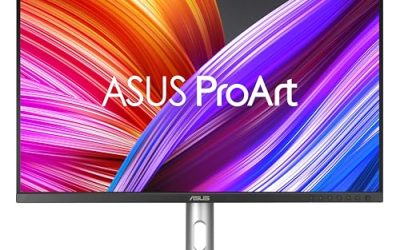
2. ASUS ProArt Display PA279CRV — Best Balanced Professional Monitor
The PA279CRV is the easiest recommendation in this guide for a mixed professional workflow of photo editing, video work, and design. Its listing describes a 27-inch 4K IPS panel with 99% DCI-P3 and 99% Adobe RGB coverage, color accuracy of Delta E under 2, and Calman Verified status. That combination is notable because it gives video editors the P3 coverage they need and gives photographers meaningful Adobe RGB reach in the same display, without stepping up to a dedicated photographer-only model.
Connectivity is a strength. The listing states USB-C with 96W power delivery, DisplayPort with daisy-chain support, HDMI, and a USB hub, on an ergonomic stand. For a laptop creator, 96W gives headroom for larger notebooks over one cable, and daisy-chaining simplifies a dual-ProArt desk. DisplayHDR 400 appears in the listing, but like most IPS monitors here it is best treated as an accurate SDR editing display first.
Choose the PA279CRV if you want one monitor that covers the widest range of professional tasks at 27 inches: retouching in Adobe RGB-aware software, grading and delivering video in P3 and Rec.709, and docking a laptop cleanly. Choose the BenQ SW model instead only when hardware calibration and print proofing are central to your work, and choose the Dell instead when the hub and IPS Black contrast matter more than Adobe RGB coverage.
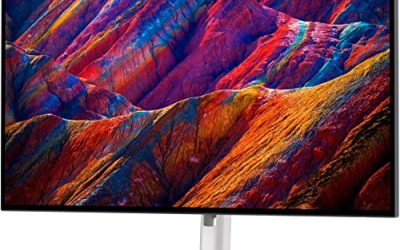
3. Dell UltraSharp U2723QE — Best Professional Hub Monitor
The U2723QE approaches professional work from the workstation side. From the product listing, it is a 27-inch 4K IPS Black monitor with 98% DCI-P3, 100% sRGB, and 100% Rec.709 coverage, factory calibration with Delta E under 2, 400 nits of brightness, DisplayHDR 400, and a 2000:1 contrast ratio. The IPS Black panel is the differentiator: deeper contrast than a standard IPS display helps separate shadow detail in video and in dark photographic work, an area where conventional IPS panels can look comparatively washed out.
Where this Dell pulls ahead is the hub. The listing describes USB-C with 90W power delivery, DisplayPort 1.4 in and out, HDMI, RJ45 Ethernet, multiple USB-A ports, and KVM for controlling two computers with one set of peripherals. That built-in docking removes a separate hub and a tangle of adapters. ComfortView Plus and a fully adjustable stand support long sessions.
Its professional boundary is Adobe RGB: the listing emphasizes P3, sRGB, and Rec.709 rather than wide Adobe RGB coverage, so dedicated print photographers should look to the BenQ SW272U or the ASUS ProArt above. For video editors, designers, producers, and hybrid workers whose deliverables are screen-based, the U2723QE pairs credible, documented color accuracy with the strongest desk infrastructure in this guide.
4. BenQ PD2706UA — Best for Designers Who Want Ergonomics and Control
BenQ’s PD series is the designer sibling of the SW photographer line, and the PD2706UA shows that difference clearly. Its listing describes a 27-inch 4K IPS monitor using AQCOLOR technology with 95% DCI-P3, 100% sRGB and Rec.709 coverage, Delta E of 3 or lower, and Pantone Validated, Pantone SkinTone Validated, and Calman Verified status. That validation set is aimed at brand, product, and interface designers who need colors, including skin tones, to match reference standards across devices.
The hardware around the panel is built for long, adjustable working days. This UA version ships with BenQ’s Ergo Arm rather than a conventional stand, giving wide swivel, tilt, pivot, and height range with cable management inside the arm, which is valuable on shallow desks and in shared studios. USB-C carries 90W of power, a KVM switch is built in, and the included Hotkey Puck G2 gives physical control over modes and inputs. The listing also names DualView, Darkroom, Animation, and CAD/CAM modes, which present two color settings side by side or tune the display for specific design tasks.
Its Delta E figure is looser than the under-2 claims of the ASUS, Dell, and SW picks, and its P3 coverage sits a step below the PA279CRV, so those models are stronger for demanding grading or print work. For graphic, product, web, and app design in Mac-centered studios that value ergonomics and validated color, the PD2706UA is a purpose-built choice.
5. LG UltraFine 27UP850N-W — Best Simpler Wide-Gamut Option
The LG UltraFine entry is the most straightforward monitor in this guide: a 27-inch 4K IPS display with VESA DisplayHDR 400 and USB Type-C, from the product listing, with DCI-P3 coverage of 95% stated for this UltraFine line. It suits professionals and advanced creators whose work is primarily screen-based video, design, and photography in sRGB and P3, and who want a clean, minimal desk without paying for photographer-specific hardware calibration features.
USB-C connectivity with power delivery keeps a laptop setup to one cable for video, data, and charging, and the listing includes DisplayPort, HDMI, and USB ports alongside a height, pivot, and tilt adjustable stand. LG’s color calibration software support helps you profile the display with a compatible colorimeter, and the virtually borderless design makes it a tidy candidate for a matched pair.
Be clear about its place: it does not publish a Delta E under-2 claim like the ASUS and Dell, offers no Adobe RGB story for print, and has no hardware LUT like the SW272U. If income depends on print matching, step up. If you need a dependable wide-gamut 4K panel for video and design and will profile it properly, the UltraFine covers the essentials in a simpler package.
How to Choose Among These Five
Start with your delivery medium, because it decides the gamut you actually need. Print-first photographers should put Adobe RGB coverage and hardware calibration at the top of the list, which points directly to the BenQ SW272U, with the ASUS PA279CRV as the more flexible alternative. Video editors and colorists should prioritize high DCI-P3 coverage, accurate Rec.709 handling, and contrast, which makes the Dell U2723QE and the ASUS PA279CRV the natural pair to compare. Designers working to brand and Pantone references, especially on Mac-based desks, should weigh the BenQ PD2706UA’s validations, ergo arm, and KVM. Buyers who mainly need a wide-gamut 4K canvas for screen delivery can consider the LG UltraFine and spend the difference on a colorimeter, which will improve accuracy on any monitor in this guide.
Next, check your laptop’s charging requirement against the USB-C figures in each listing: 96W on the ASUS, 90W on the BenQ and Dell models. Drives, a card reader, wired networking, and a second computer argue for the Dell’s hub or the BenQ PD’s KVM. A second monitor argues for daisy-chaining, offered on the ASUS and Dell.
Finally, budget for calibration as part of the professional setup, not as an accessory. Even a factory-calibrated panel drifts over time. A colorimeter, a dim and neutral room, and a consistent profiling routine will do more for trustworthy color than any single specification difference between the top four monitors here.
Setting Up Properly
Warm the panel up before profiling it, select the color mode that matches your work rather than a vivid preset, and load the supplied ICC profile. In color-managed software, confirm whether your document is in sRGB, Adobe RGB, P3, or Rec.709, and soft-proof before print or export. Match brightness to your room rather than running at maximum, and recalibrate on a regular schedule.
Frequently Asked Questions
Is a professional monitor worth it over a good office monitor?
For color-dependent work, yes, because the difference is documented accuracy rather than image preference. A professional model publishes wide gamut coverage, a Delta E target, and factory calibration, and the better ones add hardware calibration or third-party validation. An office monitor may look sharp and dock well while covering only sRGB with no accuracy claim, which is fine for documents and risky for client color work.
Do professional monitors work for gaming?
They work, but they are not optimized for it. Every pick here is a 60Hz-class display focused on accuracy, so competitive players will prefer a dedicated high-refresh gaming monitor. For casual play after work these panels are perfectly usable, and their accurate color can look excellent, but refresh rate and response tuning are not why you buy them.
Do I still need a colorimeter if a monitor is factory calibrated?
Yes, for sustained professional work. Factory calibration gives you an accurate, documented starting point, as described in each product listing, but panels drift with age and use. Periodic profiling with a colorimeter keeps the display honest, and it is essential if you run two monitors that must match each other.
Should I choose 27-inch 4K or a larger monitor?
At a normal desk distance, 27-inch 4K gives fine pixel density for retouching and text, and it is the size shared by all five verified picks here. A larger panel gives more canvas for timelines at the same resolution, with slightly lower pixel density. Choose by desk depth and workflow.
Verdict
For most creative professionals, the ASUS ProArt PA279CRV is the balanced starting point: wide coverage of both DCI-P3 and Adobe RGB, Delta E under 2 with Calman verification from the listing, and 96W USB-C with daisy-chaining. Print photographers should step up to the BenQ SW272U for hardware calibration through its 16-bit 3D LUT and full Adobe RGB focus. Desk-centered professionals who live on video calls, shared machines, and wired networks should take the Dell UltraSharp U2723QE for its IPS Black contrast and unmatched hub. Designers who value ergonomics and validated brand color should shortlist the BenQ PD2706UA, and buyers who want wide-gamut 4K essentials in a simpler package can choose the LG UltraFine 27UP850N-W and invest in calibration. Whichever you pick, verify the ASIN and current listing before ordering, because professional lines include closely named variants.
More from Amazon
Programs that pair well with the guide above. Offers and eligibility are set by Amazon and may change.
Free shipping on eligible items, Prime Video and more. Eligible new members can start with a free trial.
Start a Prime free trialAd-free music streaming. Eligible new subscribers can start with a free trial.
Try Music Unlimited freeA Prime membership for ages 18-24 with a trial period. Eligibility is set by Amazon.
See Prime for Young AdultsAudiobooks and podcasts to listen to on the go. Eligible new members can start with a free trial.
Try Audible freeAs an Amazon Associate we earn from qualifying purchases.
Write Your Review
No reviews yet. Be the first to share your experience!