
Our Short List of 3

- Best for: people who want consistent, automatic sleep tracking with zero nightly effort, and anyone curious about snoring.

- Best for: Garmin users who charge their watch overnight, and anyone who wants a full week of sleep data per charge with no membership attached.

- Best for: people who want detailed sleep and recovery trends in the least obtrusive wearable available, and who accept a membership as part of the package.
All 5 Picks at a Glance
| Product | Specs | Action |
|---|---|---|
| Withings Sleep: the under-mattress mat |
| Check price on Amazon |
| Garmin Index Sleep Monitor: the sleep-only arm band |
| Check price on Amazon |
| Oura Ring 4: the ring you forget you are wearing |
| Check price on Amazon |
 Muse S Athena: the EEG headband |
| Check price on Amazon |
 Wellue O2Ring: the overnight oxygen ring |
| Check price on Amazon |
Key takeaways
- Compare the best sleep monitors for home use: an under-mattress mat, a sleep-only arm band, a smart ring, an EEG headband and an overnight oxygen ring.
As an Amazon Associate, we earn from qualifying purchases made through links on this page.
A sleep monitor is a device whose whole job is to record what happens while you sleep at home: how long you slept, how your night split between light, deep and REM sleep, and what your heart, breathing and movement did along the way. This roundup sticks to one clear idea of the category. Every pick below is a dedicated sleep tracker, built first for the night rather than adapted from a daytime gadget. General smartwatches are left out on purpose, because their sleep features are a side function of a device designed for notifications, apps and workouts.
Within that single intent, the five picks use three approaches to the same problem. One slides under your mattress and asks nothing of you. Three are worn in places most people tolerate better than a watch: the upper arm, a finger and the forehead. The last is a ring that ignores sleep stages and instead records blood oxygen and pulse through the night. Which approach suits you depends on what you want to know and what you are willing to wear, so the sections below spell out what each device measures, in the manufacturer’s own terms, and where each falls short.
A necessary note on medical claims
Everything in this roundup is a consumer wellness product, not a medical device. None of these products can diagnose sleep apnea, insomnia or any other condition, and none of them replaces a clinical sleep study. What they produce are estimates, built from movement, heart signals, blood oxygen readings and, in one case, brain activity, and those estimates are best used to spot patterns across weeks rather than to judge a single night.
The manufacturers say this themselves, in their own words. Garmin states plainly that the Index Sleep Monitor is not a medical device and is not intended for diagnosing or monitoring medical conditions, and that its data is meant to be a close estimation of the metrics tracked. Wellue states that the O2Ring is for sports and aviation use and is not intended for medical use. Oura and Muse likewise describe their products as wellness devices. Some of these products record signals, such as breathing disturbances or overnight oxygen dips, that can be a useful prompt to talk to a doctor. Treat them as exactly that: a prompt, not a verdict. If you snore heavily, wake up gasping or feel exhausted despite long nights, a tracker is not the answer; a clinician is.
What to look for in a sleep monitor
Form factor comes first. A tracker you stop wearing after a week records nothing. Under-mattress mats are the zero-effort option but only cover one side of the bed. Rings are the least noticeable wearables, arm bands keep your hands and wrists free, and headbands are the most intrusive option here, traded against the richest signal.
Match the metrics to your question. If you want sleep stages and a morning sleep score, look at the mat, the arm band, the ring or the headband. If your question is specifically about overnight blood oxygen and pulse, the oxygen ring answers it directly and the stage trackers mostly do not. Snore recording is rarer than you would expect; only the under-mattress pick here logs it.
Battery rhythm matters. Devices here range from roughly one night per charge to a week or more. A tracker that needs charging every night will eventually spend a night on the charger instead of on you, and the mat avoids the issue entirely by staying plugged in.
Check the ongoing cost of the app. Two of these five keep their full sleep data behind a membership or premium tier. The hardware is a one-time purchase, but the complete picture may not be, so factor that in before choosing.
Look at data access. Most companion apps show trends well, but if you want to keep or share your records, check whether the app exports reports. One pick below generates shareable PDF and CSV reports as a headline feature; others keep everything inside their own app and health-platform sync.
Withings Sleep: the under-mattress mat
- Best for: people who want consistent, automatic sleep tracking with zero nightly effort, and anyone curious about snoring.
people who want consistent, automatic sleep tracking with zero nightly effort, and anyone curious about snoring.
The Withings Sleep is a thin pneumatic mat, about 25 inches long, that you slide under your mattress once and then forget. Because it never touches you, there is nothing to charge, nothing to wear and nothing to remember at bedtime. It senses the mechanical signals that travel through the mattress and turns them into a nightly report in the Withings app: sleep cycles covering light, deep and REM sleep, total duration and interruptions, heart rate, snore detection and breathing disturbances, rolled into a sleep score. It syncs over Wi-Fi on its own, so the report is waiting in the app when you wake up, and it can feed data into Apple Health and Google health platforms.
Withings lists the mat as compatible with spring, latex, foam and memory foam mattresses between roughly 4 and 18 inches thick, and it runs from a USB power adapter, so it needs an outlet near the bed. It is the only pick here that records snoring, and the only one that keeps working if you would simply refuse to wear anything to bed.
The limitations follow directly from the design. One mat monitors one side of the bed, so two people who both want data need two mats. It is not intended for water mattresses, and because it reads signals through the mattress, placement matters: it has to sit at chest height on your side. It also cannot follow you to a hotel or a partner’s house the way a wearable can.
Garmin Index Sleep Monitor: the sleep-only arm band
- Best for: Garmin users who charge their watch overnight, and anyone who wants a full week of sleep data per charge with no membership attached.
Garmin users who charge their watch overnight, and anyone who wants a full week of sleep data per charge with no membership attached.
Garmin built the Index Sleep Monitor to do one thing: record the night for people who do not want to sleep in a watch. It is a soft, breathable fabric band worn on the upper arm, with a small removable sensor module, sold in two sizes, S-M and L-XL. It has no screen and no buttons to speak of. Across the night it records sleep score and sleep stages, heart rate variability status, breathing variations using its Pulse Ox sensor, and skin temperature, then syncs everything to the Garmin Connect app. For Garmin watch owners, the data merges with daytime data so features such as Body Battery stay continuous even though the watch spent the night on its charger.
Garmin rates the battery at up to seven nights, and the band adds a smart wake alarm that vibrates on your arm during a lighter phase of sleep near your chosen wake time. The fabric band can go in the wash on a gentle cycle once the module is removed. Core sleep metrics in Garmin Connect do not require a subscription, which separates it from the ring and the headband below.
The trade-offs are about scope. This is a night-only device: it does not track your daytime activity, workouts or notifications, so it earns its place only if overnight data is what you are missing. Pulse Ox features are not available in every country, as Garmin notes, and Garmin is explicit that the readings are estimates and the band is not a medical device. If you do not already use Garmin Connect, you are adopting a new app for a single-purpose band.
Oura Ring 4: the ring you forget you are wearing
- Best for: people who want detailed sleep and recovery trends in the least obtrusive wearable available, and who accept a membership as part of the package.
people who want detailed sleep and recovery trends in the least obtrusive wearable available, and who accept a membership as part of the package.
The Oura Ring 4 puts sleep tracking on a finger, in a titanium ring that most people stop noticing within a night or two. Sleep is the centre of what Oura does: the ring records sleep stages, heart rate and heart rate variability, blood oxygen sensing and temperature trends, then presents a sleep score and a readiness score in the Oura app each morning. Oura rates battery life at up to eight days depending on use, and the ring is worn around the clock, so it also captures naps and the daytime context around your nights.
Two practical points decide whether the Oura suits you. The first is sizing. Oura uses its own sizing, and the company insists you size before you buy, using its sizing kit, because a loose ring produces poor data and a tight one is unwearable; the link above is for the silver finish in size 8, and the listing covers the other sizes and finishes. The second is the membership. The ring hardware is one purchase, but full access to Oura’s sleep analysis and scores runs through the Oura Membership, so the real cost of ownership continues after checkout.
The ring format also sets the limits. There is no display and no alarm on the device itself, the inside of the band carries sensor bumps that some people feel more than others, and a ring is easy to leave on a bathroom counter. It also shares the wearable weakness of every optical tracker: stages are inferred from heart and movement signals, not measured from the brain.
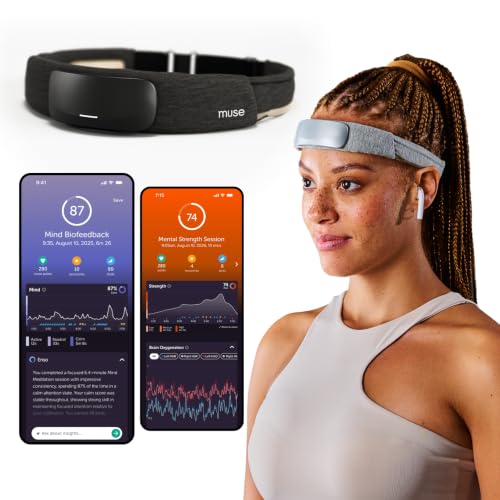
Muse S Athena: the EEG headband
- Best for: data-focused sleepers who want sleep staging based on brain activity rather than heart-rate inference, and meditators who will use the daytime features too.
data-focused sleepers who want sleep staging based on brain activity rather than heart-rate inference, and meditators who will use the daytime features too.
Every other wearable here guesses at sleep stages from your heart and movement. The Muse S Athena measures the signal sleep labs start with: brain activity. It is a soft headband carrying EEG sensors alongside fNIRS sensors that track blood oxygenation in the brain, plus sensors for heart rate, movement and breathing effort. That sensor set feeds EEG-based sleep tracking in the Muse app, so its stage breakdown rests on a more direct measurement than a wrist or finger can match. The headband also works on the front end of the night, with responsive soundscapes Muse calls sleep assists, designed to help you fall asleep and settle back down after waking.
Athena is the current generation of the Muse S line, and it doubles as a meditation and focus headband during the day, with real-time neurofeedback in the same app. Some guided content in the Muse app sits behind the company’s premium subscription, so, as with the Oura, check what is included before assuming the purchase covers everything.
The compromises are real. A headband is the most noticeable thing to sleep in on this list, and the sensors need proper skin contact, which can mean adjusting the fit. Battery life is around ten hours, which is roughly one night, so nightly charging becomes part of the routine and a forgotten charge means a missing night. It is also the most specialised tool here: if you do not care about brain-based staging or neurofeedback, you are paying for capability you will not use.
Wellue O2Ring: the overnight oxygen ring
- Best for: people whose main interest is overnight oxygen and pulse trends, and anyone who wants exportable reports instead of an app-only history.
people whose main interest is overnight oxygen and pulse trends, and anyone who wants exportable reports instead of an app-only history.
The O2Ring answers a narrower question than the other four: what did your blood oxygen and pulse do while you slept? It is a small silicone ring, worn on a finger or thumb, that records blood oxygen saturation and pulse rate continuously through the night rather than in a single spot check. The built-in memory holds up to four ten-hour sessions, and the free ViHealth app and PC software turn the recordings into detailed reports you can export as PDF or CSV files, which makes this the easiest data here to hand to someone else.
A detail many buyers specifically want is the vibration reminder. You set thresholds in the app, and if your oxygen level or pulse crosses them during the night, the ring vibrates on your finger. The battery is rated at up to sixteen hours, comfortably more than one night, and at about half an ounce the ring itself is easy to ignore once it is on.
Be clear about what it is not. The O2Ring does not track sleep stages, sleep scores or snoring; oxygen and pulse are the whole story. And Wellue is unusually direct about the product’s status: its documentation states the ring is for sports and aviation use and is not a medical device. Repeated overnight oxygen dips are information worth raising with a doctor, not a diagnosis you can make from an app chart.
Comparison table
| Product | Form factor | Headline metrics | Battery | App notes |
|---|---|---|---|---|
| Withings Sleep | Under-mattress mat | Sleep stages, heart rate, snoring, breathing disturbances | Mains powered, no battery | Withings app, Wi-Fi sync |
| Garmin Index Sleep Monitor | Upper-arm band | Sleep stages, HRV status, breathing variations, skin temperature | Up to 7 nights | Garmin Connect, no membership needed for core sleep data |
| Oura Ring 4 | Finger ring | Sleep stages, heart rate, HRV, blood oxygen, temperature trends | Up to 8 days | Oura app, full analysis via Oura Membership |
| Muse S Athena | Headband | EEG sleep staging, brain blood oxygenation, heart rate | Around 10 hours | Muse app, some content behind premium tier |
| Wellue O2Ring | Finger ring | Blood oxygen and pulse rate, recorded continuously | Up to 16 hours | ViHealth app and PC reports with PDF and CSV export |
FAQ
Can a sleep monitor diagnose sleep apnea?
No. Every product here is a consumer wellness device. Some record related signals, such as breathing disturbances or overnight oxygen dips, and those records can be a sensible reason to book a medical sleep study. Diagnosis requires clinical testing, and the manufacturers of these products say so themselves.
Which sleep monitor is best if I cannot stand wearing anything to bed?
The Withings Sleep mat. It lives under the mattress, runs from an outlet and needs no charging or wearing at all. Its costs are coverage of only one side of the bed and no portability.
Do any of these need a subscription?
The Garmin band and the Wellue ring do not gate their core sleep data behind one. The Oura Ring 4’s full analysis runs through the Oura Membership, and part of the Muse app’s guided content sits behind a premium tier, so check what each includes before buying.
How accurate are sleep stage readings?
Treat them as estimates. Optical and movement-based trackers infer stages from heart rate, blood oxygen and motion; the EEG headband measures brain activity more directly, but it is still a consumer device, not a sleep lab. Night-to-night trends from the same device are far more trustworthy than any single night’s numbers.
Can one device track two people in the same bed?
Not among these picks. The mat covers one side of the bed, and the wearables each belong to one wearer. Two people who both want data need two devices.
Conclusion
Pick by the question you are actually asking. If you want the night recorded automatically and snoring is part of the picture, the Withings Sleep mat is the effortless default. Garmin’s Index Sleep Monitor is the strongest wearable here for week-long battery life and subscription-free sleep data, especially inside the Garmin ecosystem. The Oura Ring 4 is the one you are least likely to feel, provided the membership fits your budget. Choose the Muse S Athena if brain-based staging is the point, and the Wellue O2Ring if overnight oxygen and pulse, in exportable form, are what you need. Whichever you choose, use it for trends, and take persistent problems to a clinician rather than an app.
More from Amazon
Programs that pair well with the guide above. Offers and eligibility are set by Amazon and may change.
Free shipping on eligible items, Prime Video and more. Eligible new members can start with a free trial.
Start a Prime free trialAd-free music streaming. Eligible new subscribers can start with a free trial.
Try Music Unlimited freeA Prime membership for ages 18-24 with a trial period. Eligibility is set by Amazon.
See Prime for Young AdultsAudiobooks and podcasts to listen to on the go. Eligible new members can start with a free trial.
Try Audible freeAs an Amazon Associate we earn from qualifying purchases.


Write Your Review
No reviews yet. Be the first to share your experience!