

Key takeaways
- Fabric covers: wipe weekly with a slightly damp microfiber cloth and mild soap, then air dry. Do not soak the pad, because wet foam can mould inside.
- Polyurethane skins: wipe with a damp cloth. Avoid alcohol-heavy cleaners, which can dry the surface and cause cracking.
- Wood: dry cloth or lightly damp cloth, then dry immediately.
- Rubber feet: clean the underside every few months so dust does not reduce grip, which is the main cause of a rest sliding during intense play.
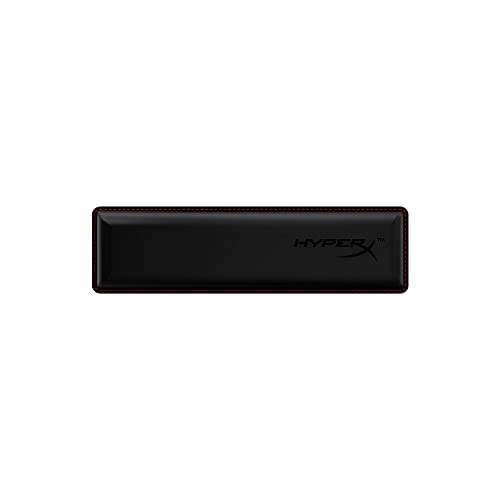
The best gaming keyboard wrist rest for most people is a cooling-gel memory foam model that matches the height of the keyboard front edge, and the HyperX Wrist Rest is the easiest all-round recommendation because it comes in full-size, tenkeyless, and compact lengths at a moderate thickness of 22 mm. Taller keyboards suit the thicker Razer Ergonomic Wrist Rest Pro, while thin low-profile boards pair better with slim gel or padded options. Height match matters more than brand, material, or color.
A wrist rest is a simple accessory, yet a mismatched one can be worse than none. If it sits lower than the front edge of your keyboard, your wrists end up resting on nothing. If it sits higher, it pushes your hands upward and bends your wrists back. This guide explains how to match height and length, compares six types of rest, and covers cleaning, wear, and how a rest fits with fast-paced gaming habits such as hovering over WASD. It offers general comfort information only and is not medical advice. If you feel persistent pain, numbness, or tingling in your hands or wrists, see a qualified professional.
Our top picks



As an Amazon Associate we earn from qualifying purchases at no extra cost to you.
Quick comparison of the six picks
| Pick | Best for | Key specs | Surface and fill | Tier |
|---|---|---|---|---|
| HyperX Wrist Rest | Best overall | 22 mm thick, 88 mm deep; full 457 mm, TKL 362 mm, compact 318 mm | Cooling gel memory foam, fabric cover, rubber base | Mid-range |
| Razer Ergonomic Wrist Rest Pro | Tall mechanical keyboards, premium feel | 444.5 mm x 90 mm, 26.4 mm thick, 248 g | Gel-infused memory foam, heat-transfer fabric, anti-slip feet | Premium |
| Glorious Padded Wrist Rest | Budget buyers | Compact, slim and full-size lengths | Foam core, soft fabric, non-slip rubber | Budget |
| Glorious Wooden Wrist Rest | Sweaty hands and a firm feel | Around 19 mm tall, hard wood | Solid wood, rubber feet | Mid-range |
| Kensington ErgoSoft slim gel rest | Low-profile and laptop-height keyboards | About 10 mm thick, 17 inches long | Gel core, polyurethane skin | Budget to mid-range |
| Kensington Duo Gel Wave | Soft, contoured gel support | Wave-shaped gel surface | Gel with fabric top | Mid-range |
Dimensions come from each manufacturer or retailer spec sheet, and sizes vary between product versions, so confirm the exact length and thickness of the variant you choose.
How to choose: match height, length, and firmness
Pick a wrist rest by working through three measurements and one preference. Doing them in order prevents the most common buying mistakes.
- Measure your keyboard front edge. Place a ruler on the desk against the front of the keyboard and read the height to the top of the front case edge. Then measure to the top of the space bar row keycaps, because that is where your palm base will sit.
- Choose a rest equal to or slightly lower than the front case edge. The goal is for the heel of your palm to rest lightly on the pad while your wrists stay in a neutral line with your forearms, neither bent up nor drooping down.
- Match the length. A full-size rest of about 450 mm suits a 100 percent keyboard, a tenkeyless rest of about 360 mm suits a TKL or 80 percent board, and a compact rest of about 320 mm or less suits 60 to 75 percent layouts. A rest longer than the keyboard is fine only if you do not need the space.
- Decide on firmness. Memory foam compresses under weight, so a 26 mm foam rest may sit closer to 22 mm after a few minutes. Wood and hard plastic do not compress, so choose a height that is exactly right.
The reason height matters is mechanical. When you type, your fingers extend slightly from the knuckles. A rest that is too tall tilts the hand upward and presses on the underside of the wrist. A rest that is too low does not provide support, and your hands tend to float. Fast gaming adds another factor: many players lift their hands for quick key presses and drop them to rest between rounds, so the rest is mostly a stable landing spot rather than constant support.
Worked example: choosing a height
Suppose your keyboard front edge measures 25 mm at the bottom case and 33 mm at the space bar keycap top. A 22 mm HyperX rest will compress slightly under your weight and sit a little below the case, which suits players who rest their palms lightly. A 26.4 mm Razer Pro will sit roughly level with the case edge and works better for players who anchor their palms for long sessions. If your keyboard instead measures 15 mm at the front edge, as many slim wireless boards do, both of those rests would be too tall, and a 10 mm slim gel rest becomes the better fit.
Best overall: HyperX Wrist Rest
The HyperX Wrist Rest is the easiest pick for most gaming desks. It uses cooling-gel memory foam under a fabric cover with a rubber underside, and it is sold in full-size, tenkeyless, compact, and mouse lengths. The listed dimensions are 457 mm long for the full-size version, 362 mm for the tenkeyless version, and 318 mm for the compact version, all 88 mm deep and 22 mm thick. That thickness fits a large range of standard mechanical keyboards, including many TKL and 75 percent designs.
Who it suits: players with a typical mechanical keyboard who want a comfortable pad without thinking about it. It is also a sensible buy for office use, because the fabric surface feels pleasant for long hours.
Main trade-off: fabric covers collect skin oils and crumbs over time, and the stitched seams can fray if you scrub them. It is also not the thickest option, so owners of very tall boards may still prefer a taller pad.
Best for tall keyboards: Razer Ergonomic Wrist Rest Pro
Razer lists the full-size Pro model at 444.5 mm by 90 mm, 26.4 mm thick, and 248 g. It combines gel-infused memory foam with a heat-transfer fabric surface and anti-slip rubber feet, and it has a gentle incline toward the keyboard so that your palm slopes naturally. The extra height makes it a better match for tall mechanical keyboards, especially boards with a high front edge or tall keycaps.
Who it suits: players using a large full-size mechanical keyboard with a thick case, and anyone who prefers a firmer, taller support. Razer also sells a tenkeyless version.
Main trade-off: it is the most expensive of the six and the tallest. If your keyboard sits lower than about 25 mm at the front edge, the Pro will push your wrists upward. Reviewers also note that the incline is a matter of taste, so try it before committing if you can.
Best budget pick: Glorious Padded Wrist Rest
Glorious offers a padded rest in compact (slim), tenkeyless, and full-size lengths. It uses a soft multi-layer fabric cover over a foam core with a non-slip rubber base. Sources list different thicknesses across versions, from under 20 mm in the slim compact model to about 25 mm in a thicker compact version, so choose the version that matches your measurement.
Who it suits: anyone who wants a low-cost rest to test whether a wrist rest helps at all. It is also an easy way to add support to a compact board.
Main trade-off: basic foam can flatten after a year or two of daily use, and the soft cover shows wear sooner than gel or wood. Treat it as a replaceable part.
Best firm feel: Glorious Wooden Wrist Rest
The Glorious Wooden Wrist Rest is a solid hardwood bar, reported at around 19 mm in height, with rubber feet underneath. The surface does not absorb sweat, so it is easy to wipe clean, and it never compresses. That makes it consistent: the height you measure is the height you get on day one and on day one thousand.
Who it suits: players with sweaty palms, anyone who dislikes the sinking feel of foam, and desk setups where a wooden look matches other accessories.
Main trade-off: a hard edge presses into the heel of the hand if the height is wrong, and it does not give any cushioning. If your desk edge is sharp, a hard rest does not fix that either. Wood finishes can also show scratches, so wipe it with a dry or slightly damp cloth rather than an abrasive pad.
Best for low-profile boards: Kensington ErgoSoft slim gel rest
Kensington lists its slim ErgoSoft keyboard rest at about 17 inches long, 4 inches deep, and 0.4 inches (around 10 mm) thick, with a gel core under a polyurethane skin. A compact slim version of about 11 inches also exists. It is the thinnest rest in this guide, which is exactly its purpose.
Who it suits: owners of low-profile mechanical keyboards, laptop-style boards, and thin wireless models whose front edge is roughly 10 to 18 mm.
Main trade-off: on a tall mechanical keyboard it simply will not reach the right height. The polyurethane skin is easy to clean, but it can feel slick if your hands are damp.
Best contoured gel: Kensington Duo Gel Wave
The Duo Gel Wave uses a wave-shaped gel surface that gives a varied contour under the palm and is often cited by reviewers as a comfortable gel option. It suits typists who change hand position frequently, because the ridge pattern supports different parts of the palm as you shift.
Who it suits: people who both type and game on the same keyboard and want a soft, cooler-feeling surface.
Main trade-off: wave shapes mean the effective height varies along the pad, so measure the highest point. Check the manufacturer sizing chart to make sure the version you buy matches your keyboard length.
Keyboard height reference
Use this table as a starting point only, and measure your own board because case styles and keycap profiles vary.
| Keyboard type | Typical front edge height | Suggested rest thickness | Suitable picks |
|---|---|---|---|
| Low-profile wireless | Roughly 10 to 18 mm | About 10 to 15 mm | Kensington slim gel |
| Slim gaming board with short keycaps | Roughly 18 to 22 mm | About 17 to 22 mm | HyperX, Glorious slim |
| Standard mechanical TKL or 75 percent | Roughly 22 to 28 mm | About 19 to 26 mm | HyperX, Glorious Wooden, Razer Pro |
| Tall full-size mechanical | Roughly 28 mm and above | About 26 mm and above | Razer Pro |
Wrist rest versus keyboard tilt, feet, and posture
A wrist rest is one of several levers. Most keyboards have flip-out feet that raise the back edge, but raising the back tilts the board toward you and tends to bend your wrists upward, which many ergonomic guides advise against for long typing. If your desk and chair are at a normal height, leaving the feet down and using a rest at the right height keeps the wrist flatter.
Other factors matter too. Elbows near 90 degrees, shoulders relaxed, and the keyboard close enough that you do not reach forward all reduce strain more than any pad alone. Take a short break every 30 to 45 minutes. For long matches, rest the heel of your palm on the pad between actions, then float your hands during fast movement rather than dragging them across the surface.
Ownership realities: what wears first and how to clean it
The wear item on any foam or gel wrist rest is the cover, not the core. Fabric surfaces absorb oil and sweat and begin to look dull or smell stale. Gel cores can leak a small amount if the skin is punctured, so keep sharp objects off the desk. Foam compresses permanently over time, and many users replace foam rests every two to three years of daily use. Wooden rests last far longer but can mark if you place hot drinks on them.
- Fabric covers: wipe weekly with a slightly damp microfiber cloth and mild soap, then air dry. Do not soak the pad, because wet foam can mould inside.
- Polyurethane skins: wipe with a damp cloth. Avoid alcohol-heavy cleaners, which can dry the surface and cause cracking.
- Wood: dry cloth or lightly damp cloth, then dry immediately.
- Rubber feet: clean the underside every few months so dust does not reduce grip, which is the main cause of a rest sliding during intense play.
Common mistakes include buying a rest by brand rather than by measurement, using a full-size rest with a compact keyboard so it hits the desk edge, and resting the forearm on the pad rather than the palm heel. A rest should support the heel of the hand, not the wrist joint itself.
Decision matrix by situation
| Your situation | Best choice | Reason |
|---|---|---|
| Standard mechanical TKL, general gaming | HyperX Wrist Rest (TKL) | 22 mm height and cooling gel |
| Tall full-size mechanical keyboard | Razer Ergonomic Wrist Rest Pro | 26.4 mm height and incline |
| Tight budget, trying a rest for the first time | Glorious Padded Wrist Rest | Low cost, three lengths |
| Sweaty hands or dislike of foam | Glorious Wooden Wrist Rest | Non-absorbent, does not compress |
| Low-profile or wireless slim keyboard | Kensington ErgoSoft slim | About 10 mm thickness |
| Mixed typing and gaming, prefers soft gel | Kensington Duo Gel Wave | Contoured gel support |
Should you buy a keyboard with a built-in wrist rest?
Several gaming keyboards ship with a detachable magnetic or clip-on rest, and some makers sell a model-specific rest for lines such as the Corsair K70 series. The advantage is a perfect height match and a locked position, so the rest does not slide. The disadvantage is a smaller choice of materials and fills. If you already own a keyboard, a universal rest chosen by measurement is usually cheaper and easier to replace.
Frequently Asked Questions
Do gaming wrist rests actually help?
They help some people by providing a stable resting place and keeping the wrist closer to neutral, but they are not a cure for discomfort. Comfort depends on the whole setup, including chair height, desk height, and how often you take breaks. If you have persistent pain, speak to a healthcare professional.
How tall should a wrist rest be compared with my keyboard?
Aim for a rest equal to or slightly lower than the front edge of the keyboard case. Memory foam compresses under weight, so a foam rest can be a few millimetres taller than the case at rest and still end up about right in use.
Is gel or memory foam better?
Gel feels cooler and holds its shape in short sessions, while memory foam is firmer and often more supportive. Many popular rests combine them, such as the cooling-gel memory foam pads from HyperX and Razer. Choose by the height you need first and by feel second.
Should I rest my wrists on it while typing or gaming?
Rest the heel of your palm on it between bursts of activity, and let your hands float while you press keys rapidly. Anchoring your wrist while sweeping your fingers across the keyboard can put pressure on the underside of the wrist.
Which length should I buy?
Match the keyboard layout. A full-size keyboard needs a rest of about 450 mm, a tenkeyless or 80 percent board needs about 360 mm, and compact 60 to 75 percent boards fit a rest of about 320 mm.
How often should I replace a wrist rest?
Replace foam and gel rests when the cover cracks, the gel leaks, or the foam stays flat after you lift your hand away. This typically happens after two to three years of daily use, while wooden rests can last much longer.








Write Your Review
No reviews yet. Be the first to share your experience!