

Our Short List of 3

- Photo resolution: 36MP
- Video resolution: 1080p HD with audio, as listed
- Trigger speed: 0.4 seconds
- Detection range: 100 ft

- Photo resolution: Up to 32MP, dual day and night sensors
- Video resolution: 4K at 30 fps
- Trigger speed: 0.15 seconds, as listed
- Detection range: Up to 110 ft, per the maker’s manual
- Photo resolution: 24MP
- Video resolution: 1080p Full HD with sound
- Trigger speed: 0.22 seconds; recovery time 0.35 seconds
- Detection range: 100 ft
All 5 Picks at a Glance
| Product | Specs | Action |
|---|---|---|
| 1. Moultrie Edge 2 Cellular Trail Camera |
| Check price on Amazon |
| 2. Bushnell Core DS-4K No Glow Trail Camera |
| Check price on Amazon |
| 3. Browning Strike Force Pro X 1080 Trail Camera Bundle |
| Check price on Amazon |
 4. SPYPOINT FLEX-M Twin Pack Cellular Trail Camera |
| Check price on Amazon |
 5. GardePro A3 Trail Camera |
| Check price on Amazon |
Key takeaways
- Compare the best wildlife cameras for deer, birds and backyard visitors, using published trigger speeds, detection ranges and night vision figures.
A wildlife camera does its work while nobody is watching. Strapped to a tree or a fence post, it sits idle until its passive infrared sensor picks up the heat and movement of an animal crossing in front of it, then fires the shutter in a fraction of a second and goes back to sleep. That simple pattern is what makes trail cameras so useful for watching deer on a food plot, finding out which predator visits the chicken run at night, logging birds at a feeder, or building a picture of everything that moves through a garden after dark. The camera never needs a person present, and the animals behave as if it were not there.
Disclosure: As an Amazon Associate, we earn from qualifying purchases made through links on this page, at no extra cost to you.
The five cameras below are all motion-activated trail cameras built for wildlife work, and they split along two clear lines. The Moultrie Edge 2 and the SPYPOINT FLEX-M Twin Pack are cellular models that send photos to a phone app, so the card never has to be pulled. The Bushnell Core DS-4K, the Browning Strike Force Pro X 1080 and the GardePro A3 store everything on a memory card or built-in memory and ask for a visit now and then, in exchange for having no plan and no network involved at all. Every figure in the specs blocks comes from the listing or the maker’s own published material, and the buying notes first will make the differences easier to weigh.
Our top picks
What to check before you buy a wildlife camera
Trigger speed. This is the delay between the sensor detecting movement and the camera taking the picture, and makers publish it in fractions of a second. A slow trigger photographs the tail end of a deer that has already crossed the frame, or misses a fast bird entirely. Figures of 0.4 seconds and below suit crossing trails; a feeder or a scrape, where animals stop and linger, forgives a slower camera.
Detection range and flash range are different numbers. Detection range is how far away the infrared sensor can sense an animal and wake the camera. Flash range is how far the infrared LEDs can light a subject at night. A camera can detect at 100 feet yet only light a night photo clearly at 90, so both figures are quoted separately in the specs below, exactly as the makers publish them.
No-glow versus low-glow flash. No-glow cameras use 940 nm infrared LEDs that produce no visible light at all, which keeps them invisible to animals and to people. Low-glow cameras use 850 nm LEDs that reach a little further but show a faint red shimmer when they fire. For wary game and for cameras near footpaths, no-glow is the safer choice; for maximum night reach on open ground, low-glow has the edge.
Cellular or card-based. A cellular camera sends photos to an app over the mobile network, which needs signal at the camera site and an active plan with the maker. A card-based camera needs nothing but batteries and a memory card, and the trade is a trip to the camera whenever the photos are wanted. Neither approach is better in general; the distance to the camera and the strength of the local signal usually decide it.
Photo and video figures. Photo resolution is quoted in megapixels, and on many cameras the highest figure involves processing, so it should be read as the maker’s published maximum rather than a sensor measurement. Video resolution is the plainer number: 720p, 1080p, 1296p and 4K clips differ clearly in how much detail survives for identifying individual animals.
1. Moultrie Edge 2 Cellular Trail Camera
- Photo resolution: 36MP
- Video resolution: 1080p HD with audio, as listed
- Trigger speed: 0.4 seconds
- Detection range: 100 ft
The Edge 2 is Moultrie’s current entry point into cellular scouting, and its headline feature is how little setup the connection needs. The camera connects automatically to the strongest available signal across the major United States networks, with no SIM swapping and no carrier choice to make, and it delivers photos and video to the Moultrie Mobile app. There is no memory card to manage either, because storage is built into the camera and the material lives in the maker’s cloud service once it has been sent.
The published figures are 36 megapixel photos and 1080p video with sound, a 0.4-second trigger speed, and a detection and flash range of 100 feet from a low-glow infrared array. On-demand capture lets the app request a photo or clip between detections, which is handy for checking a feeder before a visit. Because everything arrives on the phone, this is the natural pick for land that sits far from home; because it is cellular, it needs an active plan with Moultrie and a usable signal where it hangs.
View the Moultrie Edge 2 on Amazon
2. Bushnell Core DS-4K No Glow Trail Camera
- Photo resolution: Up to 32MP, dual day and night sensors
- Video resolution: 4K at 30 fps
- Trigger speed: 0.15 seconds, as listed
- Detection range: Up to 110 ft, per the maker’s manual
The Core DS-4K is built around an idea no other camera in this list uses: two separate image sensors, one tuned for daylight and one tuned for darkness, instead of a single sensor compromised for both jobs. Bushnell publishes up to 32 megapixel stills and 4K video at 30 frames per second from that arrangement, and the flash is a no-glow array, so the camera stays invisible while it works at night. A 1.5-inch color screen inside the housing lets photos be checked and settings changed at the tree, with no phone or computer involved.
The listing publishes a 0.15-second trigger speed and a 120-foot no-glow night range, while Bushnell’s manual gives a detection range of up to 110 feet, and both figures are quoted here as published. The camera records to an SD card, supports cards up to 512GB, and runs on six AA batteries, with a port for Bushnell’s external solar panel. With no cellular radio at all, nothing about this camera depends on signal or a plan; it suits a fixed scrape line, a pinch point or a garden where image quality is the whole point of the exercise.
View the Bushnell Core DS-4K on Amazon
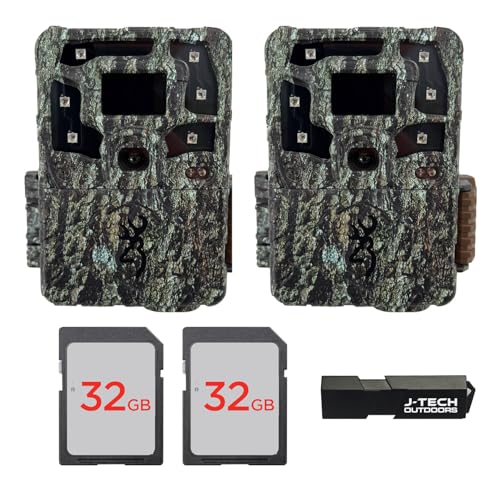
3. Browning Strike Force Pro X 1080 Trail Camera Bundle
- Photo resolution: 24MP
- Video resolution: 1080p Full HD with sound
- Trigger speed: 0.22 seconds; recovery time 0.35 seconds
- Detection range: 100 ft
Browning’s Strike Force line is the traditional end of the trail camera market: no app, no network, just a fast camera on a card. The Pro X 1080 records 24 megapixel photos and Full HD 1080p video with sound, and its 0.22-second trigger speed is among the quickest published figures in this roundup, backed by a 0.35-second recovery time that lets it fire again almost immediately when an animal keeps moving. The listing sells the camera as a bundle with a 32GB memory card and a card reader included, so the first card pull needs nothing extra.
Night work comes from Browning’s RADIANT 6 infrared system with a published flash range of 120 feet and three adjustable settings, Power Save, Long Range and Fast Motion, that trade reach against battery drain. Detection range is published at 100 feet. A 1.5-inch color viewing screen and an all-steel adjustable mounting bracket are built in, the info bar stamps time, date, temperature and moon phase onto each frame, and Browning rates battery life at up to a year on eight AA batteries. For a scrape or a trail close enough to visit on foot, this is the straightforward, quick-firing option.
View the Browning Strike Force Pro X 1080 Bundle on Amazon
4. SPYPOINT FLEX-M Twin Pack Cellular Trail Camera
- Photo resolution: 28MP
- Video resolution: 720p with sound
- Trigger speed: 0.4 seconds
- Detection range: 90 ft
The FLEX-M listing sells two cellular cameras in one pack, which changes the maths of covering ground: one camera on each of two trails, two gates or two ends of a food plot, both reporting to the same SPYPOINT app. Each camera carries dual SIM technology with the cards preactivated and already inserted, and each connects automatically to the best available network, so there is no carrier decision at setup. SPYPOINT includes a free photo transmission plan with its cameras that sends up to 100 photos a month, with paid tiers above that for heavier use.
Each unit publishes 28 megapixel photos and 720p video with sound, a 0.4-second trigger speed, and a 90-foot detection range matched by a 90-foot low-glow flash range. Capture modes run beyond plain motion triggering to time-lapse settings that watch a whole field on a schedule, and GPS positioning helps keep track of where each camera hangs. The housings carry an IP65 water-resistance figure. Power is eight AA batteries per camera or SPYPOINT’s LIT-22 rechargeable pack. For two sites that both need remote reporting, the twin pack is the efficient way to buy them.
View the SPYPOINT FLEX-M Twin Pack on Amazon
5. GardePro A3 Trail Camera
- Photo resolution: 48MP, as listed
- Video resolution: 1296p HD
- Trigger speed: 0.1 seconds with side sensors enabled; recovery under 0.5 seconds
- Detection range: 90 ft PIR sensing distance, per the maker’s manual; 120-degree total sensing angle
The A3 is the no-glow specialist of this group, and it earns that place with its sensor layout. Three passive infrared sensors cover a combined 120-degree sensing angle, and the two side sensors pre-activate the camera as an animal enters the edge of the zone, which is how GardePro supports its published 0.1-second trigger time. The current listing publishes 48 megapixel photos and 1296p HD video, figures that sit at the top of what card-based cameras in this class advertise.
Night illumination comes from 36 no-glow 940 nm LEDs with a published flash range of 100 feet, and GardePro’s manual gives a PIR sensing distance of 90 feet, so the camera wakes slightly inside the reach of its own flash. Recovery time is published at under 0.5 seconds, the housing takes standard SD cards up to 512GB, and eight AA batteries power the unit. A built-in color screen handles setup and lets captures be checked in the field. Nothing here connects to a network, which makes the A3 a quiet fit for gardens, allotments and woodland edges where discretion matters more than remote delivery.
View the GardePro A3 on Amazon
Frequently asked questions
What trigger speed does a wildlife camera need?
For animals that stop and feed, almost any published figure works, because the subject stays in frame. For crossing trails, look for 0.4 seconds or faster; the GardePro A3 publishes 0.1 seconds and the Bushnell Core DS-4K 0.15 seconds, both aimed squarely at moving subjects. Mounting the camera at an angle to the trail, rather than square across it, also buys every camera extra time.
What is the difference between no-glow and low-glow flash?
No-glow LEDs work at 940 nm and produce no visible light when they fire, so animals and people see nothing. Low-glow LEDs work at 850 nm, generally reach a little further, and show a faint red glow at the camera face. Wary game, public footpaths and garden use point to no-glow; open ground where night reach matters most points to low-glow.
Do cellular wildlife cameras need a plan?
Yes. The Moultrie Edge 2 and the SPYPOINT FLEX-M send photos over the mobile networks, and delivery runs through the maker’s service, so an active plan and a usable signal at the camera site are both required. SPYPOINT includes a free tier that transmits up to 100 photos a month. Card-based cameras such as the Bushnell, Browning and GardePro picks need no plan at all, but their photos wait on the card until the camera is visited.
How high and where should a wildlife camera be mounted?
Waist to chest height on a tree or post, angled slightly downward toward the trail, feeder or gap the animals use, is the standard starting point. North-facing placement keeps direct sun off the sensor and reduces false triggers from moving shadows and sun-warmed vegetation. Clearing branches and tall grass from the detection zone cuts most empty frames, whatever camera is chosen.
More from Amazon
Programs that pair well with the guide above. Offers and eligibility are set by Amazon and may change.
Free shipping on eligible items, Prime Video and more. Eligible new members can start with a free trial.
Start a Prime free trialAd-free music streaming. Eligible new subscribers can start with a free trial.
Try Music Unlimited freeA Prime membership for ages 18-24 with a trial period. Eligibility is set by Amazon.
See Prime for Young AdultsAudiobooks and podcasts to listen to on the go. Eligible new members can start with a free trial.
Try Audible freeAs an Amazon Associate we earn from qualifying purchases.







Write Your Review
No reviews yet. Be the first to share your experience!