
Our Short List of 3
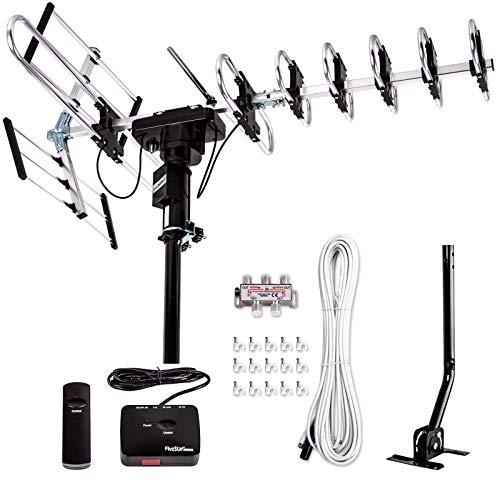
- Best for: Larger homes and rural households that want one outdoor antenna feeding four or five televisions.
- Model: FSA-3806
- Televisions supported: Up to 5 with the included 4-way splitter
- Range: Up to 200 miles, per the manufacturer
- Reception: UHF, VHF, and FM, with 1080p and 4K support

- Best for: Two-television homes, and anyone who wants a clean outdoor install with adjustable amplification.
- Model: AT-800SBS
- Televisions supported: 2 through the dual-output Smart Boost System
- Range: Up to 85 miles, per the manufacturer
- Reception: UHF, VHF, and FM, with 1080p and 4K Ultra HD support
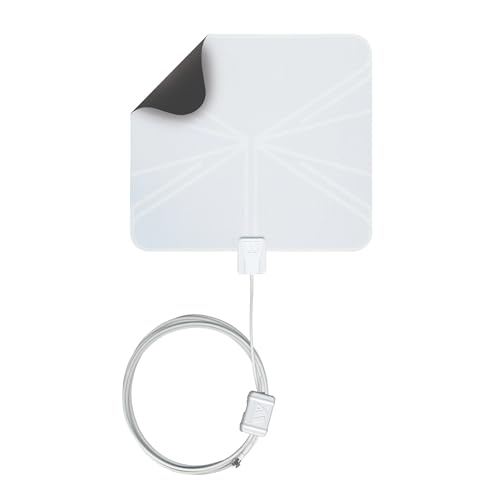
- Best for: Apartments and suburban homes close to the towers where an outdoor antenna is not possible.
- Model: FL5500A
- Televisions supported: 1 directly; multiple with an added splitter or distribution amplifier
- Range: Up to 60 miles, per the manufacturer
- Reception: High-VHF and UHF, with 4K and ATSC 3.0 readiness
All 5 Picks at a Glance
| Product | Specs | Action |
|---|---|---|
| 1. Five Star Outdoor Digital Amplified HDTV Antenna — Best Overall for Multiple TVs |
| Check price on Amazon |
| 2. Antop AT-800SBS HD Smart Panel Antenna — Best Dual-Output Antenna for Two TVs |
| Check price on Amazon |
| 3. Winegard FlatWave FL5500A — Best Indoor Antenna to Pair With a Splitter |
| Check price on Amazon |
 4. Antennas Direct ClearStream JUICE4 — Best Distribution Amplifier for Four TVs |
| Check price on Amazon |
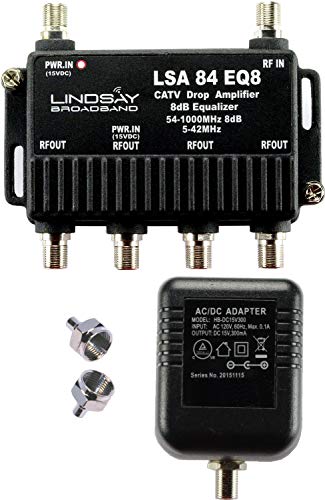 5. Reliable Cable Products Lindsay LSA84-EQ8 — Best Four-Port Amplifier With Equalizer |
| Check price on Amazon |
Key takeaways
- Looking for the best TV antenna for multiple TVs? Compare amplified antennas, splitters, and distribution amplifiers that feed up to five rooms clearly.
One antenna can feed every television in a home, but only when the rest of the setup is right. A strong antenna on the roof means little if the signal is split four ways through a passive splitter and long cable runs. That is why the best TV antenna for multiple TVs is rarely just an antenna. It is a small system: an antenna with enough gain for the distance to the towers, a splitter or distribution amplifier that shares the signal without starving any room, and short cable runs.
This guide covers that whole system. Three picks below are complete antennas that feed two or more televisions, and two are distribution amplifiers that sit between an existing antenna and the televisions.
Disclosure: As an Amazon Associate, we earn from qualifying purchases.
How to Choose the Best TV Antenna for Multiple TVs
Count the televisions first
The number of televisions decides almost everything else. A two-television home can often get away with an antenna that has dual outputs, such as the Antop panel antenna below, while a four- or five-television home needs a four-way splitter or a four-output distribution amplifier. Plan for one more output than the number of televisions you have today. Splitting a signal that has already been split is the most common cause of pixelation in the farthest bedroom.
Indoor or outdoor makes the biggest difference
Outdoor antennas mounted on a roof, chimney, or eave almost always outperform indoor antennas, because roofs and walls block and reflect broadcast signals. If the broadcast towers are more than 30 miles away, or if the home has metal roofing or foil-backed insulation, an outdoor antenna is the safer choice. Indoor antennas suit apartments and homes close to the towers, but they should sit high, near a window, and away from large appliances.
Range ratings are optimistic by design
Manufacturers quote maximum range figures measured under ideal conditions, and real-world range is almost always shorter. A 200-mile rating does not mean the antenna will receive a station 200 miles away through hills and buildings. Treat the rating as a rough comparison between models rather than a promise. Before buying, check a reception map for the home address to see how far away the towers are.
Amplification helps, but only in the right place
An amplifier can do two different jobs, and confusing them causes most multi-TV problems. A preamplifier sits at the antenna and boosts a weak signal before cable loss eats it. A distribution amplifier sits where the cable splits and replaces the loss caused by the splitter. If the signal at the antenna is already strong, adding a preamplifier can overload the tuners and make reception worse. If the signal at the antenna is good but fades after splitting, a distribution amplifier is the fix.
Splitters, cable, and placement
Every two-way split costs roughly 3.5 dB of signal, and every four-way split costs roughly 7 dB, which is why a passive splitter alone often leaves the farthest television with a weak picture. A distribution amplifier adds gain back at the split point, so it outperforms a passive splitter in multi-room homes. Use RG6 coaxial cable rather than older RG59, keep runs short, and seal outdoor connections against moisture. Where towers sit in different directions, a motorized rotating antenna or a multidirectional design saves repeated trips to the roof.
Interference filters matter in cities
Cellular signals from nearby towers can leak into the television bands and cause intermittent pixelation, especially on UHF channels. An LTE or 4G filter, built into several picks below, blocks those frequencies. Homes near a cell tower should treat a built-in filter as a real feature rather than a marketing line.
Top Picks
1. Five Star Outdoor Digital Amplified HDTV Antenna — Best Overall for Multiple TVs
- Best for: Larger homes and rural households that want one outdoor antenna feeding four or five televisions.
- Model: FSA-3806
- Televisions supported: Up to 5 with the included 4-way splitter
- Range: Up to 200 miles, per the manufacturer
- Reception: UHF, VHF, and FM, with 1080p and 4K support
Larger homes and rural households that want one outdoor antenna feeding four or five televisions.
The Five Star outdoor kit is the most complete multi-television package in this guide, and the first pick for households that want one purchase to cover the whole home. The listing describes a motorized outdoor antenna with 360-degree rotation controlled by a wireless remote, so it can be aimed at different tower directions from inside the house instead of from a ladder. The kit includes a 40-foot RG6 coaxial cable, a 4-way splitter, 15 cable clips, and a J-pole mounting pole, so the parts for several rooms are in the box.
According to the listing, the antenna supports up to five televisions at once with the included splitter, and it receives UHF, VHF, and FM signals in 1080p and 4K. The manufacturer rates its range at up to 200 miles and fits a built-in amplifier with automatic gain control.
Key specifications:
Pros:
Cons:
2. Antop AT-800SBS HD Smart Panel Antenna — Best Dual-Output Antenna for Two TVs
- Best for: Two-television homes, and anyone who wants a clean outdoor install with adjustable amplification.
- Model: AT-800SBS
- Televisions supported: 2 through the dual-output Smart Boost System
- Range: Up to 85 miles, per the manufacturer
- Reception: UHF, VHF, and FM, with 1080p and 4K Ultra HD support
Two-television homes, and anyone who wants a clean outdoor install with adjustable amplification.
The Antop AT-800SBS takes a different approach: instead of relying on an external splitter, it builds dual outputs into the amplifier itself. The Smart Boost System is a power booster with an adjustment dial, and its secondary output connects a second television, an FM stereo, or another over-the-air-ready device at the same time. For a two-television home, that removes an entire piece of hardware.
The panel is a multidirectional outdoor design rated for up to 85 miles, and it receives UHF and VHF signals along with FM radio. The Smart Boost dial lets the viewer turn the amplification up or down to match the distance from the towers, which helps avoid overload in strong-signal areas. A built-in 4G LTE filter reduces interference from nearby cellular signals.
Key specifications:
Pros:
Cons:
3. Winegard FlatWave FL5500A — Best Indoor Antenna to Pair With a Splitter
- Best for: Apartments and suburban homes close to the towers where an outdoor antenna is not possible.
- Model: FL5500A
- Televisions supported: 1 directly; multiple with an added splitter or distribution amplifier
- Range: Up to 60 miles, per the manufacturer
- Reception: High-VHF and UHF, with 4K and ATSC 3.0 readiness
Apartments and suburban homes close to the towers where an outdoor antenna is not possible.
The Winegard FlatWave FL5500A is the most discreet pick in this guide, and the right choice for households that cannot mount an outdoor antenna. It is an ultra-thin amplified indoor panel that sticks to a wall or window, and its reversible black-and-white design blends into most rooms. The listing rates it for up to 60 miles on high-VHF and UHF signals, and it is ready for 4K and ATSC 3.0 broadcasts.
Winegard highlights the amplifier’s low noise figure of 1.0 dB, which matters because a noisy amplifier adds its own interference to the signal. One important detail: this antenna has a single output, so feeding multiple televisions means adding a passive splitter for two nearby sets or a distribution amplifier, such as the models below, for three or more rooms.
Key specifications:
Pros:
Cons:
4. Antennas Direct ClearStream JUICE4 — Best Distribution Amplifier for Four TVs
- Best for: Homes that already own a good antenna and need to feed three or four televisions without losing picture quality.
- Model: JUICE4
- Televisions supported: Up to 4 through four amplified outputs
- Frequency range: 54 to 1220 MHz forward path, 5 to 42 MHz return path
- Compatibility: Over-the-air antenna and CATV systems, ATSC 3.0 NextGen TV, 4K and 8K ready
Homes that already own a good antenna and need to feed three or four televisions without losing picture quality.
The ClearStream JUICE4 is not an antenna. It is the hardware that makes an existing antenna serve four televisions, and for many homes it is the most effective upgrade in this guide. A passive four-way splitter throws away roughly 7 dB of signal, and the JUICE4 replaces that splitter with an amplifier that restores the loss, so each output gets a strong, clean feed. It is designed for over-the-air antennas and cable systems, with support for ATSC 3.0 NextGen TV and 4K and 8K resolutions.
The unit covers 54 to 1220 MHz on the forward path, with a return path of 5 to 42 MHz, in a compact zinc diecast housing for indoor or outdoor mounting. The package includes a 12-volt power adapter with surge protection and a 40-inch RG6 coaxial cable.
Key specifications:
Pros:
Cons:
5. Reliable Cable Products Lindsay LSA84-EQ8 — Best Four-Port Amplifier With Equalizer
- Best for: Households with long cable runs and four televisions, where some channels arrive weaker than others.
- Model: Lindsay LSA84-EQ8
- Televisions supported: Up to 4 through four amplified outputs
- Frequency range: 54 to 1000 MHz
- Gain: Up to 7.5 dB at 1000 MHz, per the manufacturer
Households with long cable runs and four televisions, where some channels arrive weaker than others.
The Lindsay LSA84-EQ8, sold by Reliable Cable Products, is a four-port distribution amplifier built for the point where the antenna feed splits. It takes one antenna input and provides four amplified outputs, so up to four televisions or cable boxes can share a single antenna line. The EQ8 version adds an equalizer that adjusts gain across the frequency range, which helps when higher-frequency channels arrive weaker after a long cable run.
The listing describes a frequency range of 54 to 1000 MHz, a passive return path, and F59 terminators included in the box to seal unused ports against ingress noise. Surge protection rated at 6 kV on all ports guards against voltage spikes, and the wide operating temperature range suits attic or garage installation.
Key specifications:
Pros:
Cons:
Comparison Table
| Product | Type | TVs Supported | Key Feature | Best For |
|---|---|---|---|---|
| Five Star Outdoor FSA-3806 | Outdoor antenna kit | Up to 5 | 4-way splitter and 40-foot cable included | Whole-home outdoor setups |
| Antop AT-800SBS | Outdoor panel antenna | 2 | Dual outputs with adjustable Smart Boost | Two-TV homes |
| Winegard FlatWave FL5500A | Indoor amplified antenna | 1 direct, more with splitter | 1.0 dB noise figure, ATSC 3.0 ready | Apartments and close-in suburbs |
| Antennas Direct JUICE4 | Distribution amplifier | Up to 4 | 54 to 1220 MHz, 4K and 8K ready | Upgrading an existing antenna |
| Lindsay LSA84-EQ8 | Distribution amplifier | Up to 4 | Built-in equalizer, 6 kV surge protection | Long cable runs, uneven channels |
Frequently Asked Questions
Can one TV antenna really feed multiple TVs?
Yes, one antenna can feed several televisions, but the signal has to be shared properly. A passive splitter divides the signal, so each television gets a smaller share. For two televisions a dual-output antenna or a two-way splitter is often enough. For three or more, a distribution amplifier is the reliable answer, because it adds gain back at the split.
Do I need an amplifier to run multiple TVs from one antenna?
Not always, but usually. If the antenna signal is very strong and the cable runs are short, a passive splitter can work. In most real homes, splitting to three or four rooms without amplification causes pixelation on the farthest sets. A distribution amplifier is the correct tool for that problem, while a preamplifier belongs at the antenna for weak signals.
What is the difference between a splitter and a distribution amplifier?
A splitter is a passive device that divides one signal into two or more weaker signals, with no power and no gain. A distribution amplifier divides the signal and amplifies it at the same time, so each output stays close to the strength of the original feed. Distribution amplifiers cost more and need a power outlet, but they are the right choice when more than two televisions share one antenna.
Where should I place an antenna that feeds multiple TVs?
Place the antenna as high as practical: a roof, chimney, or attic mount for outdoor models, or a high window for indoor models. The distribution amplifier should sit where the coaxial cables from each room converge, often near the electrical panel or in the attic. Moving an antenna even a few feet can change reception noticeably, so rescan after repositioning.
Will an outdoor antenna work in an attic?
An attic antenna often works well, especially when the roof is made of asphalt shingles or wood, and it avoids weather exposure entirely. Metal roofing, foil-backed insulation, and radiant barriers can block signals, so an attic install in that kind of home may perform poorly. When in doubt, a temporary attic placement before permanent mounting saves a difficult reinstall.
How many channels will I get with a multi-TV antenna?
Channel count depends on distance from the towers, terrain, building materials, and the direction the antenna faces, not on the number of televisions connected. A good outdoor antenna near a city can receive dozens of free channels, while a home far from any tower may receive only a handful. Splitting does not reduce the channel count directly, but a weak split signal can make marginal channels drop out.
Conclusion
The best TV antenna for multiple TVs depends on how many rooms need a feed and how far the home sits from the broadcast towers. The Five Star outdoor kit is the strongest all-in-one answer for four- or five-television homes, because the splitter, cable, and mounting hardware arrive in one box. The Antop AT-800SBS is the neatest solution for two televisions, with its dual-output amplifier removing the need for a separate splitter. The Winegard FlatWave FL5500A suits apartments and close-in homes where only an indoor antenna is possible.
For homes that already own a good antenna, the Antennas Direct JUICE4 is the most direct upgrade, turning a passive split into four strong outputs, while the Lindsay LSA84-EQ8 adds an equalizer for long runs where channels arrive unevenly. The rule stays the same: buy for the number of televisions, amplify at the split, and rescan after every change.
More from Amazon
Programs that pair well with the guide above. Offers and eligibility are set by Amazon and may change.
Free shipping on eligible items, Prime Video and more. Eligible new members can start with a free trial.
Start a Prime free trialAd-free music streaming. Eligible new subscribers can start with a free trial.
Try Music Unlimited freeA Prime membership for ages 18-24 with a trial period. Eligibility is set by Amazon.
See Prime for Young AdultsAudiobooks and podcasts to listen to on the go. Eligible new members can start with a free trial.
Try Audible freeAs an Amazon Associate we earn from qualifying purchases.










Write Your Review
No reviews yet. Be the first to share your experience!