

Our Short List of 3

- Best for: Wired-headphone listeners and anyone who watches video on speakers held in front of them.
- 6.5-inch FHD+ HDR OLED display, 120Hz
- Front-facing stereo speakers
- 3.5mm headphone jack
- Snapdragon 8 Gen 3 processor

- Best for: Speaker-first listeners who want the full US flagship with warranty support.
- 6.9-inch Dynamic AMOLED 2X display, 120Hz
- Stereo speakers
- Snapdragon 8 Elite processor
- 12GB RAM and 256GB storage

- Best for: Google-ecosystem buyers who listen mainly on speakers and Bluetooth earbuds.
- 6.8-inch Super Actua display
- Stereo speakers
- Google Tensor G4 processor
- 16GB RAM and 256GB storage
All 3 Picks at a Glance
| Product | Specs | Action |
|---|---|---|
| Sony Xperia 1 VI |
| Check price on Amazon |
| Samsung Galaxy S25 Ultra |
| Check price on Amazon |
| Google Pixel 9 Pro XL |
| Check price on Amazon |
Key takeaways
- Three smartphones chosen for audio — Sony Xperia 1 VI, Samsung Galaxy S25 Ultra and Google Pixel 9 Pro XL — compared on speakers, headphone output and listing specs.
Phone sound quality is decided by hardware most buyers never see compared: whether the stereo speakers are both front-facing or a bottom-and-earpiece compromise, whether a headphone jack survives, and which Bluetooth and wired audio formats the phone actually supports. Two phones with identical headline specs can sound completely different, one projecting stereo toward your face, the other firing half of it into the table. The decision is which audio path — speakers, wired, or wireless — you use most.
This guide is for listeners who watch and play without headphones, wired-headphone owners who refuse dongles, and anyone replacing a phone mainly because the current one sounds thin. The three phones below were chosen because their listings support a genuine audio case: front stereo speakers and a 3.5mm jack on the Sony, the flagship Samsung’s stereo system on the US model, and Google’s Pixel flagship. Specs are taken from each Amazon listing.
Quick Picks
As an Amazon Associate we earn from qualifying purchases.
| Product | Best for | Key spec from title |
|---|---|---|
| Sony Xperia 1 VI | Wired listening and front-facing stereo | 256GB unlocked with 3.5mm headphone jack |
| Samsung Galaxy S25 Ultra | Loud, full stereo for video and games | 256GB US version unlocked with stereo speakers |
| Google Pixel 9 Pro XL | Clean stereo sound in Google’s flagship | 256GB unlocked with 6.8-inch Super Actua display |
How to Choose
Speaker layout matters more than speaker count
Almost every flagship claims stereo speakers, but the layouts differ. A bottom-firing speaker paired with the earpiece sends half the sound away from you and unbalances the image when the phone is held in portrait. True front-facing stereo, which the Sony here uses, points both channels at the listener and keeps the balance in both orientations. When a listing or its spec table describes the speaker arrangement, that line is worth more than any loudness claim, because layout is physics while volume figures are rarely published honestly.
The headphone jack is a yes-or-no decision
Wired listening splits buyers cleanly. With a 3.5mm jack, as on the Xperia, any wired headphones or earbuds connect directly, with no dongle to lose and no Bluetooth compression in the chain, and the phone’s internal DAC does the work. Without one, wired listening means a USB-C dongle whose own DAC decides the quality. If you own good wired headphones, this single feature can settle the shortlist before speakers are even compared. Check the listing’s port list rather than assuming, because the jack has quietly vanished from most flagships.
Wireless audio depends on codec support
For Bluetooth listeners, the phone’s codec list sets the ceiling: basic SBC everywhere, with higher-quality codecs appearing model by model. Listings do not always publish the full codec table, so treat detailed wireless claims cautiously and verify against the manufacturer’s specification if a particular codec is your deciding factor. What the listing does settle is the platform and generation, which determines which codecs are even possible. Buy the phone whose stated platform supports your headphones’ best codec, not the one with the longest feature paragraph.
Do not let the audio choice wreck the phone choice
A sound-first phone still has to work as your phone. All three here are current flagships with the displays, cameras and update support that implies, but the details differ: the Sony is a GSM-only unlocked model per its listing, the Samsung is the full US version with a US warranty, and the Pixel ties its experience to Google’s services. Check carrier compatibility and warranty wording on the exact listing, because the best-sounding phone on paper is useless on a network it cannot join.
The 3 Best Options
Sony Xperia 1 VI
- Best for: Wired-headphone listeners and anyone who watches video on speakers held in front of them.
- 6.5-inch FHD+ HDR OLED display, 120Hz
- Front-facing stereo speakers
- 3.5mm headphone jack
- Snapdragon 8 Gen 3 processor
Wired-headphone listeners and anyone who watches video on speakers held in front of them.
The listing states GSM-only compatibility with no CDMA, so it will not work on Verizon or Sprint-type networks; confirm your carrier first.
The Xperia 1 VI is the audiophile’s phone almost by default, because Sony kept the two features the rest of the industry dropped: front-facing stereo speakers and a 3.5mm headphone jack. The speakers face the listener in both orientations, and the jack connects wired headphones directly to the phone’s own audio circuitry, with high-resolution audio support part of the model’s stated design. Around the audio it is a full flagship: a 6.5-inch FHD+ OLED screen with a 120Hz refresh rate, Snapdragon 8 Gen 3 power and a large battery. Its listing is the GSM-only international model, which is the one real constraint.
Samsung Galaxy S25 Ultra
- Best for: Speaker-first listeners who want the full US flagship with warranty support.
- 6.9-inch Dynamic AMOLED 2X display, 120Hz
- Stereo speakers
- Snapdragon 8 Elite processor
- 12GB RAM and 256GB storage
Speaker-first listeners who want the full US flagship with warranty support.
No 3.5mm jack, so wired headphones need a USB-C adapter whose DAC becomes part of the sound chain.
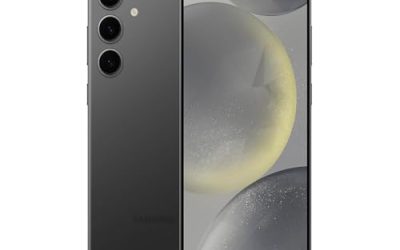
The S25 Ultra is the mainstream flagship answer: a big 6.9-inch AMOLED screen with stereo speakers that make it the loud, full-sounding choice for video, games and speakerphone media, in the US version with a domestic warranty. Its Snapdragon 8 Elite platform and 12GB of memory keep everything else at flagship pace, and the 5,000mAh battery supports long listening days. There is no headphone jack, so wired listeners join through a USB-C dongle, while Bluetooth listeners get Samsung’s current wireless platform. For most buyers who listen on speakers and earbuds, this is the balanced pick.
Google Pixel 9 Pro XL
- Best for: Google-ecosystem buyers who listen mainly on speakers and Bluetooth earbuds.
- 6.8-inch Super Actua display
- Stereo speakers
- Google Tensor G4 processor
- 16GB RAM and 256GB storage
Google-ecosystem buyers who listen mainly on speakers and Bluetooth earbuds.
No headphone jack, and the audio hardware is competent rather than specialised, so committed wired listeners should take the Sony instead.
The Pixel 9 Pro XL rounds out the group with stereo speakers in Google’s flagship body, a 6.8-inch Super Actua display and the Tensor G4 platform. Its audio case is the straightforward one: balanced stereo output for video and calls, current Bluetooth for wireless listening, and an ownership experience built around Google’s software and long update support. It lacks the Sony’s jack and front-facing layout, so it will not displace the Xperia for wired listeners, but for buyers already in Google’s ecosystem who mostly listen on speakers and earbuds, it is the coherent choice.
Which One Fits Your Situation
You own good wired headphones and use them daily
Choose the Sony Xperia 1 VI, and it is not close. The 3.5mm jack connects your headphones directly, the front stereo speakers cover the times you listen without them, and the rest of the phone is a genuine flagship. The only homework is the carrier check, because the listing’s GSM-only wording rules out CDMA networks, and that single line matters more than any audio feature if your carrier is on the wrong side of it.
You watch and game on speakers, and want US warranty support
Choose the Galaxy S25 Ultra. The large screen and stereo speakers suit media-first use, the US version’s warranty removes the grey-import questions that hang over international models, and Samsung’s platform covers modern Bluetooth listening well. Add a decent USB-C dongle only if wired listening matters; for speaker and earbud use, the phone is complete as it stands.
Your life runs on Google services and earbuds
Choose the Pixel 9 Pro XL. Its stereo speakers handle video and calls cleanly, its software support window is the longest-feeling of the three in daily use, and it avoids the carrier caveat attached to the Sony’s listing. It is the least specialised audio device here, but for earbud-based listening the phone around the audio matters more than the last increment of speaker tuning.
You listen mostly on Bluetooth earbuds
Choose between the Samsung and the Pixel on the phone itself, because your audio travels over Bluetooth either way and the earbuds set most of the sound. The S25 Ultra brings the bigger screen and US warranty; the Pixel brings Google’s software experience. Speaker layout and headphone jacks stop mattering in this use case, so let carrier fit, camera preference and update support make the decision instead of audio specifications.
Common Mistakes
- Assuming stereo speakers means front-facing; most flagships fire one channel downward.
- Buying a jack-less phone for wired headphones without budgeting for a good USB-C DAC dongle.
- Chasing codec names the listing never states, instead of verifying platform support with the manufacturer.
- Ignoring carrier compatibility wording on international-model listings.
- Judging sound by a loudness claim when no honest volume figure is published anywhere.
Frequently Asked Questions
Does a 3.5mm headphone jack actually sound better than Bluetooth?
It removes two variables: Bluetooth compression and the battery-dependent electronics in wireless earbuds. A good wired headphone on a jack, as on the Xperia here, delivers exactly what the phone’s DAC produces. Modern Bluetooth codecs narrow the gap considerably for casual listening, but for owners of quality wired headphones the direct connection remains the most predictable route to the best sound a phone can make.
Are front-facing speakers really better than bottom-firing stereo?
Yes, in the ways that matter daily. Front-facing speakers project both channels toward you, hold their balance in portrait and landscape, and are not muffled by the hand or surface under the phone. Bottom-firing designs lose one channel to the room and shift balance with grip. The difference is obvious in dialogue and game audio, less so in sheer volume, which is why layout beats loudness claims.
What should I check on the listing before buying an international model?
Three lines: the network wording, such as GSM-only with no CDMA; the warranty statement, since international versions often exclude US warranty cover; and the exact model number, so the bands and features match the version you researched. The Sony in this guide is the clear example — an excellent phone whose listing constraints are stated plainly and simply need reading before purchase.
Can a USB-C dongle match a built-in headphone jack?
A good dongle with its own quality DAC can come close, and some outperform mediocre built-in outputs. The costs are practical rather than sonic: another item to carry, a port occupied while listening, and quality that varies wildly between dongles. If wired listening is occasional, a dongle on the Samsung or Pixel is fine. If it is daily, the built-in jack on the Xperia is the simpler path.
More from Amazon
Programs that pair well with the guide above. Offers and eligibility are set by Amazon and may change.
Free shipping on eligible items, Prime Video and more. Eligible new members can start with a free trial.
Start a Prime free trialAd-free music streaming. Eligible new subscribers can start with a free trial.
Try Music Unlimited freeA Prime membership for ages 18-24 with a trial period. Eligibility is set by Amazon.
See Prime for Young AdultsAudiobooks and podcasts to listen to on the go. Eligible new members can start with a free trial.
Try Audible freeAs an Amazon Associate we earn from qualifying purchases.
Write Your Review
No reviews yet. Be the first to share your experience!