

Key takeaways
- Looking for the best smartphones for visually impaired users? We compare four phones with strong screen readers, magnification, and voice control.
As an Amazon Associate, we earn from qualifying purchases.
The Short Answer
The best smartphones for visually impaired users are ordinary flagship and mid-range phones chosen for their built-in accessibility tools, not special devices made for one audience. Our top pick is the Samsung Galaxy S25, because its bright 6.2-inch Dynamic AMOLED 2X display pairs with the full Android accessibility suite, including TalkBack, magnification, high-contrast text, and voice control. The Google Pixel 9 is the strongest alternative for voice control, while the Samsung Galaxy A16 5G and the Motorola Moto G Power 2025 bring larger screens and longer-lasting batteries.
One fact matters before we go further: no phone on this list was made only for visually impaired users. Every pick is a mainstream smartphone, and the ranking below is based on accessibility features, screen size, and ease of spoken control. We also want to be open about one gap: we could not verify a new, non-refurbished iPhone listing on Amazon US while researching this article, since the iPhone listings that surfaced were refurbished units. This guide therefore covers Android phones with linked listings, and the How to Choose section explains what iPhone users should look for instead.
Our Top Picks

- Best Overall: Samsung Galaxy S25 128GB, Mint — a bright 6.2-inch display, the full Android accessibility suite, and a compact body. Check on Amazon
- Best for Voice Control: Google Pixel 9 128GB, Peony — clean Android with Gemini voice assistance and a 4,700 mAh battery. Check on Amazon
- Best Large Display: Samsung Galaxy A16 5G 128GB, Blue Black — a large 6.7-inch Super AMOLED display and a 5,000 mAh battery. Check on Amazon
- Best Battery and Simplicity: Motorola Moto G Power 2025 128GB, Slate Gray — a big 6.8-inch display, a 5,000 mAh battery, and a headphone jack. Check on Amazon
Quick Comparison
| Phone | Display | Storage and Memory | Battery | Screen Reader and Voice Tools |
|---|---|---|---|---|
| Samsung Galaxy S25 | 6.2-inch Dynamic AMOLED 2X, 120 Hz refresh rate | 128 GB storage, 12 GB RAM | 4,000 mAh | TalkBack, magnification, high-contrast mode, voice control |
| Google Pixel 9 | 6.3-inch Actua display | 128 GB storage, 12 GB RAM | 4,700 mAh | TalkBack, magnification, Gemini voice assistance |
| Samsung Galaxy A16 5G | 6.7-inch Super AMOLED, 90 Hz refresh rate | 128 GB storage, 4 GB RAM, expandable storage | 5,000 mAh | TalkBack, magnification, high-contrast mode, voice control |
| Motorola Moto G Power 2025 | 6.8-inch display | 128 GB storage, 8 GB RAM, microSD expansion to 1 TB | 5,000 mAh | TalkBack, magnification, voice control |
How to Choose
Choosing a phone for low vision begins with the screen reader, because that is the tool you will use most. On Android phones it is called TalkBack; on iPhones it is called VoiceOver. Both read aloud what is on the screen, describe buttons and menus, and let you explore the screen by touch. Both are built into the operating system and cost nothing extra. If you already know one of them, stay with that platform, because relearning a screen reader takes time and patience.
Next, look at the display. A larger display shows larger text, and an AMOLED display gives stronger contrast between text and background, which helps many people with low vision. The phones in this guide range from 6.2 inches to 6.8 inches. Android lets you increase font size and display size separately, and it includes a magnification shortcut that enlarges part of the screen on demand, plus built-in high-contrast text and color inversion.
Voice control is the third feature to weigh. Every phone here supports hands-free voice commands for calling, texting, setting reminders, and opening apps. The Pixel 9 leans hardest into voice assistance through Gemini, while Samsung and Motorola phones use Google Assistant and their own voice tools. Confirm on the listing which voice assistant version the phone ships with.
Battery life matters more than it might seem. A screen reader user often keeps the display on longer and listens to spoken feedback throughout the day, so a larger battery gives more room. The three phones with 4,700 mAh or 5,000 mAh batteries will generally last longer between charges than the 4,000 mAh Galaxy S25, though actual use varies, so confirm battery details on the listing.
For iPhone users, the accessibility story is strong even though no new iPhone listing is linked in this guide. VoiceOver is widely regarded as one of the most complete screen readers available, and iPhones include magnification, large text, high-contrast modes, and voice control through Siri. If you already use an iPhone, the accessibility features you know are a good reason to stay. When buying from Amazon US, confirm on the listing whether the unit is new or refurbished.
The Picks in Detail
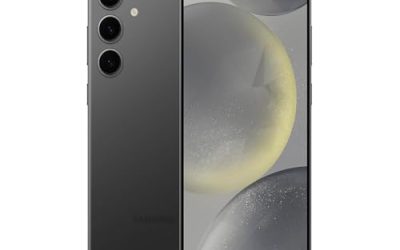
1. Samsung Galaxy S25 128GB, Mint — Best Overall
The Galaxy S25 earns the top spot because it combines a bright, sharp display with the full Android accessibility suite in a compact body. Its 6.2-inch Dynamic AMOLED 2X display has a 120 Hz refresh rate, and the listing describes vivid visuals indoors and outdoors. The phone runs Android 15 with One UI 7, with 12 GB of RAM and 128 GB of storage. The Snapdragon 8 Elite processor keeps TalkBack, magnification, and voice commands responsive even when several apps are open. The battery is listed at 4,000 mAh with fast charging and wireless charging. The triple-lens camera uses a 50 MP wide lens, a 12 MP ultra-wide lens, and a 10 MP telephoto lens. The listing gives the model number as SM-S931ULGAXAA and the date first available as January 22, 2025.
For a visually impaired user, the S25 has three practical strengths: the AMOLED panel delivers deep blacks and strong contrast for high-contrast text, Samsung’s One UI adds large font options and a magnification window, and the phone is light and compact at 5.7 ounces.
Pros:
- Bright 6.2-inch Dynamic AMOLED 2X display with strong contrast for low vision
- Full Android accessibility suite, including TalkBack, magnification, and voice control
- Fast Snapdragon 8 Elite processor with 12 GB of RAM
- Compact and light body that is easy to hold one-handed
Cons:
- 4,000 mAh battery is the smallest in this guide, so heavy screen reader use may drain it sooner
- 128 GB of storage with no microSD expansion listed
- Smaller display than the other picks
2. Google Pixel 9 128GB, Peony — Best for Voice Control
The Pixel 9 is the best pick for anyone who wants to run their phone mainly by voice. It ships with Gemini, Google’s voice assistant, and clean Android with no extra interface layered on top. The 6.3-inch Actua display is bright and sharp, and the phone has 12 GB of RAM and 128 GB of storage. The Google Tensor G4 chip powers the phone, and the battery is listed at 4,700 mAh with a 24-hour battery claim on the listing. The dual rear camera uses a 50 MP main sensor and a 48 MP ultrawide camera, and the listing gives the model number as G2YBB.
What sets the Pixel 9 apart is how much of the phone can be driven by spoken commands. You can ask Gemini to read messages, place calls, and set reminders, and the clean Android interface means TalkBack and magnification behave predictably across apps. The listing shows the phone as unlocked for major carriers, including Google Fi, Verizon, T-Mobile, and AT and T, but confirm carrier compatibility on the listing before buying.
Pros:
- Gemini voice assistance built in for hands-free control
- Clean Android with predictable TalkBack and magnification behavior
- 4,700 mAh battery for longer days of spoken use
- Bright 6.3-inch Actua display with strong contrast
Cons:
- No microSD expansion listed, so 128 GB is the storage limit
- No headphone jack, so wired listening needs a USB-C adapter, which is not included in the box per the listing
- Some voice features need a network connection, so confirm on the listing which functions work offline
3. Samsung Galaxy A16 5G 128GB, Blue Black — Best Large Display
The Galaxy A16 5G is the pick for anyone who wants the largest readable screen in a straightforward, easy-to-learn phone. Its 6.7-inch Super AMOLED display has a 90 Hz refresh rate and a full high-definition resolution, which keeps large text crisp. The phone has 4 GB of RAM and 128 GB of internal storage, expandable with a microSD card up to 1.5 TB according to the listing. The battery is listed at 5,000 mAh with fast charging support, and the phone supports 5G. The triple-lens camera uses a 50 MP main lens, a 5 MP ultra-wide lens, and a 2 MP macro lens, with a 13 MP front camera. The listing gives the model number as SM-A166 and the date first available as January 9, 2025.
The A16 5G runs Android 14 with One UI, so it includes the same TalkBack, magnification, and high-contrast tools as the Galaxy S25. Its advantage is size: text set to the largest font still leaves room to read. The 4 GB of RAM is the lowest in this guide, so the phone may feel slower with several apps open, but for calls, messages, audiobooks, and browsing it is adequate.
Pros:
- Large 6.7-inch Super AMOLED display that keeps large text readable
- 5,000 mAh battery for long days of use
- Expandable storage up to 1.5 TB for audiobooks and downloads
- Full Samsung and Android accessibility suite, including TalkBack and magnification
Cons:
- 4 GB of RAM is the lowest in this guide and may feel slow with many apps open
- No wireless charging listed
- The large body may be harder to hold one-handed
4. Motorola Moto G Power 2025 128GB, Slate Gray — Best Battery and Simplicity
The Moto G Power 2025 is the simplest phone in this guide, and that simplicity is its strength. It has a large 6.8-inch display, 8 GB of RAM, and 128 GB of storage that expands with a microSD card up to 1 TB. The battery is listed at 5,000 mAh, and the listing says it gives hours of power after a short charge. The phone uses the MediaTek Dimensity 6300 chipset and runs Android 15, with a 50 MP main lens with optical image stabilization. The listing gives the model number as PB640002US and the date first available as February 6, 2025. It is unlocked for all major US carriers, and the box includes a SIM tray ejector, a USB cable, and a user guide.
Motorola’s near-stock Android means TalkBack, magnification, and voice control work the way Google designed them. The 6.8-inch display is the largest in this guide, and the phone is the only pick with a 3.5 mm headphone jack for private screen reader audio without an adapter. The long battery life and simple interface make it a strong choice for a first smartphone.
Pros:
- Largest display in this guide at 6.8 inches for very large text
- 5,000 mAh battery and 8 GB of RAM for smooth, long-lasting daily use
- Near-stock Android with standard TalkBack, magnification, and voice control
- 3.5 mm headphone jack for wired screen reader audio
Cons:
- The large body is the heaviest feel in this guide, so a case with grip may help
- No wireless charging listed
- Fewer advanced camera features than the Galaxy S25 or Pixel 9
Who Should Choose What
Choose the Samsung Galaxy S25 if you want the strongest all-around phone with the best display contrast in a compact body. It suits users who already know TalkBack and want a phone that responds quickly to spoken feedback.
Choose the Google Pixel 9 if you plan to control the phone mostly by voice. Gemini handles calls, messages, reminders, and reading aloud with fewer taps, and the clean Android interface keeps accessibility settings easy to find.
Choose the Samsung Galaxy A16 5G if you want the largest readable screen and a long-lasting battery in a straightforward phone. It is a good fit for reading large text, listening to audiobooks, and making video calls with family.
Choose the Motorola Moto G Power 2025 if you want the simplest experience, the largest display, and a headphone jack for private listening. It is a good first smartphone for someone new to TalkBack.
If you already use an iPhone and rely on VoiceOver, staying with iPhone is a reasonable choice even though no new iPhone listing is linked here. VoiceOver, magnification, and Siri are built into every iPhone, and the familiarity of the tools you already know is worth more than any single specification. When buying an iPhone from Amazon US, confirm on the listing whether the unit is new or refurbished.
Common Mistakes
Buying a phone made only for one audience. No mainstream phone is made only for visually impaired users, and specialist devices with tiny screens and limited apps are often harder to use, not easier. A mainstream phone with strong built-in accessibility tools gives you more apps and more support.
Choosing the smallest screen. A small screen forces larger text to scroll more often and makes magnification harder to use. If low vision is the main concern, a display of 6.2 inches or larger is a good place to begin.
Skipping the screen reader setup. TalkBack and VoiceOver need a few minutes of setup, including the shortcut that turns the screen reader on and off. Set the shortcut during the first day, and ask a friend or family member to help if needed.
Ignoring audio. A screen reader speaks all day, so a quiet speaker or a poor Bluetooth connection becomes a daily frustration. The Moto G Power 2025 is the only pick here with a wired headphone jack.
Forgetting carrier compatibility. An unlocked phone still needs to work with your carrier and your plan. Confirm on the listing that the phone supports your carrier, and confirm whether it uses a physical SIM, an eSIM, or both before you buy.
FAQ
What is the best smartphone for visually impaired users?
The Samsung Galaxy S25 is our top pick because its bright 6.2-inch Dynamic AMOLED 2X display, full Android accessibility suite, and fast processor make TalkBack, magnification, and voice control work smoothly. The Google Pixel 9 is the best alternative for voice control, and the Galaxy A16 5G and Moto G Power 2025 are better for a larger screen and a longer-lasting battery.
Do I need a special phone for low vision?
No. No phone is made only for visually impaired users, and the best choice is usually a mainstream smartphone with strong built-in accessibility tools. Android phones include TalkBack, magnification, large text, and high-contrast modes, while iPhones include VoiceOver and the same kinds of tools. The ranking in this guide is based on how well those features work on each phone.
What is TalkBack, and how is it different from VoiceOver?
TalkBack is the screen reader built into Android, and VoiceOver is the screen reader built into iPhones. Both read aloud what is on the screen, describe buttons and menus, and let you explore the screen by touch. They do the same job on different platforms, so the best one is the one you already know.
Can I use a smartphone if I cannot see the screen at all?
Yes. With a screen reader turned on, the phone speaks everything on the screen, including menus, messages, and notifications. Voice commands can place calls, send messages, and set reminders without touching the screen at all. It takes practice to learn the gestures, and it helps to learn with a sighted friend or a local accessibility group at first.
Should I buy an iPhone or an Android phone for accessibility?
Both platforms have strong accessibility tools, so the better choice is usually the one you already know. If you already use VoiceOver, staying with iPhone keeps your habits and settings. If you already use TalkBack, any of the four phones in this guide will feel familiar. If you are new to both platforms, the Pixel 9 is the easiest Android phone to control by voice, and the Moto G Power 2025 is the simplest to learn.
Conclusion
The best smartphones for visually impaired users are mainstream phones with strong accessibility features. The Samsung Galaxy S25 is the best overall choice for its bright display and responsive performance. The Google Pixel 9 is the best choice for voice control. The Samsung Galaxy A16 5G and the Motorola Moto G Power 2025 are the best choices for large text and long battery life. Whichever phone you choose, turn on the screen reader on the first day, set the magnification shortcut, and confirm on the listing that the storage, color, and carrier details match what you need.
More from Amazon
Programs that pair well with the guide above. Offers and eligibility are set by Amazon and may change.
Free shipping on eligible items, Prime Video and more. Eligible new members can start with a free trial.
Start a Prime free trialAd-free music streaming. Eligible new subscribers can start with a free trial.
Try Music Unlimited freeA Prime membership for ages 18-24 with a trial period. Eligibility is set by Amazon.
See Prime for Young AdultsAudiobooks and podcasts to listen to on the go. Eligible new members can start with a free trial.
Try Audible freeAs an Amazon Associate we earn from qualifying purchases.
Write Your Review
No reviews yet. Be the first to share your experience!