

Key takeaways
- People searching for NAS hard drives for home use tend to land in one of two camps. The first already owns an empty network storage box and wants the.
People searching for NAS hard drives for home use tend to land in one of two camps. The first already owns an empty network storage box and wants the right disks to put inside it. The second has nothing yet and would rather buy one product that arrives ready to plug in. The listings gathered here belong mostly to the second camp: ready-made Buffalo network storage units that ship with drives included, described as a home cloud or network storage. That changes the decision from picking a drive model to choosing how many bays and how many terabytes your household really needs.
The guide is written for families backing up photos from several phones, people who want a shared media library, and small home offices that have outgrown a single USB disk. Plain desktop hard drives that appeared in the same search results, such as the 8TB and 10TB internal drives from other brands, are left out of the reviews because they are PC drives rather than NAS products. Everything below relies on what each title states, so check the listing for details such as supported RAID modes, warranty and app support before buying in 2026.
Quick Picks
Our top picks


As an Amazon Associate we earn from qualifying purchases at no extra cost to you.
| Product | Best for | Key spec from the title |
|---|---|---|
| Buffalo LinkStation 210 2TB | Light backup for one household | 1-bay, 2TB, drives included |
| Buffalo LinkStation 210 4TB | Photo and document archive | 1-bay, 4TB, drives included |
| Buffalo LinkStation 210 6TB | Growing media library, single bay | 1-bay, 6TB, drives included |
| Buffalo LinkStation 220 4TB | Two-drive layout on a small budget | 2-bay, 4TB, drives included |
| Buffalo LinkStation 220 8TB | Balanced family storage | 2-bay, 8TB, drives included |
| Buffalo LinkStation 220 12TB | Large home library | 2-bay, 12TB, drives included |
| Buffalo TeraStation Essentials 4-Bay | Home office or heavy users | 4-bay desktop NAS, 16TB (4x4TB) |
How to Choose
Bays decide your options
A one-bay unit holds a single drive, so a failure of that drive means the data on it is at risk unless you keep another copy. Two bays open the door to mirroring if the listing supports it, and four bays add more flexibility. The title of each product states its bay count, but supported RAID modes are not always visible, so read the listing before assuming protection against drive failure.
Capacity planning with real numbers
Count what you store now and double it. A family with a few years of phone photos and videos can fill 2TB sooner than expected, while a household with a large movie collection will want 8TB or more. Remember that mirrored layouts use half the raw space, so a 4TB two-bay unit configured that way would give you about 2TB of usable room.
What to ignore
Do not chase the highest capacity if your data is modest, and do not treat a NAS as a backup by itself. It is one copy on one device in your home. Ignore flashy cloud wording in titles and check the listing for the actual remote access method and the app support included.
Where budget models cut corners
Entry-level units usually use slower processors and less memory, so large photo libraries can feel slow to browse remotely and heavy file transfers take longer. Plastic cases and limited expandability are other typical compromises. Fan noise, power draw and how often the unit spins its drives down are further details worth reading on the listing, especially if the NAS will sit in a living room or bedroom. If you expect to run several users at once, step up toward the larger models rather than the smallest single-bay unit.
The 7 Best Options
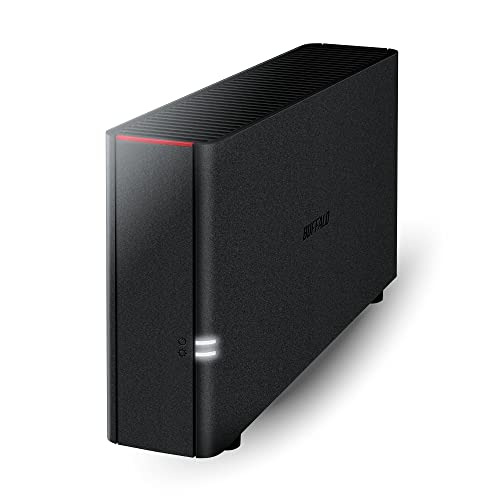
Buffalo LinkStation 210 2TB (1-Bay)
The smallest LinkStation here is a single-bay unit with 2TB of drives included, billed as a home cloud or network storage. It is for a household that wants shared access to documents and a modest photo set without managing separate disks. As an entry point it keeps outlay low and setup short.
- Strength: drives are included, so the unit is ready to use out of the box.
- Strength: smallest and most affordable entry among the Buffalo units.
- Trade-off: one bay and 2TB leave little room to grow or add redundancy.
Skip it if your photo and video library already exceeds a terabyte or two, or if you want any protection against a drive failure. A larger model is a better match for a growing archive.
Buffalo LinkStation 210 4TB (1-Bay)
This single-bay model doubles the capacity to 4TB while keeping the same simple format. It suits a family archive of photos, scanned documents and a few home videos that needs to be reachable from several devices around the house. The setup is aimed at everyday users rather than enthusiasts.
- Strength: 4TB covers a typical multi-year family photo archive.
- Strength: a single-bay design stays compact and simple to place.
- Trade-off: still one bay, so a drive problem puts everything on that unit at risk.
Skip it if the data on it would be painful to lose and you will not keep a second copy elsewhere. In that case a two-bay model with a mirror option, if the listing confirms it, deserves a look.
Buffalo LinkStation 210 6TB (1-Bay)
The largest single-bay LinkStation in this set gives 6TB in one drive. It suits a household with a growing media library of music, movies and photos that is mostly kept for convenience rather than as the only copy. It remains a straightforward way to centralize files without extra drives.
- Strength: the most capacity available in a one-bay unit here.
- Strength: media sharing across devices without a dedicated computer.
- Trade-off: all 6TB sit on a single drive, so a failure affects the whole library at once.
Skip it if you want redundancy built into the box. For roughly similar total capacity, a two-bay unit offers more options, and a separate backup would still be wise whichever model you choose. Confirm on the listing how remote access and the companion app work.
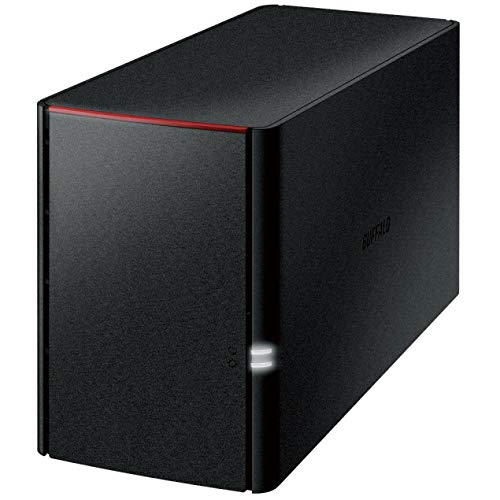
Buffalo LinkStation 220 4TB (2-Bay)
The 220 series moves to two bays, and this 4TB version is the entry point. Two drives are included, which gives the household a chance to use a layout other than a single disk if the listing supports it. It fits a small home that wants a bit more flexibility.
- Strength: two bays open up more layout options than a single-bay unit.
- Strength: drives are included, so no separate disk shopping.
- Trade-off: capacity is modest if a mirrored setup uses half of it.
Skip it if you need lots of space for video, since the 8TB and 12TB versions offer more room. Check the listing for the RAID modes that are actually supported, and decide whether you want the second drive for extra space or for a safety copy before you commit to a layout.
Buffalo LinkStation 220 8TB (2-Bay)
The 8TB 220 is the middle option and probably the most balanced pick for family use. It combines two bays with enough capacity for years of photos plus a moderate video collection, and it still carries the home cloud and network storage positioning in its title.
- Strength: a sensible capacity for most households that want room to grow over several years.
- Strength: two bays allow a different layout from the single-bay models.
- Trade-off: a mirrored layout would halve the usable space, so plan accordingly before choosing how to configure the two drives.
Skip it if your needs are small and you would rather save money on the 4TB model, or if you need more than two drives. Households that stream large video files to several rooms at once should also read the listing for network port details before deciding.
Buffalo LinkStation 220 12TB (2-Bay)
This is the biggest two-bay LinkStation listed, with 12TB included. It fits households with a large media archive, such as a long-running photo collection, home videos and ripped discs, that wants everything in one place on the network.
- Strength: the largest capacity of the two-bay LinkStation units, which helps with long video archives.
- Strength: drives are included, so it works as a complete package.
- Trade-off: more data in one box makes a separate backup even more important, and restoring that much data takes time.
Skip it if you want to expand later by adding drives, since a two-bay unit has limited room once both bays are filled. A four-bay unit gives more flexibility for growth, and either way a second copy of the most important files should live somewhere else.
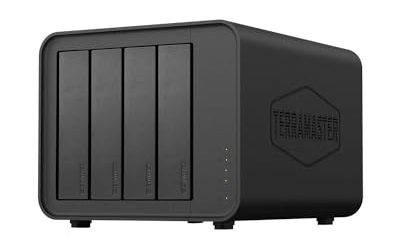
Buffalo TeraStation Essentials 4-Bay
The TeraStation Essentials is described as a value desktop NAS with four bays and 16TB (four 4TB drives) included. It targets a home office or a heavy household that wants more room and more flexibility than the compact LinkStation range.
- Strength: four bays and 16TB in a single desktop unit.
- Strength: four 4TB drives are included in the package, so there is no extra disk shopping.
- Trade-off: it is physically larger and likely costlier than the compact LinkStation models, and it takes more desk or shelf space.
Skip it if your data fits comfortably in a smaller unit, since the extra bays and capacity would sit idle. Check the listing for supported RAID modes, the warranty and the software features before buying, and make room on a shelf with decent airflow because a four-drive box runs warmer than a compact one.
Which One Fits Your Situation
Light photo and document backup
The Buffalo LinkStation 210 4TB is enough for a typical family and stays simple to manage. Add a second copy of anything irreplaceable.
A family that records lots of video
The Buffalo LinkStation 220 8TB gives two bays and ample space without jumping to a four-bay unit, which keeps the footprint small while handling years of phone clips.
A growing media collection
The Buffalo LinkStation 220 12TB suits a large library of photos, films and music, provided you maintain a separate backup elsewhere and check the listing for how the two drives are configured.
A home office with several users
The Buffalo TeraStation Essentials 4-Bay offers the room and bay count that a busier setup needs, with four drives included so the whole team or family can share one place for files.
Common Mistakes
- Treating a single-bay NAS as a backup when it is just one more copy on one drive.
- Buying plain desktop internal drives and expecting NAS features without checking the listing.
- Forgetting that mirrored layouts consume half the raw capacity.
- Underestimating how fast photo and video libraries grow.
- Leaving the unit in a hot or dusty spot with no airflow.
Related guides
- How To Apply Thermal Paste How Much And Which Pattern
- How To Choose Power Supply Wattage For A Pc Build
- Cpu Coolers For Small Form Factor Cases
Frequently Asked Questions
Do these units include hard drives?
Yes. The titles for the Buffalo LinkStation and TeraStation models say hard drives are included, so no separate disks are needed.
Is a NAS the same as a backup?
No. A NAS is a central copy on one device. Keep another copy on a different device or location for files you cannot replace.
How much capacity does a family need?
It depends on photos, videos and media. Many households start at 4TB or 8TB, but count your current data and leave room to grow.
Can a regular PC hard drive work inside a NAS?
Some people do it, but NAS-oriented drives are built for always-on use and steady workloads. Check the manufacturer’s guidance for your unit before mixing in desktop disks, and note that the units in this roundup already include their drives.
More from Amazon
Programs that pair well with the guide above. Offers and eligibility are set by Amazon and may change.
Free shipping on eligible items, Prime Video and more. Eligible new members can start with a free trial.
Start a Prime free trialAd-free music streaming. Eligible new subscribers can start with a free trial.
Try Music Unlimited freeA Prime membership for ages 18-24 with a trial period. Eligibility is set by Amazon.
See Prime for Young AdultsAudiobooks and podcasts to listen to on the go. Eligible new members can start with a free trial.
Try Audible freeAs an Amazon Associate we earn from qualifying purchases.

Write Your Review
No reviews yet. Be the first to share your experience!