
Our Short List of 3

- Best for: Students who want one Windows laptop for essays, spreadsheets, research and light technical coursework.
- Display: 15.6-inch Full HD
- Processor: AMD Ryzen 5 7530U (6 cores, 12 threads, up to 4.5 GHz)
- Memory: 16GB DDR4 RAM
- Storage: 512GB PCIe SSD

- Best for: Students who handwrite or annotate notes on screen and carry their laptop across campus all day.
- Display: 14-inch WUXGA (1920 x 1200) touch screen
- Processor: AMD Ryzen 5 (8000 Series)
- Memory: 16GB
- Storage: 512GB SSD

- Best for: STEM students who need GPU power for coursework and want one machine that also games.
- Display: 15.6-inch Full HD, 144Hz
- Processor: AMD Ryzen 5 7535HS (6 cores, 12 threads, up to 4.55 GHz)
- Graphics: AMD Radeon RX 6550M, 4GB GDDR6
- Memory: 16GB DDR5 RAM
All 3 Picks at a Glance
| Product | Specs | Action |
|---|---|---|
| HP 255 G10 |
| Check price on Amazon |
| HP Envy x360 14 (14-fa0013dx) |
| Check price on Amazon |
| HP Victus 15 |
| Check price on Amazon |
Key takeaways
- HP laptops for students compared by listing specs: the 255 G10 for all-round coursework, Envy x360 14 for touch notes, Victus 15 for STEM and gaming, Chromebook 14 on a budget.
The real decision when buying an HP laptop for school is not raw speed. It is whether the machine still feels quick in the third year of a degree, when it carries a full drive, dozens of browser tabs and the software your courses actually require. Students also need to decide early between Windows and Chrome OS, because that choice decides which apps can run locally at all.
This roundup is for students who have settled on HP and want the right model line for their workload, from web-based high school classes to engineering software. Every pick below comes from a current Amazon US listing, and the specs quoted are the ones printed on that listing, so check the exact configuration on the page before ordering.
Quick Picks
As an Amazon Associate we earn from qualifying purchases.
| Product | Best for | Key spec from title |
|---|---|---|
| HP 255 G10 | All-round Windows coursework | Ryzen 5 7530U, 16GB RAM, 512GB SSD |
| HP Envy x360 14 | Touch notes and a lighter bag | 14-inch WUXGA touch screen, 16GB memory |
| HP Victus 15 | STEM software and gaming after class | Radeon RX 6550M graphics, 144Hz display |
| HP Chromebook 14 | Web-based schoolwork on a tight budget | Chrome OS, Intel Celeron N4120, 4GB RAM |
How to Choose
Start with the operating system your courses need
Windows and Chrome OS cover very different kinds of schoolwork. A Chromebook handles documents, slides, research and video classes in the browser, and it boots fast with very little maintenance. The moment a course needs installed software, such as a statistics package, a CAD tool, an IDE with local compilers or a proctored exam client that only supports Windows, a Chromebook stops being enough. Check your syllabus and your school’s software list before choosing, because this single decision rules whole product lines in or out.
Treat 16GB of memory as the four-year target
A student laptop rarely runs one thing at a time. A typical session stacks a video lecture, a document, a chat app and twenty research tabs, and 8GB machines start swapping to disk under that load. Listings with 16GB of RAM leave headroom for heavier tools later in the degree, such as virtual machines or data software. Storage matters the same way: 512GB holds a few years of coursework, photos and offline material comfortably, while 64GB or 128GB drives fill quickly once Windows updates and a few large apps land.
Match the screen and weight to your timetable
Back-to-back classes mean the laptop lives in a backpack, so weight and screen size shape daily comfort more than benchmarks do. A 14-inch machine around three pounds suits students moving between buildings all day, while a 15.6-inch screen gives more room for split-screen writing and spreadsheets at a desk. Resolution is worth checking on the listing: Full HD or WUXGA panels keep text sharp during long reading sessions, while basic HD panels look grainy and tire eyes faster over a semester.
Check the ports, camera and keyboard details on the listing
Small spec lines decide how the laptop fits your routine. An HDMI port connects to library monitors and classroom projectors without a dongle. A webcam with a privacy shutter matters for remote classes. A numeric keypad helps accounting and science students who enter data often, and a backlit keyboard helps during late study sessions in dim rooms. Read the listing’s port and keyboard lines rather than assuming, because HP sells the same model name with different keyboards and port layouts in different configurations.
The 4 Best Options
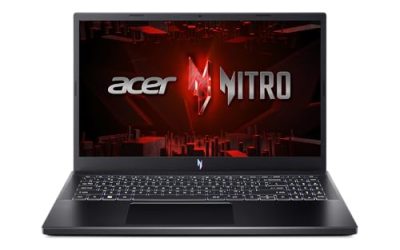
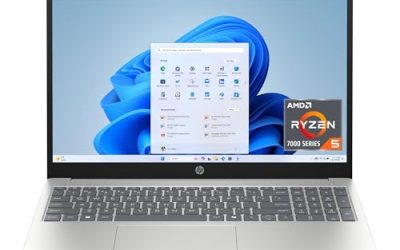
HP 255 G10
- Best for: Students who want one Windows laptop for essays, spreadsheets, research and light technical coursework.
- Display: 15.6-inch Full HD
- Processor: AMD Ryzen 5 7530U (6 cores, 12 threads, up to 4.5 GHz)
- Memory: 16GB DDR4 RAM
- Storage: 512GB PCIe SSD
Students who want one Windows laptop for essays, spreadsheets, research and light technical coursework.
The integrated graphics are fine for coursework and video but are not meant for demanding games or GPU-heavy rendering.
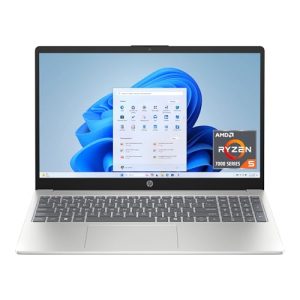
The 255 G10 is the sensible default for a student who needs Windows and wants the machine to last the whole degree. The listing pairs a six-core Ryzen 5 processor with 16GB of memory and a 512GB solid-state drive, which is the combination that keeps a coursework laptop responsive when lectures, documents and research tabs pile up. Windows 11 Pro also covers school networks and exam software that expect a full Windows install, and the numeric keypad is a quiet bonus for anyone entering figures regularly.
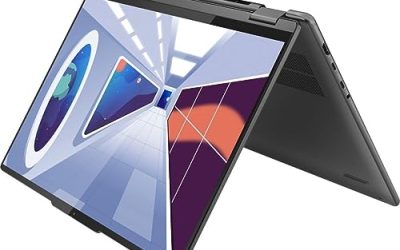
HP Envy x360 14 (14-fa0013dx)
- Best for: Students who handwrite or annotate notes on screen and carry their laptop across campus all day.
- Display: 14-inch WUXGA (1920 x 1200) touch screen
- Processor: AMD Ryzen 5 (8000 Series)
- Memory: 16GB
- Storage: 512GB SSD
Students who handwrite or annotate notes on screen and carry their laptop across campus all day.
Confirm whether a stylus is included in the box on the listing before ordering, since pen support and pen inclusion are separate things on convertible models.
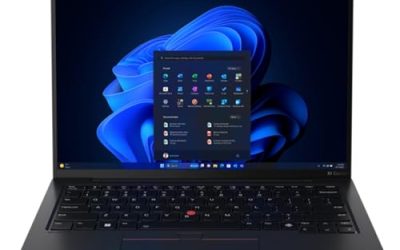
The Envy x360 suits students whose day is built around notes, readings and group work in different places. Its 14-inch touch screen folds back into tablet mode for annotating PDFs and reading on the move, and the WUXGA resolution gives text more sharpness than a basic HD panel. The listing’s 16GB of memory and 512GB drive match the all-rounder above, so the convertible format does not force a performance compromise, and the smaller chassis is easier to carry between classes.
HP Victus 15
- Best for: STEM students who need GPU power for coursework and want one machine that also games.
- Display: 15.6-inch Full HD, 144Hz
- Processor: AMD Ryzen 5 7535HS (6 cores, 12 threads, up to 4.55 GHz)
- Graphics: AMD Radeon RX 6550M, 4GB GDDR6
- Memory: 16GB DDR5 RAM
STEM students who need GPU power for coursework and want one machine that also games.
At just over five pounds before the charger, it is noticeably heavier in a backpack than the 14-inch options, and this listing is a seller-configured unit, so confirm the exact RAM and storage on the page.
The Victus 15 is the pick for students whose coursework or downtime needs a dedicated graphics card. Engineering, design and computer science students running modelling tools, local development environments or game engines get real value from the Radeon RX 6550M, and the same hardware covers gaming after class without a second machine. The listing pairs it with a fast Ryzen 5 processor, 16GB of DDR5 memory and a 144Hz display, which keeps both coursework and play feeling responsive.
HP Chromebook 14
The Chromebook 14 covers the other end of student life: web-based classes, documents, email and video calls on the smallest budget. Chrome OS starts quickly, updates itself in the background and needs almost no maintenance, which suits younger students and anyone whose school runs on browser apps. The listing’s storage combines built-in eMMC with an included card, so read that line carefully and plan to keep large files in cloud storage rather than on the device.
Specs
- Display: 14-inch HD
- Processor: Intel Celeron N4120
- Memory: 4GB RAM
- Storage: 128GB (64GB eMMC plus 64GB card)
- Graphics: Intel UHD Graphics 600
- Camera: webcam
- Connectivity: WiFi
- Operating system: Chrome OS
Best for: Students whose schoolwork lives entirely in the browser and who want the lowest-maintenance option.
Watch out for: Chrome OS cannot install Windows course software, and 4GB of memory is only comfortable with a modest number of open tabs.
ASIN: B0CVGV2YBT
Which One Fits Your Situation
Your courses are essays, research and presentations
Choose the HP 255 G10. Its 16GB of memory and 512GB drive handle the standard student stack of documents, slides, video lectures and heavy tab use without slowing down, and Windows covers any installed software a lecturer suddenly requires. It is the lowest-risk choice when you are not sure what your courses will demand over the next few years.
You take notes by hand and read on the move
Choose the HP Envy x360 14. The folding touch screen turns it into a reading and annotation tablet for PDFs and slides, the sharper WUXGA panel is kinder during long reading sessions, and the smaller body is easier to carry between lectures. It keeps the same memory and storage as the bigger all-rounder, so you are choosing a format, not trading away performance.
Your degree involves modelling, coding or games
Choose the HP Victus 15. It is the only pick here with a dedicated graphics card, which matters for CAD viewers, 3D coursework, game development tools and GPU-accelerated software, and it doubles as a capable gaming machine in the evening. Accept the extra weight as the cost of that hardware, and keep a charger in your bag on long days.
School runs on browser apps and money is tight
Choose the HP Chromebook 14. If your classes use web documents, online quizzes and video calls, Chrome OS covers them with fast startup and almost no upkeep. It is also the easiest option to replace if it is lost or damaged. Just confirm first that no course on your timetable requires installed Windows software.
Common Mistakes
- Buying a Chromebook before checking whether a course needs installed Windows software or a specific exam client.
- Choosing 8GB of memory or a 64GB drive to save money, then outgrowing both within the first two years.
- Comparing model names instead of listings, even though HP sells the same name with different processors, memory and keyboards.
- Ignoring weight and charger size, then carrying a heavy gaming laptop across campus every day.
- Forgetting to check webcam, HDMI and keyboard details on the listing until the first online class or presentation.
Frequently Asked Questions
Is 16GB of RAM worth it for a student laptop?
For a laptop that should last a full degree, yes. Lectures, documents, chat apps and research tabs run together every day, and 16GB keeps that mix smooth while leaving room for heavier course software later. An 8GB machine can work for light use, but it is the first specification students usually outgrow.
Can a Chromebook handle college coursework?
It depends entirely on the course. Browser-based writing, research, slides and video classes work well on Chrome OS. Courses that require installed Windows applications, specialist lab software or certain proctored exam clients do not. Check your school’s software requirements first, and choose a Windows model if anything on the list is install-only.
Which HP line should a student pick: Pavilion-class, Envy or Victus?
Match the line to the workload rather than the badge. Everyday coursework suits a mainstream model like the 255 G10 in this roundup. The Envy line adds a convertible touch format for note-heavy students. Victus adds a dedicated graphics card for STEM tools and gaming. Paying for a line above your workload buys weight and cost, not better grades.
What should I verify on the listing before ordering?
Confirm the exact processor, memory and storage in the configuration you are buying, since sellers list several variants under one page. Check the screen resolution, whether a stylus is included on convertible models, the port selection and the warranty terms. On seller-configured listings, also confirm who provides the warranty for upgraded parts.
More from Amazon
Programs that pair well with the guide above. Offers and eligibility are set by Amazon and may change.
Free shipping on eligible items, Prime Video and more. Eligible new members can start with a free trial.
Start a Prime free trialAd-free music streaming. Eligible new subscribers can start with a free trial.
Try Music Unlimited freeA Prime membership for ages 18-24 with a trial period. Eligibility is set by Amazon.
See Prime for Young AdultsAudiobooks and podcasts to listen to on the go. Eligible new members can start with a free trial.
Try Audible freeAs an Amazon Associate we earn from qualifying purchases.
Write Your Review
No reviews yet. Be the first to share your experience!