
Our Short List of 3
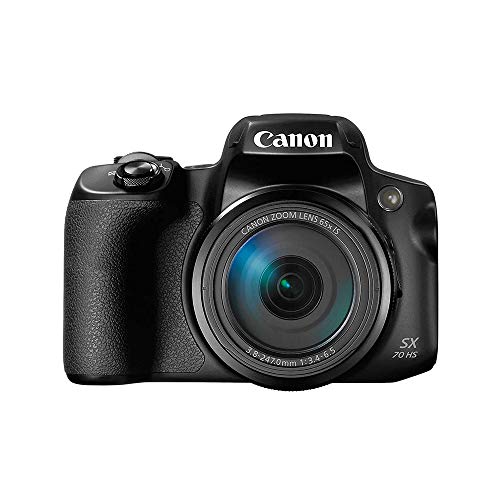
- Best for: Birders and safari travellers who want the longest stated reach in one box, with no lens purchase after it.
- Optical zoom: 65x per the listing’s Optical Zoom field
- Lens: 3.8-247mm focal length, 21-1365mm 35mm equivalent per listing-derived data
- Viewfinder: electronic viewfinder fitted; Viewfinder Magnification field states 0.65x
- Form: fixed-lens bridge camera per listing

- Best for: Travellers and walkers who want 40x reach in a compact body they will actually carry all day.
- Optical zoom: 40x, 24-960mm equivalent per listing
- Feature: Zoom Framing Assist stated in the listing
- Sensor: 20.3MP CMOS per listing
- Processor: DIGIC 8 per listing

- Best for: System builders who want Canon’s APS-C subject detection and will add an RF telephoto lens to complete it.
- Sensor: 32.5 megapixel APS-C CMOS per listing title
- Processor: DIGIC X per listing
- Autofocus: Dual Pixel CMOS AF with subject detection per listing
- Video: 4K 60p per the listing description
All 5 Picks at a Glance
| Product | Specs | Action |
|---|---|---|
| Canon PowerShot SX70 HS |
| Check price on Amazon |
| Canon PowerShot SX740 HS (Black) |
| Check price on Amazon |
| Canon EOS R7 (Body Only) |
| Check price on Amazon |
 Canon EOS 90D with EF-S 18-135mm IS USM |
| Check price on Amazon |
 Canon EOS R10 (Body Only) |
| Check price on Amazon |
Key takeaways
- Five Canon cameras for wildlife work compared on listing-stated zoom reach, subject detection and burst facts: two superzooms and three APS-C bodies.
Choosing a Canon for wildlife is a decision about reach. A distant animal fills the frame only if the lens gets you there, and Canon’s range offers two honest routes: a bridge camera whose fixed lens states an enormous zoom, or an APS-C body whose detection and burst systems are built for moving subjects but which needs a telephoto lens you buy separately.
No listing below uses the words wildlife photography, so the case rests on what the listings do state: telephoto reach, subject detection and continuous-shooting figures. The five cameras span two superzoom compacts and three APS-C bodies, every pick chosen from the names and specifications on its Amazon product page, with the body-only listings flagged as plainly as the listings themselves state them.
Quick Picks
As an Amazon Associate we earn from qualifying purchases.
| Product | Best for | Key spec from title |
|---|---|---|
| Canon PowerShot SX70 HS | Birders and safari travellers who want the longest stated reach in one box, with no lens purchase after it. | 65x optical zoom, 21-1365mm equivalent |
| Canon PowerShot SX740 HS (Black) | Travellers and walkers who want 40x reach in a compact body they will actually carry all day. | 40x optical zoom, Zoom Framing Assist, 20.3MP |
| Canon EOS R7 (Body Only) | System builders who want Canon’s APS-C subject detection and will add an RF telephoto lens to complete it. | 32.5MP APS-C sensor, subject detection, 4K 60p |
| Canon EOS 90D with EF-S 18-135mm IS USM | Buyers who want a complete DSLR kit in the box now and a deep EF lens system to grow a telephoto from. | 32.5MP APS-C DSLR kit, up to 10 fps, 4K video |
| Canon EOS R10 (Body Only) | Walkers building a mirrorless kit who value the compact body and stated subject tracking over the R7’s sensor figure. | 24.2MP sensor, subject tracking, compact body |
How to Choose
Fixed zoom reach versus a body that needs a lens
The two PowerShots state their reach outright: 65x and 40x optical zooms, 1365mm and 960mm equivalents, ready the day the box opens. The three APS-C bodies state no reach at all, because theirs depends on a lens that is not included or is a general kit zoom. Decide which purchase you are really making. A superzoom is a finished wildlife tool at a fixed ceiling; a body is the start of a system whose ceiling your lens budget sets.
Subject detection and tracking are the bodies’ counter-argument
What the bodies offer instead of built-in reach is help with moving subjects. The R7’s listing states subject detection with Dual Pixel CMOS AF; the R10’s title states subject tracking; the 90D states face detection AF and Dual Pixel CMOS AF in its description. A perched bird forgives any of them. A bird crossing the frame does not, and that is where these stated systems earn their place over a compact’s longer lens.
Continuous shooting figures are stated unevenly
Two listings put numbers on burst shooting: up to 7.4 fps for the SX740 HS and up to 10 fps for the 90D. The mirrorless pair describe their speed in words (high-speed shooting, and a title positioning the R7 for sports and action) rather than a figure this guide can print. Compare what is stated, and do not let a missing number read as a slow camera or a fast one: it reads as a listing that chose positioning over a specification.
Viewfinders and screens decide bright-day usability
At full zoom in hard sunlight, how you see the subject is half the battle. The SX70 HS fits an electronic viewfinder, the tool that survives glare. The SX740 HS answers with a 3.0-inch tilt-type LCD for low and awkward angles, and the 90D with a vari-angle touch LCD. The body-only pair leave their viewing facts less prominent in the captured fields, so check the live listings if a viewfinder is on your personal must-have list.
The 5 Best Options
Canon PowerShot SX70 HS
- Best for: Birders and safari travellers who want the longest stated reach in one box, with no lens purchase after it.
- Optical zoom: 65x per the listing’s Optical Zoom field
- Lens: 3.8-247mm focal length, 21-1365mm 35mm equivalent per listing-derived data
- Viewfinder: electronic viewfinder fitted; Viewfinder Magnification field states 0.65x
- Form: fixed-lens bridge camera per listing
Birders and safari travellers who want the longest stated reach in one box, with no lens purchase after it.
This model is discontinued at other retailers, so any Amazon offer will likely be third-party: confirm a live offer exists before planning around it. Its listing records also conflict on the sensor figure, so no megapixel number is printed here.
The SX70 HS is the reach-first pick: its listing’s Optical Zoom field states 65, a 65x fixed lens running 3.8-247mm, or 21-1365mm in 35mm equivalent terms, which is the longest stated reach in this guide by a wide margin. An electronic viewfinder is fitted, the fact that matters when a bright day washes out a rear screen at full zoom. There is no lens to buy and nothing to swap in the field. This entry deliberately prints no megapixel figure for the camera, for the reason its Watch out for line explains.
Watch out for: This model is discontinued at other retailers, so any Amazon offer will likely be third-party: confirm a live offer exists before planning around it. Its listing records also conflict on the sensor figure, so no megapixel number is printed here.
Canon PowerShot SX740 HS (Black)
- Best for: Travellers and walkers who want 40x reach in a compact body they will actually carry all day.
- Optical zoom: 40x, 24-960mm equivalent per listing
- Feature: Zoom Framing Assist stated in the listing
- Sensor: 20.3MP CMOS per listing
- Processor: DIGIC 8 per listing
Travellers and walkers who want 40x reach in a compact body they will actually carry all day.
This camera also circulates under a second verified code and in bundle and Renewed listings: confirm the live page is this black camera listing before ordering.
The SX740 HS trades some of its sibling’s reach for a body that travels. Its listing states a 40x optical zoom covering 24-960mm equivalent with Zoom Framing Assist, the feature that helps relocate a subject lost at full zoom, plus a 20.3MP CMOS sensor, a DIGIC 8 processor and continuous shooting up to 7.4 fps. A 3.0-inch tilt-type LCD handles awkward angles from hides and low tripods. For a walker who photographs what the day presents, this is the pocketable end of serious reach.
Watch out for: This camera also circulates under a second verified code and in bundle and Renewed listings: confirm the live page is this black camera listing before ordering.
Canon EOS R7 (Body Only)
- Best for: System builders who want Canon’s APS-C subject detection and will add an RF telephoto lens to complete it.
- Sensor: 32.5 megapixel APS-C CMOS per listing title
- Processor: DIGIC X per listing
- Autofocus: Dual Pixel CMOS AF with subject detection per listing
- Video: 4K 60p per the listing description
System builders who want Canon’s APS-C subject detection and will add an RF telephoto lens to complete it.
Body only means exactly that: budget for a telephoto RF lens alongside it. The kit version with an 18-150mm lens is a different listing and not a wildlife reach answer either.
The R7 is the system pick for moving subjects. Its own title positions the body for sports and action work, and the listing states a 32.5 megapixel APS-C CMOS sensor, a DIGIC X processor, Dual Pixel CMOS AF and subject detection, with 4K 60p video in the listing description. Those are the facts a wildlife shooter leans on when the subject will not sit still. The listing is body only, so the reach itself is a second purchase: an RF telephoto lens is what turns this detection system into wildlife frames.
Watch out for: Body only means exactly that: budget for a telephoto RF lens alongside it. The kit version with an 18-150mm lens is a different listing and not a wildlife reach answer either.
Canon EOS 90D with EF-S 18-135mm IS USM
- Best for: Buyers who want a complete DSLR kit in the box now and a deep EF lens system to grow a telephoto from.
- Sensor: 32.5MP APS-C per listing
- Processor: DIGIC 8 per listing title
- Autofocus: Dual Pixel CMOS AF; face detection AF per listing description
- Continuous shooting: up to 10 fps per listing description
Buyers who want a complete DSLR kit in the box now and a deep EF lens system to grow a telephoto from.
The included 18-135mm lens is a general-purpose zoom, not a wildlife telephoto: plan a longer EF or EF-S lens as a separate purchase for distant subjects.
The 90D is the DSLR route, sold here as a kit with the EF-S 18-135mm IS USM lens in the box. The listing states a 32.5MP APS-C sensor, a DIGIC 8 processor, Dual Pixel CMOS AF, high-speed continuous shooting up to 10 fps and face detection AF, with 4K video, a 3.0-inch vari-angle touch LCD and built-in Wi-Fi and Bluetooth. That lens makes it a working camera on day one, but honesty matters: 18-135mm is a general range, and distant wildlife will still ask for a longer EF or EF-S telephoto later.
Watch out for: The included 18-135mm lens is a general-purpose zoom, not a wildlife telephoto: plan a longer EF or EF-S lens as a separate purchase for distant subjects.
Canon EOS R10 (Body Only)
- Best for: Walkers building a mirrorless kit who value the compact body and stated subject tracking over the R7’s sensor figure.
- Sensor: 24.2 MP per listing title
- Processor: DIGIC X per listing title
- Shooting: high-speed shooting stated in the title
- Autofocus: subject tracking stated in the title
Walkers building a mirrorless kit who value the compact body and stated subject tracking over the R7’s sensor figure.
Body only again: a telephoto RF lens is a separate purchase, and neither the kit listing nor the Renewed body listing is this pick.
The R10 is the lighter mirrorless body of the pair. Its title states the facts its case rests on: a 24.2 MP sensor, a DIGIC X image processor, 4K video, high-speed shooting and subject tracking, in a compact, lightweight body the title itself calls out. Subject tracking is the wildlife-relevant line, the system that holds a moving animal while you compose. Like the R7, it arrives as a body only, so its wildlife life starts when an RF telephoto joins it; unlike the R7, it asks less of your bag and your arms on a long walk.
Watch out for: Body only again: a telephoto RF lens is a separate purchase, and neither the kit listing nor the Renewed body listing is this pick.
Which One Fits Your Situation
The longest reach with no lens shopping at all
Take the PowerShot SX70 HS for its stated 65x zoom and 1365mm equivalent, once you have confirmed a live offer exists for it. The electronic viewfinder keeps the subject visible in hard sunlight at full zoom, and the fixed lens means the camera that arrives is the finished tool: no second purchase stands between the box opening and the first distant bird.
A travel camera that still reaches across a lake
Take the PowerShot SX740 HS: 40x reach, Zoom Framing Assist for relocating a subject lost at full zoom and a tilt screen for awkward angles, all in the compact body of this group. Its stated 7.4 fps continuous shooting covers the moment a heron decides to move, and the whole kit still fits the coat-pocket end of a day bag.
A mirrorless system built around moving subjects
Take the EOS R7 for its stated subject detection and Dual Pixel CMOS AF, or the EOS R10 when the lighter, more compact body matters more than the sensor figure. Both are bodies only, so the real decision is the RF telephoto you will pair with them; the detection and tracking systems are what those lenses will be feeding once the system is built.
A complete kit to shoot with today
Take the EOS 90D kit: the EF-S 18-135mm IS USM lens is in the box, the listing states up to 10 fps with face detection AF, and the vari-angle touch screen handles hides and low angles. The EF system leaves room to add a true telephoto later, which is the honest path from a general kit to a dedicated wildlife setup.
Common Mistakes
- Buying a body-only camera and expecting wildlife reach on day one, when the listing states plainly that the lens is a separate purchase.
- Repeating a megapixel figure for the SX70 HS from a single page, when its own listing records disagree with each other on that number.
- Ordering a bundle, kit or Renewed variant of the SX740 HS by mistake, since this camera circulates under several listings with different contents.
- Expecting the 90D’s included 18-135mm lens to frame distant birds, when its stated range is a general-purpose one and the telephoto is a later purchase.
- Skipping the live-offer check on the SX70 HS, a model discontinued at other retailers whose Amazon offer needs confirming before any plan depends on it.
Frequently Asked Questions
Which camera reaches farthest on stated figures?
The Canon PowerShot SX70 HS. Its listing states a 65x optical zoom reaching a 1365mm equivalent, ahead of the SX740 HS at 40x and 960mm equivalent. The three APS-C bodies state no reach of their own, because theirs depends on the lens fitted.
Which picks are body only?
The EOS R7 and the EOS R10. Both listings are camera bodies with no lens included, so a telephoto RF lens is a separate purchase for either. The EOS 90D listing is the opposite pattern: a kit with the EF-S 18-135mm IS USM lens in the box.
Does the 90D kit lens cover wildlife distances?
Not distant wildlife, on its stated range. The included EF-S 18-135mm is a general-purpose zoom, useful for nearer subjects and everything else you shoot. Framing animals across a field needs a longer EF or EF-S telephoto, which the DSLR system offers as a later separate purchase.
Why is there no megapixel figure for the SX70 HS?
Because its listing records conflict: different captured fields for the same model state different sensor figures, and no third field settles the disagreement. Rather than print one side of a conflict, this guide prints none and rests the camera’s case on its stated zoom and viewfinder facts.
More from Amazon
Programs that pair well with the guide above. Offers and eligibility are set by Amazon and may change.
Free shipping on eligible items, Prime Video and more. Eligible new members can start with a free trial.
Start a Prime free trialAd-free music streaming. Eligible new subscribers can start with a free trial.
Try Music Unlimited freeA Prime membership for ages 18-24 with a trial period. Eligibility is set by Amazon.
See Prime for Young AdultsAudiobooks and podcasts to listen to on the go. Eligible new members can start with a free trial.
Try Audible freeAs an Amazon Associate we earn from qualifying purchases.










Write Your Review
No reviews yet. Be the first to share your experience!