

Key takeaways
- Data center priority. Intel shifted wafer starts on its older node toward server and AI products, where each processor earns far higher revenue than a desktop Core chip. Tom’s Hardware reported that the company said it would prioritize data center CPUs over consumer chips and warned of price increases.
- Demand for older chips. Business PC refreshes, the end of support for Windows 10 and the weak sales of some newer AI-focused laptops pushed buyers toward proven Raptor Lake designs, which are made on Intel 7.
- Memory market pressure. A tight DRAM market raised the cost of building new-generation DDR5 systems, which kept demand for older, cheaper platforms strong. Intel Vice President Robert Hallock said the company will keep offering Raptor Lake desktop CPUs for years to come.
The Intel CPU shortage in 2026 is real but uneven: chips built on the older Intel 7 and Intel 10 nodes, which includes 12th, 13th and 14th Gen Core desktop processors, are the hardest to find, while AMD Ryzen 7000 and 9000 chips and Intel’s newer Core Ultra parts are generally easier to buy. The cause is limited factory capacity combined with a surge in demand, not a design flaw in the processors. If you are building a PC now, the practical answer is to pick the best chip that is actually in stock and avoid paying inflated prices for a scarce one.
Our top picks


As an Amazon Associate we earn from qualifying purchases at no extra cost to you.
What Is Actually Short and Why
The shortage story begins in late 2025. According to a TrendForce report on Intel’s third-quarter results, Intel’s finance chief said capacity constraints, especially on the Intel 10 and Intel 7 nodes, limited the company’s ability to meet demand for both data center and client products. Intel said it had no plans to add capacity on those older nodes and expected tight supply to continue well into 2026. The company’s annual report repeated that the constraints would persist, with the first quarter of 2026 expected to be the worst.
Three forces overlapped to cause the squeeze:
- Data center priority. Intel shifted wafer starts on its older node toward server and AI products, where each processor earns far higher revenue than a desktop Core chip. Tom’s Hardware reported that the company said it would prioritize data center CPUs over consumer chips and warned of price increases.
- Demand for older chips. Business PC refreshes, the end of support for Windows 10 and the weak sales of some newer AI-focused laptops pushed buyers toward proven Raptor Lake designs, which are made on Intel 7.
- Memory market pressure. A tight DRAM market raised the cost of building new-generation DDR5 systems, which kept demand for older, cheaper platforms strong. Intel Vice President Robert Hallock said the company will keep offering Raptor Lake desktop CPUs for years to come.
In March 2026, CRN quoted Intel’s channel chief saying that the shortage was affecting everyone in the supply chain, from cloud providers to system builders, and that price increases were coming. In May 2026 a Nikkei Asia report, summarized by Tom’s Hardware, said Intel had effectively frozen additional supply of older Intel 7 consumer CPUs and was pushing PC makers in the United States, China and Taiwan toward 18A-based processors. That last item rests on a single secondary report, so treat it as likely rather than confirmed.
Which Intel Chips Are Hardest to Find
The squeeze is not uniform across the product line. Popular enthusiast and gaming chips on Intel 7 saw the sharpest effects, because those are the parts retailers stock in volume and the ones builders look for first.
| Processor | Process node | Cores / threads | Max boost | Availability pattern in 2026 |
|---|---|---|---|---|
| Core i5-14600K | Intel 7 | 14 (6P + 8E) / 20 | 5.3 GHz | Scarce at times, with price increases reported |
| Core i7-14700K | Intel 7 | 20 (8P + 12E) / 28 | 5.6 GHz | Scarce at times, with price increases reported |
| Core i5-12400F | Intel 7 | 6 / 12 | 4.4 GHz | Varies by region, popular budget choice |
| Core Ultra 5 245K | TSMC N3B compute tile | 14 (6P + 8E) / 14 | 5.2 GHz | Generally easier to find |
| Core Ultra 7 265K | TSMC N3B compute tile | 20 (8P + 12E) / 20 | 5.5 GHz | Generally easier to find |
The Arrow Lake Core Ultra 200S chips are built at TSMC rather than on Intel’s constrained node, which is why they were not hit the same way. Even so, the Tom’s Hardware report on 18A allocations suggests some Arrow Lake and Alder Lake supply is also unfavorable compared with the newest 18A mobile parts, so no Intel desktop chip is guaranteed to stay in stock.
Does the Shortage Mean Intel’s Chips Are Bad?
No. The phrase “Intel’s horrible processors” misreads the situation. A shortage means demand exceeds supply, which is the opposite of a product nobody wants. The reliability issue that did hurt Intel’s reputation was separate: 13th and 14th Gen Core chips such as the i9-13900K and i9-14900K were affected by a voltage problem that caused instability, and Intel shipped a microcode fix and extended warranties. That is a different topic from supply. If you want that background, the safe approach is to run the latest BIOS with Intel’s updated microcode on any 13th or 14th Gen chip.
What the shortage does change is value. When a processor is scarce, resellers raise prices, and a chip that was a bargain at launch can become a poor purchase. Buying on availability and performance per currency unit rather than on brand loyalty is the sensible response.
Best Alternatives When Intel Stock Is Short
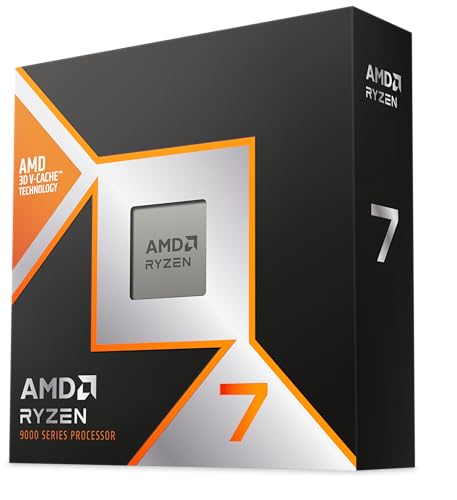
Best overall gaming alternative: Ryzen 7 9800X3D
The Ryzen 7 9800X3D has 8 cores and 16 threads, boosts up to 5.2 GHz, carries 96 MB of L3 cache with second-generation 3D V-Cache, and uses the AM5 socket with a 120 W TDP. It is the processor to buy if frame rates are the priority, and it is not exposed to Intel’s capacity problem. The trade-off is that it tends to be sold out or priced above list when demand spikes, so check stock before planning a build around it.
Best mid-range value: Ryzen 5 9600X or Ryzen 5 7600
The Ryzen 5 9600X offers 6 cores, 12 threads, a 3.9 GHz base clock, up to 5.4 GHz boost and a 65 W TDP. The older Ryzen 5 7600 has the same core count with a 3.8 GHz base and 5.1 GHz boost. Both use AM5 and DDR5, so you gain an upgrade path to later Ryzen chips. Pick the 7600 if a discount makes it cheaper, and the 9600X if the price gap is small. The compromise is that neither has the multi-thread depth of a 14-core Core chip for heavy rendering.
Best for mixed work and play: Ryzen 7 7700
The Ryzen 7 7700 gives 8 cores and 16 threads, 3.8 GHz base, up to 5.3 GHz boost, and a 65 W TDP with a cooler-friendly power draw. It handles streaming while gaming and moderate editing, and it is usually easier to find than a flagship. Its limit is the lack of extra cache, so it trails X3D models in games that depend on cache.
Best Intel option that is easier to find: Core Ultra 5 245K
The Core Ultra 5 245K has 14 cores (6 performance and 8 efficiency), boosts up to 5.2 GHz and uses the LGA 1851 socket with DDR5. Its multi-core strength is close to the previous i5-14600K, and it uses less power at the same performance. The trade-off is gaming speed: reviewers generally found Arrow Lake behind AMD’s X3D chips and slightly behind Raptor Lake in several games, so choose it for productivity and a balanced build rather than maximum frame rates.
Best if you already own an LGA 1700 board: Core i5-14600K or i7-14700K
If you own a Z690 or Z790 board and can find a 14600K or 14700K at a fair price, they remain strong. The i7-14700K’s 20 cores make it excellent for video work. Just avoid paying a large premium, and install the latest BIOS to receive Intel’s microcode updates.
Best budget pick: Core i5-12400F or Ryzen 5 5600
The Core i5-12400F has 6 cores and 12 threads, up to 4.4 GHz boost, and 18 MB of cache. The Ryzen 5 5600 matches the core count with a 3.5 GHz base, 4.4 GHz boost and 32 MB of L3 cache on the AM4 socket. Both pair well with a mid-range GPU. Their weakness is platform life: LGA 1700 and AM4 will not see many future CPU upgrades, but they are the most economical way to build when funds are tight.
Decision Matrix by Situation
| Your situation | Best choice | Why |
|---|---|---|
| Gaming at 1080p or 1440p with a fast GPU | Ryzen 7 9800X3D | Largest cache and best gaming results |
| Balanced gaming and streaming, mid budget | Ryzen 7 7700 or Core Ultra 5 245K | 8 to 14 cores at modest power |
| Video editing and 3D work | Core i7-14700K or Core Ultra 7 265K | 20 cores for rendering |
| Tight budget | Ryzen 5 5600 or Core i5-12400F | Lowest total platform cost |
| Want an upgrade path for years | Any AM5 Ryzen | AMD has committed to AM5 support through 2027 and beyond |
| Already own an LGA 1700 board | Core i5-14600K at a fair price | No need to replace the motherboard and memory |
How to Buy During a Shortage
- Decide your minimum acceptable chip, not a single model. Choose two or three equivalent processors and buy whichever is available near list price. Flexibility is your strongest weapon.
- Compare the platform, not the CPU alone. A cheaper chip on an expensive new platform can cost more than a pricier chip on a board you already own. Add motherboard and DDR5 memory to the comparison.
- Be wary of third-party marketplace listings. Scarcity attracts counterfeits, relabeled chips and used processors sold as new. Use established retailers with clear return policies.
- Check the box and the heat spreader. Genuine retail boxes have intact seals, and a processor should show no pin damage or thermal paste residue.
- Do not stockpile. Prices can fall again when supply recovers, and Intel has said inventory of Raptor Lake chips should grow over time.
Worked Example: When a Price Premium Stops Making Sense
Use relative numbers rather than exact tags. Say a Core i7-14700K normally sells for a base amount, and scarcity pushes it 30 percent higher. A Ryzen 7 7700 on a new AM5 platform costs less for the chip itself, but you must also buy an AM5 motherboard and DDR5 memory, and together those can add more than the CPU premium. If you already own a Z790 board and DDR5 memory, paying 30 percent more for the 14700K is still the cheaper route, because the replacement platform would cost more than the premium. If you currently own an older DDR4 LGA 1700 board, the calculation changes only if the board is also due for replacement. The inflated chip price matters only when it changes which total is lower, so add up the whole build rather than comparing processor tags alone.
Platform Choices: LGA 1700, LGA 1851 and AM5
The shortage makes platform decisions more important than they were two years ago, because the chip you can find determines the board you must buy.
- LGA 1700 (Alder, Raptor and Raptor Refresh): supports DDR4 or DDR5 depending on the board. It is the cheapest entry if you reuse parts, and it is at the end of its life, so there will be no new chips for it beyond what already exists.
- LGA 1851 (Core Ultra 200S): DDR5 only, with newer connectivity such as Thunderbolt 4 and Wi-Fi 7 on many boards. Intel has not promised a long future for the socket, which weakens the upgrade argument.
- AM5 (Ryzen 7000, 8000G and 9000): DDR5 only, and AMD has said the socket will be supported through at least 2027. If you value being able to drop in a faster chip later, this is the safest bet.
Whichever you choose, budget for a good power supply and a tower cooler rated for the chip’s sustained power. A 14700K or 265K can draw well over 200 W under all-core loads, while a Ryzen 7 7700 or 9600X stays closer to the 65 W class. Lower power draw also means a cheaper cooler and a smaller power supply, which offsets part of the chip’s price.
Reading Shortage Signals Before You Buy
You do not need insider data to tell whether a chip is likely to stay scarce. Watch for three patterns. First, if a processor has been listed as out of stock at several large retailers for more than two weeks, supply is truly tight and prices tend to climb. Second, if the price of a processor is above its launch recommendation while a stronger newer model costs about the same, the older chip has become a poor value and you should switch. Third, if retailers bundle the processor with a motherboard and memory, the bundle price often hides the premium, so compare the bundle with the sum of individual parts.
Buying a Laptop or Prebuilt During the Shortage
Prebuilt desktops and laptops feel the squeeze differently. System makers sign allocation agreements with Intel, so they may keep shipping older Intel 7 configurations longer than the retail channel can, but the reported push toward 18A means fewer new designs with those chips. When shopping for a prebuilt, check the exact processor name, because makers sometimes substitute a similar chip when stock changes. For laptops, newer Core Ultra Series 3 models are increasingly the default, and they bring better battery life, though early models may carry a premium. If a prebuilt has the right CPU, graphics card and a power supply of adequate quality, it can be a sensible way to avoid the retail shortage entirely.
What Happens Next
Intel’s plan is to shift volume to its own 18A node and to Arrow Lake products made outside its constrained fabs, while keeping Raptor Lake available longer. The most severe quarter was expected to be the first of 2026, and supply is forecast to improve gradually. TweakTown notes rumors of a Raptor Lake refresh arriving in early 2027, but that is not confirmed by Intel. For now, the cheapest strategy is patience combined with flexibility: monitor availability across two or three CPU options and buy when a good deal appears.
Frequently Asked Questions
Why are Intel CPUs in short supply in 2026?
Intel’s older Intel 7 and Intel 10 factories are fully loaded, and the company directed more of that capacity to higher-margin data center products. Demand for proven Raptor Lake desktop and business chips stayed high, so the remaining consumer supply sold out quickly.
Are 13th and 14th Gen Intel CPUs still worth buying?
They remain fast, but you should buy only at a fair price and with the latest BIOS installed. Intel released microcode updates to address the voltage instability affecting some 13th and 14th Gen chips, and warranties were extended.
Should I switch to AMD because of the shortage?
Not necessarily. AMD offers better gaming performance with X3D chips and a longer upgrade path on AM5, but if you already have an LGA 1700 board, staying on Intel can be cheaper. Compare total platform cost.
Will CPU prices go down later in 2026?
Intel has said inventory of Raptor Lake chips should rise in coming months, which could ease prices. However, there is no guarantee, and demand for AI-related server processors may keep older nodes constrained.
Is Intel Core Ultra 200S affected by the same shortage?
Much less. The compute tile of those processors is made by TSMC, so they do not depend on Intel’s older fabs. Their availability is generally better, although they lag the fastest AMD processors in gaming.
Does the shortage affect laptops too?
Yes. Reports say Intel has told notebook makers to move to 18A-based Core Ultra Series 3 products, and older Intel 7 mobile parts are harder to source. Laptop buyers will see more Panther Lake models and fewer older configurations.




Write Your Review
No reviews yet. Be the first to share your experience!