
Key takeaways
- Find the best laptops for project managers: portable, long-battery business laptops with strong keyboards, bright screens, and reliable performance every day.
The best laptops for project managers are not the fastest machines on the market, and they are not the cheapest either. A project manager lives in calendars, spreadsheets, Gantt charts, video calls, chat threads, and slide decks, often all at once, while moving between a desk, a meeting room, an airport, and a client site. The right laptop keeps twenty browser tabs, a project plan, and a video call running smoothly, lasts through a long day of meetings, and is light enough to carry without thinking about it. The wrong laptop freezes during a status call or dies before the last meeting.


This guide focuses on what actually matters for project work: enough memory to multitask without slowdowns, a comfortable keyboard, a bright screen, all-day battery life, reliable Wi-Fi and video calling, and a build that survives daily travel. The four laptops below cover the main choices: a premium Windows ultrabook, a polished all-rounder, a security-focused business laptop, and a lightweight Mac.
How to Choose a Laptop for Project Management
Memory and Processor: Buy for Multitasking, Not for Gaming
Project management is a multitasking workload. A typical day might include a project management tool, email, a chat app, a spreadsheet with a large tracker, a slide deck, a document, and a video call, with a browser full of tabs on top. Sixteen gigabytes of memory is the sensible minimum for that mix, and it is the configuration used by every laptop in this guide. With less memory, the system starts swapping to storage, and switching between apps becomes sluggish at exactly the wrong moment.
The processor matters less than the memory, provided you choose a current-generation chip. An Intel Core Ultra 7 or an Apple M3 chip handles project work easily, including large spreadsheets and video calls with screen sharing. You do not need a dedicated graphics card for project management, and choosing a laptop without one usually means a lighter machine and longer battery life. Five hundred and twelve gigabytes of storage is a practical minimum, and one terabyte is worth having if you keep many large files locally.
Screen: Bright, Sharp, and Easy on the Eyes
You will spend hours looking at timelines, boards, and documents, so the screen deserves more attention than it usually gets. A 13.6-inch or 14-inch display is the sweet spot for most project managers: large enough to show a Gantt chart or a spreadsheet without constant scrolling, and small enough to fit on an aeroplane tray table or a crowded meeting table. A 16:10 aspect ratio, which is taller than the older 16:9 shape, shows more rows of a spreadsheet or a task list, and it is worth preferring when you have the choice.
Resolution should be at least full high definition, and a higher resolution is helpful for sharp text. Brightness matters even more: a screen rated at 400 nits or more stays readable in a bright office or near a window. Touchscreens are optional for project work. They are useful for presenting a plan, but they add weight and battery drain, so do not pay extra for one unless you know you will use it.
Keyboard, Trackpad, and Video Calls
A project manager types all day: status updates, meeting notes, risks, decisions, and follow-up emails. A shallow, cramped keyboard becomes painful after a few hours, so look for a laptop with well-spaced keys, a firm and quiet action, and a backlit keyboard for dim rooms and evening work. Business laptops such as the ThinkPad and EliteBook lines are known for strong keyboards, and that reputation is earned over years of daily use.
The trackpad should be large, smooth, and accurate, because you will use it constantly when you do not have a mouse. Video calling is equally important. Look for a good webcam, ideally full high definition or better, with an infrared sensor for fast face login and a privacy shutter if you present often. Dual microphones with noise reduction make a real difference on calls from a busy office or a cafe.
Battery Life and Portability
Battery life is a project manager’s insurance policy. Meetings run over, chargers get forgotten, and power outlets are not always where you need them. A laptop that lasts a full working day on battery removes a whole category of stress. The manufacturers’ claims are optimistic, so treat them as a guide rather than a promise, and look for a battery of around 55 watt-hours or more in a 14-inch Windows laptop, or the equivalent efficiency of an Apple silicon Mac, which is generally the longest-lasting option in this guide.
Weight is the other half of portability. A laptop under three pounds is easy to carry all day, while a laptop over four pounds is noticeably heavier by the end of a long day. All four laptops below weigh under four pounds, and three of them weigh under three pounds.
Security, Ports, and Manageability
Project managers handle sensitive information: budgets, contracts, staffing plans, and client data. Security features that once belonged only to large companies are now worth having on any work laptop. A fingerprint reader or an infrared camera for face login makes it easy to lock the machine whenever you step away. A Trusted Platform Module chip, which all of the Windows laptops here include, supports encryption and secure login. Business laptops add extra layers, such as HP Wolf Security on the EliteBook and the ThinkPad’s long-standing security features, which help protect against tampering and unauthorised access.
Ports matter more than most buyers expect. A laptop with two Thunderbolt 4 ports, at least one USB-A port, and an HDMI port connects to almost any meeting room display, dock, or accessory without a bag full of adapters. Wi-Fi 6E and Bluetooth 5.3 are the current standards to look for. A business laptop with a good warranty and a chassis tested to military durability standards is also more likely to survive a drop or a long commute.
Top Picks: Best Laptops for Project Managers
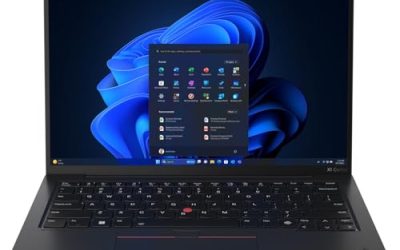
1. Lenovo ThinkPad X1 Carbon Gen 12: Best Overall for Project Managers
The ThinkPad X1 Carbon Gen 12 is the best overall laptop for project managers who want a premium Windows ultrabook that does everything well. The configuration featured here pairs an Intel Core Ultra 7 165U vPro processor with 64 gigabytes of memory and a 1 terabyte solid-state drive, so multitasking is effortless even with a project plan, a spreadsheet, a video call, and dozens of browser tabs open at once. The 14-inch OLED display, at 2880 by 1800, is bright, sharp, and vivid.
What sets the X1 Carbon apart is the combination of weight and keyboard. At around 2.4 pounds, it is one of the lightest 14-inch laptops available. The keyboard is the best in this guide for long typing sessions, with tactile keys that are comfortable for hours, and the larger glass trackpad is smooth and accurate. Security is strong, with a fingerprint reader, an infrared camera for face login, and the vPro platform for business manageability. The 57 watt-hour battery is designed to last through a working day, and the carbon fibre and magnesium chassis is tested to military durability standards.
There are trade-offs. The OLED screen uses more battery than a standard display when showing bright content, and the high memory configuration is more than most project managers need. For a project manager who travels often, types all day, and wants the lightest capable Windows laptop available, it is the pick that is hardest to fault.
Check the Lenovo ThinkPad X1 Carbon Gen 12 on Amazon
2. Dell XPS 14 9440: Best Premium All-Rounder
The Dell XPS 14 9440 is the best premium all-rounder in this guide, and the best choice for a project manager who wants a beautiful, well-built laptop that also handles occasional creative work. The configuration featured here uses an Intel Core Ultra 7 155H processor, 16 gigabytes of memory, and a 512 gigabyte solid-state drive, with a 14.5-inch InfinityEdge display that stretches almost to the edge of the lid.
The XPS 14 is a pleasure to use for project work. The display is bright and sharp, the keyboard is comfortable, and the large trackpad is responsive. Three Thunderbolt 4 ports give plenty of connectivity for docks, monitors, and accessories, and the 69.5 watt-hour battery is the largest in this guide, which helps the laptop last through long days. The XPS line is also known for its premium build, with a machined aluminium chassis that feels solid and durable.
The XPS 14 is heavier than the ThinkPad, at around 3.7 pounds, so it is less ideal if you carry your laptop all day on foot. The keyboard layout is more minimal than a traditional business laptop, and the base storage is 512 gigabytes rather than one terabyte. For a project manager who works mostly at a desk or in meeting rooms and values screen quality and build, the XPS 14 is an excellent choice.
Check the Dell XPS 14 9440 on Amazon
3. HP EliteBook 840 G11: Best Business Laptop for Security and Manageability
The HP EliteBook 840 G11 is the best business laptop in this guide for project managers who work in a managed IT environment or who handle sensitive client data. The configuration featured here pairs an Intel Core Ultra 7 165U vPro processor with 16 gigabytes of memory and a 512 gigabyte solid-state drive, running Windows 11 Pro. The 14-inch WUXGA display, at 1920 by 1200, is bright enough for office work and shows more vertical content than a standard full high definition screen, which helps when reviewing task lists and documents.
The EliteBook’s strengths are security and practicality. HP Wolf Pro Security is included, with protection against tampering and threats, and the laptop includes a fingerprint sensor, a 5 megapixel infrared webcam with a privacy shutter, and a spill-resistant backlit keyboard. The memory is upgradeable to 64 gigabytes, which is unusual in a slim laptop and useful if your workload grows. Two Thunderbolt 4 ports, two USB-A ports, and an HDMI port mean you can connect to almost any meeting room setup without adapters, and Wi-Fi 6E and Bluetooth 5.3 keep connections fast and reliable.
At around 3.1 pounds, the EliteBook is light enough for daily travel, and its 56 watt-hour battery is designed for a working day. The screen is the least impressive in this guide, with a lower resolution than the OLED ThinkPad or the XPS. For a project manager in a corporate or client-facing role, where security and reliable ports matter most, those are acceptable trade-offs.
Check the HP EliteBook 840 G11 on Amazon
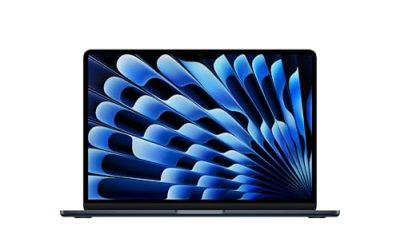
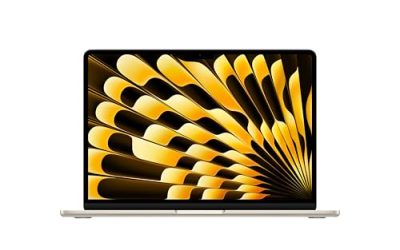
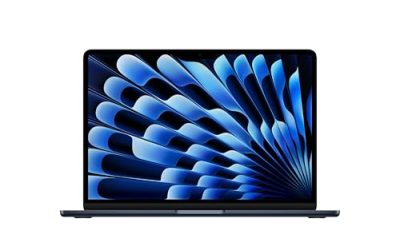
4. Apple MacBook Air 13-inch with M3 Chip: Best for Battery Life and Portability
The Apple MacBook Air 13-inch with M3 chip is the best laptop in this guide for battery life and portability, and the best choice for project managers who work in Apple-centred teams or who simply want the lightest machine that lasts the longest. The configuration featured here uses the Apple M3 chip with an 8-core CPU, 8 gigabytes of unified memory, and a 256 gigabyte solid-state drive, with a 13.6-inch Liquid Retina display that supports one billion colours and is bright and sharp for documents, plans, and presentations.
The MacBook Air’s greatest strength is efficiency. Apple rates the battery at up to 18 hours of video playback and up to 15 hours of wireless web browsing, and in real use it routinely outlasts Windows ultrabooks by several hours. At 2.7 pounds and under half an inch thick, it is easy to carry anywhere, and it runs silently, with no fan noise during video calls. The keyboard is comfortable, the trackpad is the best in this guide, and Touch ID makes it quick and secure to unlock the machine. Two Thunderbolt ports, Wi-Fi 6E, Bluetooth 5.3, and MagSafe charging cover the essentials, and the M3 chip handles project tools, spreadsheets, and video calls with ease.
Eight gigabytes of memory is the minimum recommended for heavy multitasking, and project managers who keep many apps open at once should consider a 16 gigabyte configuration if the budget allows. Storage is also 256 gigabytes in this configuration, which is tight if you keep large files locally. Finally, the MacBook Air is the best choice only if your project tools run well on macOS. If your organisation relies on Windows-only software, one of the Windows laptops above is a better fit.
Check the Apple MacBook Air 13-inch with M3 Chip on Amazon
Comparison Table
| Laptop | Best For | Screen | Memory and Storage | Weight | Battery Highlight |
|---|---|---|---|---|---|
| Lenovo ThinkPad X1 Carbon Gen 12 | Best overall | 14-inch OLED, 2880 by 1800 | 64 GB memory, 1 TB SSD | Around 2.4 pounds | 57 watt-hour battery, efficient Core Ultra processor |
| Dell XPS 14 9440 | Best premium all-rounder | 14.5-inch InfinityEdge, full high definition plus | 16 GB memory, 512 GB SSD | Around 3.7 pounds | 69.5 watt-hour battery, largest here |
| HP EliteBook 840 G11 | Best business security | 14-inch WUXGA, 1920 by 1200 | 16 GB memory, 512 GB SSD | Around 3.1 pounds | 56 watt-hour battery, upgradeable memory |
| Apple MacBook Air 13-inch M3 | Best battery life and portability | 13.6-inch Liquid Retina | 8 GB unified memory, 256 GB SSD | Around 2.7 pounds | Up to 18 hours video playback, fanless design |
Frequently Asked Questions
How much memory does a project manager need in a laptop?
Sixteen gigabytes is the sensible minimum for project management work. It allows you to keep a project tool, email, chat, a spreadsheet, a slide deck, and a video call open at once without slowdowns. Eight gigabytes can work for lighter use, particularly on a Mac with Apple silicon. If you plan to keep the laptop for several years, 16 gigabytes or more is the safer choice.
Is a MacBook or a Windows laptop better for project managers?
Both work well, and the right choice depends on your team and your tools. A MacBook Air is best for battery life, portability, and silent operation, and it suits teams that already use Apple devices and cloud-based project tools. A Windows business laptop such as the ThinkPad or EliteBook is better if your organisation uses Windows-only software or a managed IT environment. Check which project tools your team uses before deciding.
Do project managers need a dedicated graphics card?
No, a dedicated graphics card is not needed for project management. Project tools, spreadsheets, documents, and video calls run well on integrated graphics, including Intel Arc graphics and Apple M-series graphics. A dedicated card adds weight, heat, and battery drain without helping the core work. The only exception is a project manager who also edits video or works with large design files.
What screen size is best for a project manager?
A 13.6-inch or 14-inch screen is the best balance for most project managers. It is large enough to show a Gantt chart or a spreadsheet without constant scrolling, and small enough to carry and to use on an aeroplane tray table. A 16-inch laptop shows more at once, but it is heavier and harder to carry all day. If you work mostly at a desk, pair a 14-inch laptop with an external monitor.
How important is battery life for a project manager?
Battery life is very important, because meetings run over, chargers get forgotten, and power outlets are not always available. A laptop that lasts a full working day removes a whole category of stress. Look for a battery of around 55 watt-hours or more in a Windows ultrabook, or choose a MacBook Air, which generally lasts longest in this guide.
Conclusion
The best laptop for a project manager is the one that disappears into the work: it opens apps quickly, keeps many windows running smoothly, lasts through a long day, and is light enough to carry without a second thought. For most project managers, the Lenovo ThinkPad X1 Carbon Gen 12 is the best overall choice, with its light weight, excellent keyboard, bright OLED screen, and generous memory. The Dell XPS 14 is the best premium all-rounder for those who value screen quality and build, the HP EliteBook 840 G11 is the best business laptop for security and manageability, and the Apple MacBook Air with M3 is the best choice for battery life and portability.
Choose based on your team, your tools, and how much you travel. If you work in a Windows environment and travel often, start with the ThinkPad. If you work in an Apple-centred team and want the longest battery life, start with the MacBook Air. Whichever you choose, prioritise 16 gigabytes of memory where possible, a bright screen, a comfortable keyboard, and a battery that lasts a full day.
Disclosure: As an Amazon Associate, we earn from qualifying purchases.
More from Amazon
Programs that pair well with the guide above. Offers and eligibility are set by Amazon and may change.
Free shipping on eligible items, Prime Video and more. Eligible new members can start with a free trial.
Start a Prime free trialAd-free music streaming. Eligible new subscribers can start with a free trial.
Try Music Unlimited freeA Prime membership for ages 18-24 with a trial period. Eligibility is set by Amazon.
See Prime for Young AdultsAudiobooks and podcasts to listen to on the go. Eligible new members can start with a free trial.
Try Audible freeAs an Amazon Associate we earn from qualifying purchases.
Write Your Review
No reviews yet. Be the first to share your experience!