

Key takeaways
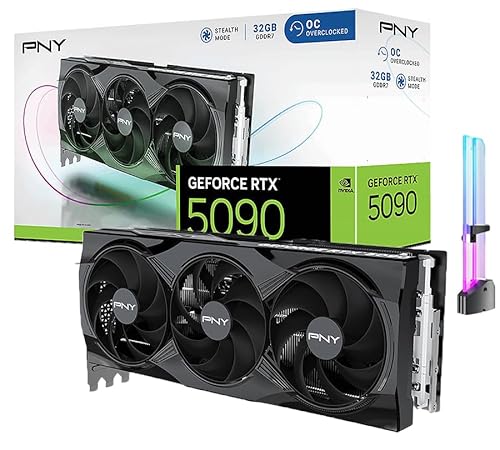
- RTX 5090: 21,760 CUDA cores, 32 GB GDDR7, 575 W.
- RTX 5080: 10,752 CUDA cores, 16 GB GDDR7, 360 W.
- RTX 5070 Ti: 8,960 CUDA cores, 16 GB GDDR7, 300 W.
- RTX 5070: 6,144 CUDA cores, 12 GB GDDR7, 250 W.
NVIDIA unveiled the GeForce RTX 5000 series at CES on January 6, 2025, and rolled it out in five waves over roughly six months: the RTX 5090 and RTX 5080 on January 30, the RTX 5070 Ti on February 20, the RTX 5070 on March 5, the RTX 5060 Ti on April 16, the RTX 5060 on May 19 and the RTX 5050 in July. The launch was defined by a new feature (DLSS 4 multi frame generation), modest raw performance gains in most tiers, tight supply at the top and a slip for the RTX 5070 from the promised February window.
This recap walks through each stage of the launch, what was promised versus what shipped, how reviewers received each card, and what buyers can learn for the next GPU launch. It is a launch history. For a model-by-model spec list, see our separate guide to the full RTX 50 series lineup.
Our top picks


As an Amazon Associate we earn from qualifying purchases at no extra cost to you.
Launch Timeline at a Glance
| Date | Event | Key detail |
|---|---|---|
| January 6, 2025 | CES announcement | RTX 5090, 5080, 5070 Ti and 5070 revealed; DLSS 4 introduced |
| January 30, 2025 | RTX 5090 and RTX 5080 on sale | Founders Edition in limited quantities; partner cards from ASUS, MSI, Gigabyte, Zotac, PNY and others |
| February 20, 2025 | RTX 5070 Ti on sale | CES had said only “February” |
| March 5, 2025 | RTX 5070 on sale | CES materials had said February, so it arrived about a month later |
| March to May 2025 | RTX 50 laptops | RTX 5090, 5080 and 5070 Ti laptops in March, 5070 in April, 5060 in May |
| April 16, 2025 | RTX 5060 Ti on sale | 8 GB and 16 GB versions on the same day |
| May 19, 2025 | RTX 5060 on sale | Press drivers arrived only at launch |
| July 2025 | RTX 5050 on sale | NVIDIA said the second half of July; some trackers list July 1, so the exact day is disputed |
The staggered release is the first lesson: a CES announcement does not equal availability. The gap between the first and last desktop launch was about five months, and during that window the lineup was incomplete, so buyers in the middle of the range had to wait or buy from the previous generation.
Wave 1: CES Reveal and the DLSS 4 Pitch
At CES 2025, NVIDIA presented Blackwell as an AI-first generation. The headline feature was DLSS 4 with multi frame generation, which inserts up to three AI-generated frames after each rendered frame, giving a 4x multiplier on displayed frame rate. NVIDIA’s marketing claim that the RTX 5070 could match RTX 4090 performance depended on this feature, and it drew immediate skepticism because the claim compared generated frames with natively rendered ones.
The DLSS 4 package also included a new transformer-based model for upscaling and ray reconstruction, which NVIDIA made available to earlier RTX generations. That detail matters for upgrade planning: owners of RTX 20, 30 and 40 cards got part of the DLSS 4 image quality improvement, while multi frame generation itself stayed exclusive to RTX 50 hardware.
The numbers that framed the debate
- RTX 5090: 21,760 CUDA cores, 32 GB GDDR7, 575 W.
- RTX 5080: 10,752 CUDA cores, 16 GB GDDR7, 360 W.
- RTX 5070 Ti: 8,960 CUDA cores, 16 GB GDDR7, 300 W.
- RTX 5070: 6,144 CUDA cores, 12 GB GDDR7, 250 W.
Compared with the previous generation, only the RTX 5090 got a big hardware jump. Mid-range cards gained speed from GDDR7 bandwidth and architectural changes rather than from many more cores, and the RTX 5070 actually had fewer cores than the RTX 4070 Super.
Wave 2: RTX 5090 and RTX 5080, January 30
The two flagship cards went on sale together on January 30, 2025. NVIDIA noted that Founders Edition models would be available in limited quantities through its own marketplace, while board partners offered custom designs. Supply was tight on launch day, and the top-end card was difficult to find from authorized sellers for weeks afterward, as widely reported by retailers and press.
How reviewers received them
Reviews agreed on the broad picture. KitGuru found the RTX 5090 about 31 percent faster than the RTX 4090 in a 4K average, with up to 43 percent in some tests, while DSOGaming’s 20-game 4K suite, as cited in a later roundup, put the average gain at about 33 percent, with a range from 23 to 47 percent. Power draw rose by more than 100 W over the RTX 4090 in KitGuru’s measurements. The RTX 5080 trailed the RTX 4090 by roughly 3 to 8 percent in native 4K rasterization in the comparisons cited by reviewers, so it was a sideways move for owners of last generation’s flagship but a clear upgrade over the RTX 3080 and RTX 4070 Ti class.
Multi frame generation was the second talking point. It made 4K ray-traced games look much smoother, but Tom’s Hardware and other outlets noted that generated frames do not improve responsiveness, so the feeling of control still follows the rendered frame rate.
Wave 3: RTX 5070 Ti, February 20, and the RTX 5070 Slip
CES materials described both the RTX 5070 Ti and RTX 5070 as arriving in February. The RTX 5070 Ti did, on February 20, 2025. The RTX 5070 came out on March 5, about a month later than the original window implied. The delay was minor in the context of the launch, but it shows how announcement months should be read as targets rather than commitments.
The RTX 5070 Ti was received as the most sensible high-end value of the stack: 16 GB of GDDR7 on a 256-bit bus, 896 GB/s of bandwidth and a 300 W rating placed it in direct competition with the Radeon RX 9070 XT that AMD launched in the same period. The RTX 5070, with 12 GB, was seen as more constrained, and the RTX 4090-class marketing line remained the main point of criticism.
Wave 4: RTX 5060 Ti, April 16
The RTX 5060 Ti launched on April 16, 2025, in 8 GB and 16 GB versions with the same 4,608 CUDA cores, a 128-bit bus, 448 GB/s of bandwidth, a 180 W rating and a PCIe 5.0 x8 interface. The 8 GB version proved controversial. Per reporting at the time, only the 16 GB card was sent out for review, and board partners were reportedly told not to send the 8 GB variant, so reviewers had to buy retail units. When those results appeared, the 8 GB card fell behind its 16 GB sibling at 4K, at 1440p and in a few titles even at 1080p.
The PCIe x8 interface added another consideration. PCIe 5.0 x8 gives the same bandwidth as PCIe 4.0 x16, but on a PCIe 3.0 or PCIe 4.0 motherboard the card runs at reduced link speed, which can cost performance in memory-limited scenarios. This matters for upgraders using older platforms.
Wave 5: RTX 5060, May 19
The RTX 5060 went on sale on May 19, 2025, with 3,840 CUDA cores, 8 GB of GDDR7 and a 145 W rating. NVIDIA withheld press drivers until the launch date, so most outlets could not publish day-one reviews. Hardware Unboxed and others argued that the timing, during Computex week when many reviewers were traveling, reduced early scrutiny. NVIDIA gave no reason for the driver timing. Reviews arrived within days to a week afterward and generally described the card as capable at 1080p but limited by its 8 GB of memory in newer games.
Wave 6: RTX 5050, July
The last desktop addition was the RTX 5050, with 2,560 CUDA cores, 8 GB of GDDR6 and a 130 W rating. It is the only desktop RTX 50 model that does not use GDDR7. NVIDIA’s own materials said availability would start in the second half of July 2025, and some trackers list July 1. Because retail dates differ by region, the exact day depends on where you live.
The Laptop Wave
Laptops followed on their own schedule: RTX 5090, 5080 and 5070 Ti systems in March, the RTX 5070 in April and the RTX 5060 in May. According to Micro Center’s laptop buying guide, the mobile RTX 5090 has 10,496 CUDA cores and 24 GB of memory, far fewer cores than the desktop card of the same name, with power limits between 95 and 150 W. The naming overlap caused confusion for shoppers, and it remains one of the most common comparison mistakes.
What Changed Versus the Rumors
Before the CES reveal, leaks suggested a range of specifications. The most useful pattern for readers is which kinds of rumors held up:
- Memory type and size: GDDR7 and the 32 GB flagship were widely leaked and correct.
- Core counts: the spread between a heavily scaled-up flagship and modestly scaled mid-range cards matched what leakers described.
- Launch windows: rumors of “February” for the RTX 5070 were right on paper but early by a month in practice.
- Super refresh: talk of a mid-cycle Super series with higher memory capacities kept circulating after launch, but none of the sources used for this recap confirms a released Super model.
Scorecard: Launch Strengths and Weaknesses
| Card | Launch strength | Launch weakness |
|---|---|---|
| RTX 5090 | Largest generational step; 32 GB VRAM | Tight supply; high power draw |
| RTX 5080 | Strong 4K upscaled gaming | Roughly flagship-of-last-generation raster performance |
| RTX 5070 Ti | 16 GB on a 256-bit bus; broad appeal | Strong rival from AMD |
| RTX 5070 | Efficient 250 W design | 12 GB memory; delayed to March; 4090-class claim criticized |
| RTX 5060 Ti | 16 GB option is balanced | 8 GB version controversy; x8 PCIe link |
| RTX 5060 | Low power; DLSS 4 access | No day-one reviews; 8 GB memory |
| RTX 5050 | Entry tier; low power | GDDR6 and low core count |
Worked Example: What Multi Frame Generation Really Delivers
NVIDIA’s multi frame generation multiplies displayed frames, so a game rendering at 60 frames per second can display about 240 with the 4x mode. The responsiveness, however, tracks the rendered frame time, which is 16.7 ms at 60 frames per second, plus some added processing delay. A 240 Hz screen with 4x generation looks as smooth as 240 frames per second but responds like a 60 frames-per-second game or slightly slower.
The practical rule is to reach a base frame rate near 60 before turning on frame generation. If a card renders only 30 frames per second, 4x generation displays 120 but the controls still feel like 30. That is why reviewers treated multi frame generation as a smoothing tool, not a substitute for rendering speed.
Power and Connector Questions at Launch
The RTX 5090’s 575 W rating put the 12V-2×6 power connector under the spotlight. Owners and press reported cases of overheated or damaged connectors after launch, which led to renewed advice about fully seating the plug, avoiding sharp bends near the socket and using a power supply with a native cable rather than a stack of adapters. Those reports did not affect every card, and the mid-range models draw far less current, but the episode made power planning a standard part of high-end GPU buying.
A worked power budget
Consider a build with an RTX 5090 and a high-power gaming processor. The graphics card is rated at 575 W. A top-end desktop processor can draw 150 to 250 W under heavy load. Add about 75 to 100 W for the motherboard, memory, drives and fans. The sum reaches roughly 800 to 925 W at peak, and transient spikes can briefly exceed the average. NVIDIA’s recommendation of a 1000 W power supply leaves headroom for those spikes and keeps the unit in its efficient load range. For an RTX 5070 at 250 W with a 100 W processor, the same arithmetic gives about 450 W and fits comfortably within the recommended 650 W.
Founders Edition Versus Partner Cards at Launch
Founders Edition cards were sold through NVIDIA’s own channel and a small set of retail partners, in limited volume. Partner cards from ASUS, MSI, Gigabyte, Zotac, PNY and others were available in many variants, usually with larger coolers, factory overclocks and higher list tiers. A few practical points helped launch-period buyers:
- Check the card’s physical dimensions against your case, because many partner designs are three-slot cards over 320 mm long.
- Compare cooler noise ratings, since the same GPU chip can sound very different across brands.
- Look at the warranty length and registration terms, which vary by brand and region.
- Avoid paying a large premium for a factory overclock; the performance gain is typically small.
Software and Drivers: The Other Half of the Launch
Blackwell’s features depend on software support. DLSS 4 with multi frame generation launched in more than 75 games according to NVIDIA’s announcement, and the number grew afterward. Games that do not integrate DLSS 4 do not benefit, so check that your favorite titles are supported before buying for that feature. NVIDIA also offered an override option in its app to apply multi frame generation to some games that already support DLSS 3 frame generation. Image quality improvements from the transformer upscaling model reached older RTX cards through the same driver channel, which reduced the pressure on RTX 40 owners to upgrade just for visual quality.
Lessons for the Next GPU Launch
- Read launch months as targets. The RTX 5070 slipped about a month from the window shown at CES.
- Wait for independent reviews. The RTX 5060 and the RTX 5060 Ti 8 GB both reached shelves before most reviews were available. A delayed or missing review window is a signal to hold off.
- Compare memory, not only model names. Two cards sharing a name (like the 8 GB and 16 GB RTX 5060 Ti) can behave very differently.
- Separate native performance from generated frames. Check benchmarks that list both, and use native results to judge raw speed.
- Check power and connector requirements before ordering. The RTX 5090’s 575 W rating and 1000 W recommended power supply affected many builders who had not planned for it.
- Do not assume laptop names match desktop names. The mobile cards differ in cores, memory and power.
Decision Matrix: Should You Have Bought at Launch?
| Your situation | Launch-day purchase? | Better approach |
|---|---|---|
| Replacing a failed or very old GPU | Yes, if you can find stock at list | Buy whichever sensible model is in stock |
| Upgrading from an RTX 40 series card | Usually no | Wait for independent reviews and stable drivers |
| Building a new PC and want 4K | Optional | Wait for the RTX 5080 or RTX 5070 Ti to be consistently available |
| Tight budget, 1080p | No | Wait for reviews of the RTX 5060 class and compare with used cards |
| Need 32 GB of VRAM for work | Yes | RTX 5090 is the only desktop option; plan power and case first |
Frequently Asked Questions
When did the RTX 5000 series launch?
NVIDIA announced it on January 6, 2025, and the first cards, the RTX 5090 and RTX 5080, went on sale on January 30, 2025. The remaining desktop models followed through July 2025.
Was the RTX 5070 delayed?
Slightly. CES materials said February for both the RTX 5070 Ti and the RTX 5070. The Ti arrived on February 20, while the RTX 5070 launched on March 5, 2025.
Why did the RTX 5060 launch without reviews?
According to multiple outlets, NVIDIA released press drivers only on the launch date, May 19, 2025, so most reviews came days later. NVIDIA did not publicly explain the timing.
How much faster was the RTX 5090 than the RTX 4090 at launch?
Reviewers reported roughly 30 to 35 percent in 4K averages, with a range of about 23 to 47 percent depending on the game, along with higher power draw.
Which RTX 5000 cards support multi frame generation?
All RTX 50 series desktop and laptop GPUs support it. RTX 40 and older cards do not, although they received the improved DLSS 4 upscaling model.
Is there an RTX 50 Super series?
Rumors have circulated about Super variants with more memory, but none of the sources reviewed here confirms a released Super model. Check NVIDIA’s announcements before waiting for one.




Write Your Review
No reviews yet. Be the first to share your experience!