

Our Short List of 3
All 4 Picks at a Glance
| Product | Specs | Action |
|---|---|---|
 TACTACAM Reveal X 3.0 Cellular Trail Camera | Check price on Amazon | |
 SPYPOINT Flex-M Twin Pack Cellular Trail Cameras | Check price on Amazon | |
 Moultrie EDGE Cellular Trail Camera 2-Pack | Check price on Amazon | |
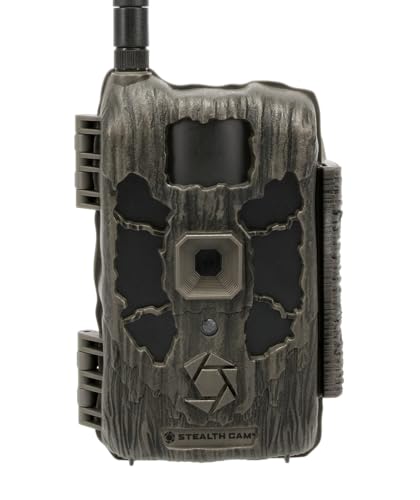 Stealth Cam Deceptor Max 2.0 Cellular Trail Camera | Check price on Amazon |
Key takeaways
- Best wireless trail cameras that send photos to your phone: cellular and Wi-Fi game cameras compared on trigger speed, night range and power.
A wireless trail camera watches a trail, a feeder, a gate, or a stretch of woodland while you are somewhere else. When motion crosses the sensor, the camera wakes, takes a photo or a short clip, and sends it to your phone through a cellular connection or a direct Wi-Fi link. You learn what passed by without walking out to pull a card, and you learn it while the trail is still fresh in your mind.
This guide covers four wireless trail cameras sold on Amazon US. All four are true game cameras with a wireless link stated in the listing: three send images over a cellular network, and one connects to a phone over its own Wi-Fi signal. No wired-only camera appears here, and no home security camera appears here either, because neither one does the job this guide is about. Each camera below is judged from the figures its own listing states, and where listings disagree with each other, this guide says so rather than smoothing the gap over.
What to Look For
Wireless type comes first, because it decides how you get your images. A cellular camera uses a mobile network to send photos to an app wherever you have signal on your phone. A Wi-Fi camera builds a short-range link to your phone, so you walk within range, open the app, and pull the images down on the spot. Cellular suits a camera hung deep in the woods or on a far boundary. Wi-Fi suits a camera near a cabin, a barn, or a garden edge where you pass by often.
Trigger speed comes next. The listing states this figure in fractions of a second, and it tells you how quickly the camera wakes and fires after the sensor sees movement. A fast trigger catches an animal in the center of the frame. A slow trigger catches an empty trail, or the tail end of whatever passed. All four cameras in this guide state a trigger speed under one second, and the comparison table at the end lines them up side by side.
Night range and flash type decide what you see after dark. Trail cameras light the scene with infrared LEDs, and the listing states the range in feet. Low-glow flash gives off a faint red glow that animals may notice. No-glow flash uses infrared light beyond the visible range, so the camera stays dark to eyes in the woods. No-glow suits wary game. Low-glow suits a spot where a faint glow does not matter, such as a driveway or a fenced yard.
Photo and video figures tell you how much detail each capture holds. Still resolution is stated in megapixels, and video is stated as 720p, 1080p, or 1440p. Higher still resolution helps when you want to study antlers, markings, or a license plate at the edge of the frame. Video with sound helps when you want to hear what the camera saw, though not every camera in this guide records sound with its clips.
Power and memory decide how long a camera can sit untouched. Most trail cameras run on AA batteries, and the listing states how many the body takes. Some cameras add built-in memory so no card is needed, while others need a microSD card that the listing may or may not include. A camera with built-in memory and a solar panel option can sit for months, while a camera that needs a card and fresh batteries needs a visit on a schedule you set yourself.
Carrier support matters for cellular cameras. Some cameras connect through one network only, and the listing names it. Others carry two SIM slots and pick whichever signal is stronger at the spot. Dual-SIM cameras suit land where one network fades and another holds.
TACTACAM Reveal X 3.0 Cellular Trail Camera
The Tactacam Reveal X 3.0 is a cellular trail camera that connects to a mobile network on its own and sends images to the Reveal app on your phone. The listing states 4K photo capture and 1080p video, which gives this camera the sharpest still images in this guide. Its low-glow infrared flash reaches 96 feet, the longest night range among the four cameras here, and the listing states a fast trigger speed that catches game in the center of the frame.
Setup is built around automatic carrier selection. The camera scans the networks around it and connects to the strongest signal without you choosing a carrier by hand. The listing names AT and T and Verizon as the networks it works with, and the camera ships with a SIM card and an antenna already in the box. A built-in GPS chip records where each camera sits, which helps when you run several cameras across a property and want to know exactly which one sent each image.
Memory is handled differently here than on most trail cameras. The Reveal X 3.0 carries 8GB of internal memory, so no card is needed to begin capturing, though the listing notes an optional card slot for extra room. That matters on a first hang, because you can set the camera and walk away without a separate card in hand. The camera also pairs with a Tactacam solar panel, a folding solar panel, a battery belt, or a lithium cartridge, all sold separately, for deployments that run through a full season without a battery change.
The body is rated IP66, the tightest seal in this guide, and the listing states battery-powered operation with a 3-watt draw. The camera measures 3.75 by 4 by 11.9 inches and weighs 1.65 pounds, so it hangs on a tree strap without sagging. The app adds deer analytics, mapping, and weather, and Wi-Fi live aiming through the app helps you line up the frame before you leave the camera alone.
Two limits deserve a plain statement. The cellular link needs a Tactacam data plan, sold separately, so the camera sends nothing until a plan is active. And the low-glow flash, while faint, can still be seen at close range in the dark, so this camera suits open trails and field edges more than a spot where total darkness matters.
SPYPOINT Flex-M Twin Pack Cellular Trail Cameras
The SPYPOINT Flex-M Twin Pack puts two cellular trail cameras in one box, so one purchase covers two locations at once. Each camera states 28MP still photos and 720p video with sound, and each one carries a dual-SIM LTE modem that picks whichever carrier signal is stronger at the spot. The listing states GPS, night vision, and IP65 weather resistance, and the cameras send images to the SPYPOINT app.
The twin pack is the value play in this guide, because two cameras cover a trail and a feeder, or two ends of a property, for the cost of a single box. Each camera works on its own plan through the SPYPOINT app, and the maker runs a free photo tier that sends a set number of photos each month per camera at no charge. That free tier suits a camera that watches a quiet trail, while a busier spot may need a paid tier to keep up with the volume of images.
Trigger speed is stated at 0.5 seconds, the slowest figure in this guide, though still under one second. On a narrow trail where animals walk straight toward the camera, half a second is enough to catch them in frame. On a wide crossing where animals move across the field of view, a faster camera would catch more of the animal. The 720p video is also the lowest video figure here, and it records with sound, which helps when you want to hear movement the photo alone cannot show.
The cameras run on batteries and store images on a microSD card. The listing for this twin pack notes that two SD cards are included in some versions of the bundle, so check the exact bundle contents on the live listing before you buy. The IP65 seal keeps rain and dust out in normal weather, though it is a step below the IP66 seal on the Tactacam pick above.
Moultrie EDGE Cellular Trail Camera 2-Pack
The Moultrie EDGE 2-Pack is a pair of cellular trail cameras built around the maker’s Auto Connect system, which links to the strongest signal across the major networks without you swapping SIM cards. The listing states 33MP still photos and 720p video with HD audio, an 80-foot low-glow infrared flash, and a 0.65-second trigger speed. Built-in memory and unlimited cloud storage through the Moultrie Mobile app mean no SD card is needed, and the app clears space on its own as new shots arrive.
This is the oldest camera in this guide by first availability date, and that age shows in two ways. On the good side, the EDGE line has a long record behind it, and the two-pack covers two spots for one purchase. The listing also states a two-year warranty with support based in the United States, which is the longest warranty stated among the cameras here. The cameras run on 8 to 16 AA batteries, and the listing states that the Moultrie Mobile app handles activation, remote viewing, photo storage, and instant alerts.
On the cautious side, the evidence for this exact listing is mixed. One older crawl of the listing shows no buying option, while a more recent crawl shows third-party sellers with stock and fulfillment through Amazon. That conflict is stated here plainly because it matters: confirm a new-unit buying option on the live listing before you buy, and check that the listing you open is the two-pack, since Moultrie sells the same camera name as a single unit under a different code. The EDGE 2 and EDGE 3 models also share the family name, and the listing for this two-pack is the original EDGE, not the newer EDGE 2 or EDGE 3.
The 720p video and 0.65-second trigger are the weakest figures in this guide, and the 80-foot flash range is the shortest. Those figures still cover a feeder, a trail crossing, or a gate where animals pass close to the camera. Where the EDGE earns its place is in the app and the memory setup: built-in memory plus cloud storage removes the card from the equation entirely, and the Auto Connect modem removes the carrier question.
Stealth Cam Deceptor Max 2.0 Cellular Trail Camera
The Stealth Cam Deceptor Max 2.0 is a cellular trail camera built for hunters who scout across land where carrier coverage changes from one spot to the next. The listing states 40MP still photos and 1440p QHD video, the sharpest video figure in this guide, with a no-glow infrared flash that stays dark to eyes in the woods. A dual-SIM design works on AT and T and Verizon, so the camera picks whichever network reaches the spot, and the Command Pro app handles remote viewing and camera management.
Trigger speed is stated at 0.4 seconds, the fastest figure among the cameras here, which helps on a wide crossing where an animal moves across the frame rather than toward the camera. The no-glow flash is the key difference from the low-glow cameras above: nothing visible lights up when the camera fires at night, so wary game keeps moving through the frame instead of turning away. That makes this camera the pick for a spot where you have already seen animals shy away from a visible glow.
The listing identifies the exact model as STC-DCPTRX2, and that model code matters. Stealth Cam sells several cameras under the Deceptor name, including the original Deceptor and the Deceptor Max, and the listings look alike at a glance. Confirm the model code on the live listing before you buy, because the Max 2.0 is the one with the dual-SIM modem and the 1440p video stated here. A bundle version of this camera also circulates with cards and a card reader in the box, so check whether the listing you open is the camera alone or a bundle.
One flag needs a plain statement. The freshest direct evidence for this exact listing is a crawl from several months ago, and the most recent confirmation comes from a camera guide that checked the exact-model listing on November 1, 2026. That is enough to include the camera, but it is the thinnest stock evidence in this guide, so open the link and confirm a new-unit buying option before you buy. If the link shows no buying option, the other three cameras here cover the same ground, and the Tactacam pick above is the closest match for sharp stills and a fast trigger.
Comparison Table
| Camera | Wireless Link | Still Photos | Video | Night Flash | Trigger Speed |
|---|---|---|---|---|---|
| TACTACAM Reveal X 3.0 | Cellular, auto-connect | 4K | 1080p | Low-glow, 96 ft | Fast, stated |
| SPYPOINT Flex-M Twin Pack | Cellular, dual-SIM | 28MP | 720p with sound | Night vision, range not stated | 0.5 seconds |
| Moultrie EDGE 2-Pack | Cellular, auto-connect | 33MP | 720p with HD audio | Low-glow, 80 ft | 0.65 seconds |
| Stealth Cam Deceptor Max 2.0 | Cellular, dual-SIM | 40MP | 1440p | No-glow, range not stated | 0.4 seconds |
Frequently Asked Questions
Do wireless trail cameras need a data plan?
Cellular trail cameras do. The camera sends images over a mobile network, and the maker sells the data plan separately from the camera. Each maker runs its own plans through its own app, and the plan is tied to the camera, not to your phone plan. Wi-Fi trail cameras need no plan at all, because they link directly to your phone over a short-range signal when you walk within range.
How far can a wireless trail camera send photos?
A cellular camera sends photos as far as the mobile network reaches, so distance from your phone does not limit it. The limit is the signal at the camera itself: if no network reaches the spot, the camera stores images until it can send them, or it never sends them at all. A Wi-Fi camera only reaches your phone while you stand within its signal range, which the listing states in feet. That range is often under 200 feet in open ground and shorter through trees and brush. Check the signal at the spot before you hang a cellular camera, and check the Wi-Fi range before you rely on a Wi-Fi camera.
How long do the batteries last in a wireless trail camera?
Battery life depends on how often the camera fires, how many images it sends, and how cold the weather gets. A camera on a quiet trail may run for months on one set of batteries, while a camera on a busy feeder may need fresh batteries much sooner. Cellular cameras use more power than Wi-Fi cameras because each image sent over the network draws on the battery. Solar panels, battery belts, and lithium cartridges are sold separately for several cameras in this guide, and they stretch the time between visits.
How to Choose
Begin with the distance between the camera and you. If the camera hangs deep in the woods or on a far boundary, pick a cellular camera and accept the separate data plan as part of the cost. If the camera hangs near a cabin, a barn, or a garden edge where you walk by often, a Wi-Fi camera gives you images with no plan and no monthly cost.
Next, match the flash to the game. No-glow flash suits wary animals and spots where you have seen game turn away from a visible light. Low-glow flash suits open trails, feeders, and property edges where a faint glow does not change behavior. The Stealth Cam pick here is the only no-glow camera in the guide, and that alone may decide the choice for a hunter.
Then weigh stills against video. The Tactacam pick leads on still resolution, the Stealth Cam pick leads on video, and the two twin packs trade a little sharpness for two cameras in one box. Two cameras on two trails tell you more about movement across a property than one sharper camera on one trail, so a twin pack is often the better buy for a first setup. A single camera with sharper stills suits a spot you already know well, where one angle covers the ground that matters.
Finally, confirm the exact listing before you buy. Trail camera names repeat across generations, and a single letter in the model code can mean a different modem, a different flash, or a different memory setup. Open the link, check the model code and the bundle contents, and confirm a new-unit buying option is live. The cameras in this guide were checked against listings and recent trackers, but Amazon listings change, and the link you open is the final word.
Disclosure: As an Amazon Associate, we may earn a commission from qualifying purchases made through links in this article, at no additional cost to you.
More from Amazon
Programs that pair well with the guide above. Offers and eligibility are set by Amazon and may change.
Free shipping on eligible items, Prime Video and more. Eligible new members can start with a free trial.
Start a Prime free trialAd-free music streaming. Eligible new subscribers can start with a free trial.
Try Music Unlimited freeA Prime membership for ages 18-24 with a trial period. Eligibility is set by Amazon.
See Prime for Young AdultsAudiobooks and podcasts to listen to on the go. Eligible new members can start with a free trial.
Try Audible freeAs an Amazon Associate we earn from qualifying purchases.







Write Your Review
No reviews yet. Be the first to share your experience!