

Our Short List of 3
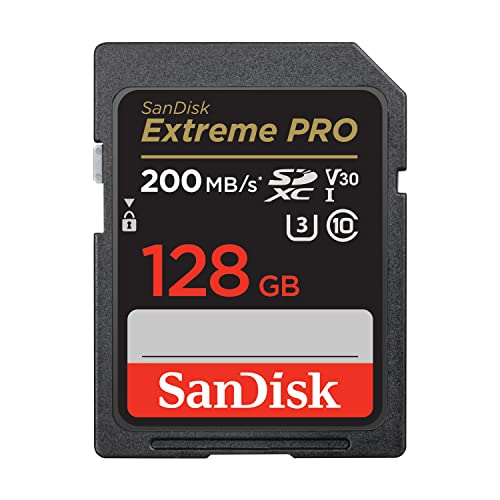
- Best for: Everyday stills and 4K video in UHS-I DSLR and mirrorless cameras
- Format: SDXC, UHS-I
- Capacity: 128GB
- Read speed: up to 200MB/s
- Write speed: up to 90MB/s

- Best for: Dual-slot mirrorless bodies that need a matched main card and spare
- Format: SDXC, UHS-II
- Capacity: 128GB per card, 2-pack
- Read speed: up to 250MB/s
- Speed classes: Class 10, U3, V60

- Best for: High-bitrate 4K video and long RAW bursts in UHS-II cameras
- Format: SDXC, UHS-II
- Capacity: 128GB
- Read speed: up to 300MB/s
- Write speed: up to 299MB/s
All 5 Picks at a Glance
| Product | Specs | Action |
|---|---|---|
| SanDisk 128GB Extreme PRO SDXC UHS-I Memory Card |
| Check price on Amazon |
| Lexar 128GB Professional 1667x SDXC UHS-II Memory Card (2-Pack) |
| Check price on Amazon |
| Sony 128GB TOUGH-G Series SDXC UHS-II Memory Card |
| Check price on Amazon |
 Lexar 128GB Professional CFexpress Type B GOLD Memory Card |
| Check price on Amazon |
 SanDisk 256GB Extreme microSDXC UHS-I Memory Card with Adapter |
| Check price on Amazon |
Key takeaways
- Compare SD UHS-I and UHS-II, CFexpress Type B and microSD camera cards by speed class and capacity, and pick the format your camera actually uses well.
The real decision when buying a memory card is not the headline speed printed on the label. It is whether the card’s format and sustained write speed match what your camera actually demands. A card that is too slow stalls burst shooting and stops high-bitrate video mid-clip, while an oversized flagship card wastes money in a camera whose slot cannot use it.
This guide is for stills shooters, hybrid video creators, and action camera owners who need a card that fits their slot and keeps up with their recording modes. Every pick below was chosen from its Amazon listing, using the format, capacity, speed class, and transfer speeds stated for that exact variant, so the card in the box matches the numbers on this page.
Quick Picks
As an Amazon Associate we earn from qualifying purchases
| Product | Best for | Key spec from title |
|---|---|---|
| SanDisk 128GB Extreme PRO SDXC UHS-I | Everyday stills and 4K video in UHS-I cameras | 128GB, up to 200MB/s read, V30 |
| Lexar 128GB Professional 1667x SDXC UHS-II (2-Pack) | Dual-slot bodies needing a matched spare | 128GB, up to 250MB/s read, V60 |
| Sony 128GB TOUGH-G Series SDXC UHS-II | Fast bursts and high-bitrate 4K in UHS-II bodies | 128GB, up to 300MB/s read, V90 |
| Lexar 128GB Professional CFexpress Type B GOLD | Flagship bodies shooting 8K RAW video | 128GB, up to 1750MB/s read |
| SanDisk 256GB Extreme microSDXC UHS-I | Action cameras and drones recording 4K | 256GB, up to 190MB/s read, V30, A2 |
How to Choose
Match the format to your camera’s slot first
Nothing else matters if the card physically does not fit or the camera cannot address it. Full-size SD cards suit most DSLR and mirrorless bodies, CFexpress Type B fits a smaller set of flagship models, and microSD belongs in action cameras, drones, and compact devices that specify it. Check your manual for the exact format and for whether the slot is UHS-I or UHS-II, because a UHS-II card in a UHS-I slot falls back to the slower bus. Adapters do not upgrade a slot, and a microSD card in an SD adapter rarely matches a native SD card for sustained work.
Read the video speed class, not just the peak numbers
The V class printed on the card states the minimum sustained write speed the card guarantees: V30 holds at least 30MB/s, V60 at least 60MB/s, and V90 at least 90MB/s. That floor is what keeps long video clips from dropping frames or stopping early. Peak read and write figures describe short bursts under ideal conditions, so they flatter almost every card. Match the V class to your camera’s highest recording mode: ordinary 4K usually sits comfortably on V30, high-bitrate 4K modes want V60, and the most demanding all-intra and high-frame-rate modes call for V90 or CFexpress.
Pick capacity around your shooting pattern
Capacity decides how often you stop to swap cards, and bigger is not automatically safer. A stills shooter working in RAW fills roughly a few thousand frames into 128GB, while 4K video eats that space in a couple of hours depending on bitrate. Many working photographers prefer several mid-size cards over one huge card, so a single failure or loss never takes a whole day with it. Video shooters recording long events lean the other way and favour larger capacities. Buy for the longest session you realistically shoot without offloading, then add one spare card to the bag.
Check the write speed your bursts actually need
Stills shooters should look past read speed entirely and focus on how fast the card clears the camera’s buffer. A high-resolution body firing long RAW bursts writes hundreds of megabytes in seconds, and a slow card leaves the camera locked out while the buffer drains. UHS-II cards with a second row of contacts move that data far faster in a compatible body. Read speed still matters at the desk, where it shortens offload time through a matching reader, but it does nothing for you in the field. Prioritise sustained write performance first, then transfer speed.
The 5 Best Options
SanDisk 128GB Extreme PRO SDXC UHS-I Memory Card
- Best for: Everyday stills and 4K video in UHS-I DSLR and mirrorless cameras
- Format: SDXC, UHS-I
- Capacity: 128GB
- Read speed: up to 200MB/s
- Write speed: up to 90MB/s
Everyday stills and 4K video in UHS-I DSLR and mirrorless cameras
The fastest offload speeds need a compatible reader; a standard UHS-I reader will transfer more slowly
For the large group of cameras with a UHS-I slot, this is the sensible default. The listing rates the 128GB variant at read speeds up to 200MB/s and shot speeds up to 90MB/s, with U3 and V30 classes that cover 4K UHD recording and sequential burst stills. SanDisk also lists the card as temperature, water, shock, and X-ray proof, which suits travel and outdoor work. It will not unlock anything extra in a UHS-II body, but in the cameras it is built for, it removes the card as a bottleneck.
Lexar 128GB Professional 1667x SDXC UHS-II Memory Card (2-Pack)
- Best for: Dual-slot mirrorless bodies that need a matched main card and spare
- Format: SDXC, UHS-II
- Capacity: 128GB per card, 2-pack
- Read speed: up to 250MB/s
- Speed classes: Class 10, U3, V60
Dual-slot mirrorless bodies that need a matched main card and spare
This ASIN is the two-card pack; confirm the pack contents on the listing before ordering if you only want a single card
This listing sells two matched 128GB cards, which fits how dual-slot cameras are actually used: one card recording, one ready as overflow or backup. Each card is a UHS-II SDXC rated V60 with read speeds up to 250MB/s, so it handles 4K video and fast bursts in bodies that support the faster bus, and it still works at reduced speed in UHS-I slots. Lexar positions the 1667x line for professional photographers and videographers, and the pair format means both slots run identical media, which keeps write behaviour predictable when the camera mirrors files.
Sony 128GB TOUGH-G Series SDXC UHS-II Memory Card
- Best for: High-bitrate 4K video and long RAW bursts in UHS-II cameras
- Format: SDXC, UHS-II
- Capacity: 128GB
- Read speed: up to 300MB/s
- Write speed: up to 299MB/s
High-bitrate 4K video and long RAW bursts in UHS-II cameras
There is no write-protect switch on this design, so guard against accidental formatting in the camera menu instead
Sony’s SF-G series TOUGH card is the pick when the camera records high-bitrate video or long bursts and the card must never be the reason a clip stops. The listing gives read speeds up to 300MB/s and write speeds up to 299MB/s, with a V90 class that guarantees the sustained floor those recording modes depend on. The TOUGH design drops the fragile write-protect switch and uses a one-piece moulded build, aimed at bodies that work outdoors in rough conditions. It belongs in a UHS-II slot; in an older camera it simply runs at UHS-I pace.
Lexar 128GB Professional CFexpress Type B GOLD Memory Card
- Best for: Flagship mirrorless and cinema cameras shooting 8K RAW or high-frame-rate video
- Format: CFexpress Type B
- Capacity: 128GB
- Read speed: up to 1750MB/s
- Interface: PCIe 3.0, NVMe
Flagship mirrorless and cinema cameras shooting 8K RAW or high-frame-rate video
You need a CFexpress Type B reader to offload; standard SD readers cannot read this card
Flagship bodies that record 8K RAW or very high frame rates leave SD behind entirely, and this is the format they use instead. Lexar’s GOLD series card is a CFexpress Type B model rated at read speeds up to 1750MB/s over a PCIe 3.0 and NVMe interface, built for the sustained data rates of RAW video recording. The 128GB capacity is the entry point in the line and suits stills-heavy flagship shooters or shorter video takes. Confirm your body takes Type B specifically, because Type A cards and slots are a different physical format.
SanDisk 256GB Extreme microSDXC UHS-I Memory Card with Adapter
- Best for: Action cameras, drones, and 360 cameras recording long 4K sessions
- Format: microSDXC, UHS-I, with SD adapter
- Capacity: 256GB
- Read speed: up to 190MB/s
- Speed classes: Class 10, U3, V30, A2
Action cameras, drones, and 360 cameras recording long 4K sessions
For a main stills camera, a native SD card is the better fit; keep this card for devices that specify microSD
Action cameras and drones record to microSD, and they are harder on small cards than their size suggests, writing continuous 4K footage in heat, cold, and vibration. This 256GB Extreme card is rated at read speeds up to 190MB/s with U3, V30, and A2 classes on the listing, and it ships with a full-size SD adapter for readers and laptops. The larger capacity matters here because action cameras are often mounted out of reach, so swapping mid-activity is not an option. It also serves as a travel spare for cameras that accept microSD in an adapter.
Which One Fits Your Situation
You shoot stills on a UHS-I camera
Take the SanDisk Extreme PRO 128GB. Its V30 class and 90MB/s shot speed clear bursts at the pace a UHS-I body can actually write, and 128GB holds a long day of RAW files for most shooters. Spending more on a UHS-II card buys you nothing in this slot, because the camera, not the card, sets the ceiling.
You record 4K video on a mirrorless body
Start with the Lexar 1667x pair if your camera has two slots, since matched cards keep mirrored recording predictable, and the V60 class covers high-bitrate 4K modes. If your body offers an all-intra or high-frame-rate mode that demands more, move up to the Sony TOUGH-G and its V90 floor instead of hoping a lesser card keeps up.
You run a flagship body with a CFexpress slot
The Lexar GOLD Type B card is the only pick here that fits your camera, and its interface headroom is what 8K RAW and fast burst modes are built around. Buy the reader at the same time if you do not own one, because your existing SD workflow will not transfer these files.
You film with an action camera or drone
Choose the SanDisk Extreme 256GB microSD. Its V30 class sustains the continuous write load of 4K action footage, and the capacity covers a full day of mounted recording without a swap. Format it in the device before the first use, and retire it once the camera starts reporting write errors.
Common Mistakes
- Buying by peak read speed alone, when sustained write speed and the V class decide whether video clips survive and buffers clear.
- Putting a UHS-II card in a UHS-I camera and expecting the faster bus to work, or the reverse: capping a UHS-II body with a slow UHS-I card.
- Confusing CFexpress Type A and Type B, which are different physical formats that do not interchange.
- Filling one very large card with an entire trip instead of rotating smaller cards, so one failure costs everything.
- Skipping the in-camera format before a shoot, which leaves a file system the camera did not create and invites write errors.
Frequently Asked Questions
Is a V30 card enough for 4K video?
For most cameras recording standard 4K modes, yes. V30 guarantees a sustained write floor that covers typical 4K bitrates with room to spare. The exceptions are high-bitrate all-intra modes and high-frame-rate recording, where the camera manual usually specifies V60, V90, or CFexpress. Check the recording mode you actually use rather than buying for a mode you never enable.
Will a UHS-II card work in my older camera?
Yes, UHS-II cards are backward compatible and will run in a UHS-I slot, just at UHS-I speeds. The extra row of contacts simply goes unused. That makes a UHS-II card a reasonable purchase if you plan to upgrade the body soon, but it will not make your current camera write any faster.
How many photos fit on a 128GB card?
It depends on file size, which varies by sensor and format. As a rough guide, a 128GB card holds several thousand RAW files from a typical mirrorless camera, or far more JPEGs. Video is the hungrier format: 4K footage can consume the same card in a few hours. Treat capacity as session length, and size the card to your longest stretch between offloads.
Should I format the card in the camera or on a computer?
Format in the camera you will shoot with. The camera builds the exact file structure it expects, which reduces the chance of write errors and strange behaviour mid-session. Do this after offloading and confirming your files are backed up, since formatting erases the card completely. Avoid deleting files one by one in the camera as a substitute.
More from Amazon
Programs that pair well with the guide above. Offers and eligibility are set by Amazon and may change.
Free shipping on eligible items, Prime Video and more. Eligible new members can start with a free trial.
Start a Prime free trialAd-free music streaming. Eligible new subscribers can start with a free trial.
Try Music Unlimited freeA Prime membership for ages 18-24 with a trial period. Eligibility is set by Amazon.
See Prime for Young AdultsAudiobooks and podcasts to listen to on the go. Eligible new members can start with a free trial.
Try Audible freeAs an Amazon Associate we earn from qualifying purchases.





Write Your Review
No reviews yet. Be the first to share your experience!