

Our Top Picks
Three hundred dollars is the first budget where the used market stops feeling like a compromise. At $300 you can buy a card that still plays modern games at 1440p, still gets driver updates, and still has DLSS, ray tracing, and NVENC. The catch is that the used market in November 2026 is rising fast, and the card that fits at the 90-day median may not fit this week.
Every price here is a sold median from completed eBay sales tracked by pcprice.watch, not an asking price. Asking prices are what sellers hope for; sold medians are what buyers actually paid. Prices are a snapshot of November 2026 — check the current price on Amazon before you buy.
Our top picks
Best for: 1440p gamers, streamers who need NVENC, and editors working in 1080p
Check price on Amazon
Best for: Buyers who will not buy used, and streamers who want AV1 encode
Check price on Amazon
Best for: AMD loyalists and 1080p high-refresh esports players
Check price on Amazon
Best for: Budget builders who want the most frames per dollar, and 1080p gamers who do not stream
Check price on AmazonBest for: 1080p gamers on a $200 budget who want DLSS
Check price on AmazonThe Honest Price Ladder: What $300 Actually Buys in November 2026
| Budget | What fits | What it means |
|---|---|---|
| $200–$220 | RTX 2070 Super ($205 asking), RX 6600 ($212 sold), RTX 2070 ($198 sold) | Cheapest DLSS card; cheapest modern 8GB |
| $220–$250 | RX 6650 XT ($245 sold) | Best value in the whole guide |
| $250–$300 | RX 7600 ($270 sold), RTX 3070 ($288 sold), Arc B570 ($289.99 new) | A real 1440p card, plus the only new one |
| $300–$350 | RTX 3060 12GB ($316 sold), Arc B580 ($329.99 new), RTX 4060 ($343 sold) | All miss — the next step up |
| $350–$375 | RX 6700 XT ($363 sold), RTX 3070 Ti ($375 asking) | 12GB and Ti cards |
The key fact: the RTX 3070 sells for a median of $288 — $6 cheaper than the RTX 3060 Ti at $294, and 10% faster.
Prices are climbing: the 3070’s 7-day median is $329 (+9%), the RX 7600’s is $314 (+15%), and the RTX 3060 12GB’s is $371 (+12%). Offer the 90-day median this week.
Quick Picks
| Card | Condition | Price | Best for |
|---|---|---|---|
| NVIDIA GeForce RTX 3070 8GB | Used | $288 sold median | Best overall — fastest card that fits |
| Intel Arc B570 10GB | New | $289.99 | Best new card — warranty, AV1 encode, 10GB |
| AMD Radeon RX 7600 8GB | Used | $270 sold median | Best AMD card — AV1 encode, FSR 4 |
| AMD Radeon RX 6650 XT 8GB | Used | $245 sold median | Best value — 7600 speed for $25 less |
| NVIDIA GeForce RTX 2070 Super 8GB | Used | $205 asking median | Cheapest DLSS + ray tracing |
How to Choose a Used Graphics Card Under $300
Judge by sold prices, not asking prices. A listing that asks $350 for a card that sold 1,293 times at $288 is a $288 card with an optimistic seller. Offer the median.
8GB is the floor, not the ceiling. Every card that fits at $300 has 8GB of VRAM except the Arc B570 (10GB). That covers 1080p ultra and 1440p high — but not 4K or large editing timelines. If you edit 4K video, save for the 12GB RTX 3060 at $316.
DLSS matters more than raw speed at this budget. A used RTX 3070 with DLSS Quality at 1440p will look better and run smoother than a faster-on-paper AMD card running native resolution. The 2070 Super from 2019 still gets DLSS support, while AMD’s FSR looks softer. Turn on ray tracing and the gap grows — NVIDIA’s RT cores are a full tier ahead.
Count the watts and the pins. The RTX 3070 draws 220W and needs a 650W PSU; the RTX 2070 Super draws 215W and wants the same. The RX 7600 (165W) and Arc B570 (150W) are happy on 550W.
Remember the PCIe lane trap. The RX 7600, RX 6650 XT, RX 6600, and Arc B570 all run on PCIe 4.0 x8 — fine on a modern board, a few percent slower on an older PCIe 3.0 board. It is one more reason the RTX 3070 — a full PCIe 4.0 x16 card — is the cleaner pick for older systems.
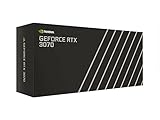
1. NVIDIA GeForce RTX 3070 8GB (Used) — $288 — Best Overall
Specs: 5,888 CUDA cores, 1,725 MHz boost, 8GB GDDR6 on a 256-bit bus, 448 GB/s, 220W TDP, PCIe 4.0 x16, DLSS, ray tracing, NVENC (Ampere). Needs a 650W PSU; most models use two 8-pin connectors.
Pros: The fastest card that fits under $300 — about 10% faster than the RTX 3060 Ti (pcprice.watch), and it sells for $6 less. DLSS, mature ray tracing, and the best encoder in this guide. A genuine 1440p card at 60 fps or better at high settings. For video editing, CUDA and NVENC make it the safest pick here — Premiere Pro still favors NVIDIA.
Cons: 8GB of VRAM is the hard limit — heavy texture packs and 4K timelines will run into it. No AV1 encode and no DLSS frame generation. The 7-day sold median is $329, up 9% — hunt for a $288 deal this week.
Best for: 1440p gamers, streamers who need NVENC, and editors working in 1080p.
2. Intel Arc B570 10GB (New) — $289.99 — Best New Card
Specs: 18 Xe cores, 2,600 MHz boost, 10GB GDDR6 on a 160-bit bus, 380 GB/s, 150W TDP, PCIe 4.0 x8, AV1 encode and decode, XeSS 2, DisplayPort 2.1. One 8-pin connector, 550W PSU, Resizable BAR required.
Pros: The only new card in this guide — a real warranty, a card nobody has mined on, and a box with a receipt. It is also the only card under $300 with 10GB of VRAM, and the cheapest here with AV1 encode. At $289.99 for the ASRock Challenger on Newegg and Amazon, it fits by $10.01 at a retail price, not a deal. It draws just 150W and is roughly 8–12% slower than the RTX 3070 (HowManyFPS, 100+ games) — a fair trade for the warranty and the extra VRAM.
Cons: Slower than the used RTX 3070 at the same price, with weaker ray tracing. It needs Resizable BAR enabled in your BIOS — without it, performance drops sharply. Old DirectX 11 games can still be inconsistent. The unconfirmed November 2 rumor that Intel might end the B580 line is still unconfirmed.
Best for: Buyers who will not buy used, and streamers who want AV1 encode.
3. AMD Radeon RX 7600 8GB (Used) — $270 — Best AMD Card
Specs: 32 compute units, 2,048 stream processors, 2,655 MHz boost, 8GB GDDR6 on a 128-bit bus, 288 GB/s, 165W TDP, PCIe 4.0 x8, AV1 encode and decode, FSR 4, DisplayPort 2.1. One 8-pin connector, 550W PSU.
Pros: The newest AMD architecture here, and the first AMD card at this price with AV1 encode — the RDNA 2 cards below it can only decode it. It supports FSR 4, a real step up from FSR 3. In raw raster speed it trades blows with the RX 6650 XT — Hardware Unboxed found the two within 3% across 22 esports titles — while drawing 11W less power. At a $270 sold median it is the cheapest current-generation card in the guide.
Cons: The 7-day sold median is $314, up 15% — the steepest rise of any card here. At this week’s prices the 7600 does not fit under $300, so offer $270 and wait rather than pay $314. Its ray tracing is still a generation behind NVIDIA’s. The PCIe 4.0 x8 interface costs a few percent on older PCIe 3.0 boards.
Best for: AMD loyalists and 1080p high-refresh esports players.
4. AMD Radeon RX 6650 XT 8GB (Used) — $245 — Best Value
Specs: 32 compute units, 2,048 stream processors, 2,635 MHz boost, 8GB GDDR6 on a 128-bit bus, 256 GB/s, 176W TDP, PCIe 4.0 x8, AV1 decode only, FSR. One 8-pin connector, 500W PSU.
Pros: The value pick of the guide, and it is not close. At a $245 sold median (109 sales) it costs $25 less than the RX 7600 for the same gaming performance, and $43 less than the RTX 3070 for roughly 75–80% of its speed. The 7-day median is $250, up just 3% — the most stable price in the guide, so $245 is a price you can actually pay this week.
Cons: No AV1 encode — if you record or stream, you will be encoding in H.264, which looks worse at the same bitrate. No FSR 4 support; it tops out at FSR 3. Ray tracing is weak enough that you will mostly leave it off. It is a 2022 card on a 2021 architecture, so its driver future is shorter than the 7600’s or the B570’s.
Best for: Budget builders who want the most frames per dollar, and 1080p gamers who do not stream.
5. NVIDIA GeForce RTX 2070 Super 8GB (Used) — $205 — Cheapest DLSS + Ray Tracing
Specs: 2,560 CUDA cores, 1,770 MHz boost, 8GB GDDR6 on a 256-bit bus, 448 GB/s, 215W TDP, PCIe 3.0 x16, DLSS, ray tracing, NVENC (Turing). Needs a 6-pin and an 8-pin connector, 650W PSU.
Pros: The cheapest way into real DLSS and real ray tracing. The asking median is $205 (CresvaMent, November 16, 23 listings), and the plain RTX 2070 has a verified sold median of $198 (178 sales). That makes the Super the floor of this guide: 8GB of VRAM, a 256-bit bus, and the same memory bandwidth as the RTX 3070. For 1080p gaming it is still genuinely good, and NVENC makes it a capable streaming card. The GTX 1080 Ti at ~$184 is faster in raw raster but has no DLSS, no ray tracing, and no new game-ready drivers.
Cons: The $205 figure is an asking median, not a sold median — treat $205 as the ceiling of your offer, not the price. It is a 2019 card: no AV1 anything, no DLSS frame generation, and the oldest driver future in this guide. It is the card most likely to have spent its life in a mining rig, so the pre-purchase tests below matter most here.
Best for: 1080p gamers on a $200 budget who want DLSS.
What to Avoid
Paying $294 for an RTX 3060 Ti. The 3060 Ti’s sold median is $294 (291 sales) — but the RTX 3070 sells for $288 and is about 10% faster.
The $52.82 listing. It appears in catalog data for the RX 6700 XT and has appeared for other cards all year. A current-generation card for $52.82 is a scam.
“For parts” and no-photo listings. A card sold for parts is a card the seller already knows is broken. A listing with only stock photos hides the fans and connectors. Ask for a photo of the actual card with today’s date next to it.
Mining cards sold as “lightly used.” A card that ran 24/7 in a mining farm is not automatically dead, but you should pay less for one, not the same. Signs include dust packed in the fins, replaced thermal pads, a modded BIOS, and a seller with a dozen identical cards.
Skipping the test. Before you pay, ask the seller for a video of the card running a benchmark — FurMark or 3DMark Time Spy — with temperatures visible. After it arrives, run the same test yourself within the return window. On eBay, buy through the platform, never off it.
Still Doesn’t Fit at $300
- RTX 3060 12GB (used), $316 sold median — misses by $16. Correction to our $200 guide, which said $350: the 90-day median is $316 (1,409 sales), so the honest budget is $320 — but the 7-day median is $371.
- Intel Arc B580 12GB (new), $329.99–$350 — misses by $30–$50. Honest budget: $350.
- RTX 4060 (used), $343 sold median — misses by $43. It is $55 more than a used RTX 3070 that is faster, and only wins on power (115W), frame generation, and AV1 encode. Honest budget: $345.
- RX 6700 XT 12GB (used), $363 sold median — misses by $63. Honest budget: $365.
- RTX 3070 Ti 8GB (used), $375 asking median — misses by $75. Asking only (CresvaMent, 25 listings, $350–$400), up 21% since November 1. Roughly 10% faster than the 3070 for $87 more.
Frequently Asked Questions
Is $300 enough for a good used graphics card in 2026?
Yes — it is the first budget where “good” stops needing an asterisk. A used RTX 3070 at $288 plays modern games at 1440p high settings, with DLSS and NVENC. You are buying used, and prices are rising — offer the 90-day median and be patient.
Should I buy the used RTX 3070 or the new Arc B570?
Buy the 3070 for speed and the best encoder for streaming. Buy the B570 if you will not buy used, if you want a warranty, or if AV1 encode matters to you — it is the cheapest AV1 encode in the guide, with 10GB of VRAM. The 3070 is 8–12% faster in games.
Is 8GB of VRAM enough in 2026?
For 1080p and 1440p, yes. For 4K, ultra texture packs, and 4K editing timelines, no — 8GB will force compromises. Save $20–$65 for the 12GB RTX 3060 or RX 6700 XT.
Is it safe to buy a used card that was used for mining?
Usually, yes — with a discount and a test. Mining cards run cool and undervolted, but their fans and thermal pads wear out faster. Pay 10–15% below the sold median and test it yourself inside the return window.
What power supply do I need?
The RTX 3070 and RTX 2070 Super need a 650W PSU with two PCIe connectors. The RX 7600 and Arc B570 are happy on 550W, and the RX 6650 XT runs on 500W. A $300 card is not worth risking on a no-name 450W PSU.
Verdict
The best used graphics card under $300 in November 2026 is the NVIDIA GeForce RTX 3070 8GB at a $288 sold median. It is the fastest card that fits, it undercuts the RTX 3060 Ti while beating it by about 10%, and it is the only pick here good at both gaming and video editing. Offer $288 and walk away above $300.
If you will not buy used, buy the Intel Arc B570 at $289.99 new. If your budget is $250, buy the RX 6650 XT at $245. If it is $200, the RTX 2070 Super at $205 is the cheapest card with DLSS and ray tracing.
As an Amazon Associate, we earn from qualifying purchases.
Suggested Internal Links
- Best graphics card for 1080p gaming under $200
- Best graphics card for 1440p gaming under $300
- Best graphics card for 1440p gaming under $500
More from Amazon
Programs that pair well with the guide above. Offers and eligibility are set by Amazon and may change.
Free shipping on eligible items, Prime Video and more. Eligible new members can start with a free trial.
Start a Prime free trialAd-free music streaming. Eligible new subscribers can start with a free trial.
Try Music Unlimited freeA Prime membership for ages 18-24 with a trial period. Eligibility is set by Amazon.
See Prime for Young AdultsAudiobooks and podcasts to listen to on the go. Eligible new members can start with a free trial.
Try Audible freeAs an Amazon Associate we earn from qualifying purchases.
Write Your Review
No reviews yet. Be the first to share your experience!