
Our Short List of 3
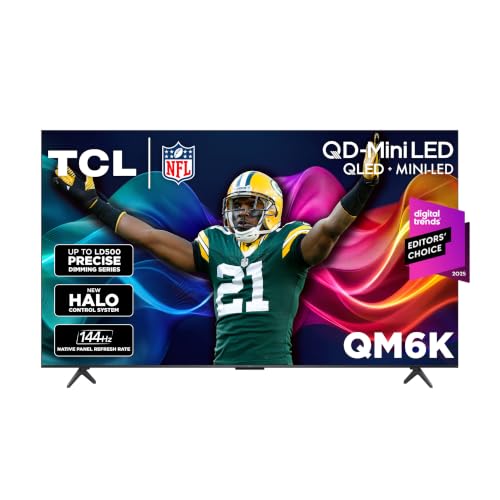
- Best for: Buyers who want Mini-LED backlighting at its ladder’s entry rung with a stated 144 hertz refresh figure.
- Display: 55 inches per the captured listing fields
- Backlight and colour: Mini LED QLED per listing title
- Resolution: 4K per captured fields
- Refresh rate: 144 hertz per captured fields; the title states a 120Hz-144Hz range
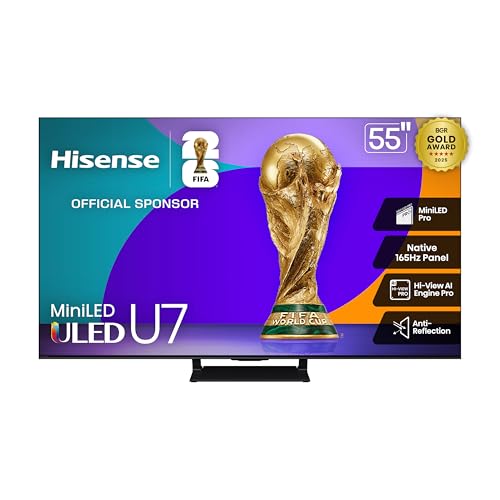
- Best for: Gaming-leaning main rooms that want the highest stated native refresh rate and Mini-LED dimming in this group.
- Display: 55-inch class (screen size summary states 54.6 inches) per listing fields
- Backlight: Mini-LED ULED with Full Array Local Dimming Pro per listing
- Colour: QLED per listing title
- Refresh rate: native 165Hz per listing title; VRR 48Hz-165Hz and up to 288 VRR per listing

- Best for: Samsung households that want the entry QLED’s stated colour volume and Quantum HDR in a slim 55-inch design.
- Display: 55-inch class per listing fields
- Panel: QLED 4K with Dual LED backlight per listing fields
- HDR: Quantum HDR per listing title
- Colour: 100% Color Volume with Quantum Dot per listing fields
All 5 Picks at a Glance
| Product | Specs | Action |
|---|---|---|
| TCL QM6K 55-inch (55QM6K) |
| Check price on Amazon |
| Hisense U7 55-inch (55U75QG, 2025) |
| Check price on Amazon |
| Samsung QLED Q60D 55-inch (QN55Q60D) |
| Check price on Amazon |
 Samsung Crystal UHD DU7200 55-inch (UN55DU7200) |
| Check price on Amazon |
 LG UT75 55-inch (55UT7570PUB) |
| Check price on Amazon |
Key takeaways
- Five 55-inch step-down TVs compared on listing-stated backlight, refresh and platform facts: Mini-LED and LED sets below each maker's flagship tier.
Choosing a television at this level is a decision about step-down rungs. Every set below is the entry or lower rung of its maker’s ladder (the first step of a Mini-LED line, the QLED line’s base model, an entry UHD range) sitting deliberately below the flagship tiers above it. What separates them is not size, since all five are 55-inch class, but backlight class, the refresh figures their listings actually state and the platform wording each one carries.
The band is argued from that line positioning and the listings’ stated feature sets only; no prices appear in this guide. Every pick was chosen from the names and specifications on its Amazon product page, and where a listing does not state a figure (one Samsung states no refresh rate at all in its captured fields) the entry says so rather than borrowing from a sibling.
Quick Picks
As an Amazon Associate we earn from qualifying purchases.
| Product | Best for | Key spec from title |
|---|---|---|
| TCL QM6K 55-inch (55QM6K) | Buyers who want Mini-LED backlighting at its ladder’s entry rung with a stated 144 hertz refresh figure. | Mini LED QLED 4K, 144 hertz, Google TV, 2025 |
| Hisense U7 55-inch (55U75QG, 2025) | Gaming-leaning main rooms that want the highest stated native refresh rate and Mini-LED dimming in this group. | Mini-LED ULED 4K, native 165Hz, Dolby Vision IQ |
| Samsung QLED Q60D 55-inch (QN55Q60D) | Samsung households that want the entry QLED’s stated colour volume and Quantum HDR in a slim 55-inch design. | QLED 4K, Quantum HDR, 100% Color Volume |
| Samsung Crystal UHD DU7200 55-inch (UN55DU7200) | Buyers who want Samsung’s entry line with every core figure stated, including the platform and the 60 Hz refresh rate. | Crystal UHD 4K, 60 Hz, Tizen stated, 3 HDMI |
| LG UT75 55-inch (55UT7570PUB) | Streaming-first rooms that want webOS with its stated free channels and AirPlay 2 in an entry 55-inch set. | LED 4K, 60 Hz, webOS 24, AirPlay 2 |
How to Choose
Backlight class splits the group first
Two picks state Mini-LED backlighting with local dimming (the TCL and the Hisense, the latter naming Full Array Local Dimming Pro), one states a QLED panel with Dual LED, and two state Direct LED. Mini-LED dimming is the stated technology for dark-room contrast in this group; the Direct LED pair answer with completeness and platform instead. Decide whether your room’s hardest scenes are dark films or bright daytime sport, then read the backlight line before any other figure.
Refresh rate must be compared only where stated
The stated figures run from a native 165Hz on the Hisense and 144 hertz on the TCL down to 60 Hz on the Samsung DU7200 and the LG. The Samsung Q60D states no refresh rate in its captured fields at all, and that absence must stay an absence: do not fill it from a sibling model or a smaller size of the same line. Gamers should shortlist from the stated high-refresh pair; film and streaming viewers lose little at a stated 60 Hz.
Platform wording is part of the specification
Each listing names its shelf differently: Google TV on the TCL, Tizen stated in the DU7200’s operating system field, webOS with a version and a free-channel count on the LG, and no platform name captured for the Q60D or the Hisense in the fields used here. Your streaming apps, your phone’s mirroring habits (AirPlay 2 is stated on the LG, Smart View on the DU7200) and your voice assistant all live on this layer, so compare the stated platform lines as seriously as the panels.
Audio claims need the same discipline as video
The stated audio runs from the Hisense’s 2.1.2 channel surround wording through Object Tracking Sound Lite on both Samsungs to the LG’s 2.0 channel, 20 watt AI Sound. One Samsung listing’s fields conflict on channel count, resolved in its entry toward the fuller speaker description. Most of these sets will end up feeding a soundbar eventually; until then, the stated channel and wattage lines are the honest comparison, not the marketing names around them.
The 5 Best Options
TCL QM6K 55-inch (55QM6K)
- Best for: Buyers who want Mini-LED backlighting at its ladder’s entry rung with a stated 144 hertz refresh figure.
- Display: 55 inches per the captured listing fields
- Backlight and colour: Mini LED QLED per listing title
- Resolution: 4K per captured fields
- Refresh rate: 144 hertz per captured fields; the title states a 120Hz-144Hz range
Buyers who want Mini-LED backlighting at its ladder’s entry rung with a stated 144 hertz refresh figure.
This pick’s code rests on aggregator product-code records rather than a captured ASIN field from the listing itself: confirm the code on the live listing before ordering. It heads this guide’s checks, and sibling TCL listings share marketing copy, so match the model number exactly.
The QM6K is the entry rung of TCL’s QD-Mini LED ladder, the step below the line’s higher models. The captured fields for this listing state a 55-inch display, 4K resolution, a 144 hertz refresh rate and a 2025 model year, and the title adds Mini LED QLED with 4K HDR, Smart Google TV, Dolby Atmos, Onkyo Audio, a voice remote and Alexa. That combination (Mini-LED backlighting at the ladder’s first rung, with a stated high refresh figure) is its whole case, and its verification note below is the most important line in this entry.
Watch out for: This pick’s code rests on aggregator product-code records rather than a captured ASIN field from the listing itself: confirm the code on the live listing before ordering. It heads this guide’s checks, and sibling TCL listings share marketing copy, so match the model number exactly.
Hisense U7 55-inch (55U75QG, 2025)
- Best for: Gaming-leaning main rooms that want the highest stated native refresh rate and Mini-LED dimming in this group.
- Display: 55-inch class (screen size summary states 54.6 inches) per listing fields
- Backlight: Mini-LED ULED with Full Array Local Dimming Pro per listing
- Colour: QLED per listing title
- Refresh rate: native 165Hz per listing title; VRR 48Hz-165Hz and up to 288 VRR per listing
Gaming-leaning main rooms that want the highest stated native refresh rate and Mini-LED dimming in this group.
The up-to brightness and zone figures are series-level maxima in the bullets, so keep them in that wording; the listing’s weight figures conflict between captures, so no weight is printed here.
The U7 is this group’s refresh-rate leader on stated figures. Its title states a Mini-LED ULED 4K panel with QLED colour, a native 165Hz refresh rate, VRR up to 288, HDR10+, Dolby Vision IQ and Atmos, IMAX Enhanced and a 2.1.2 channel surround system, and its bullets add Full Array Local Dimming Pro, a Hi-View AI Engine Pro and up-to figures for peak brightness and dimming zones that this entry keeps in their stated up-to wording. For a gaming-leaning main room, the stated combination of native 165Hz and wide VRR support is the argument.
Watch out for: The up-to brightness and zone figures are series-level maxima in the bullets, so keep them in that wording; the listing’s weight figures conflict between captures, so no weight is printed here.
Samsung QLED Q60D 55-inch (QN55Q60D)
- Best for: Samsung households that want the entry QLED’s stated colour volume and Quantum HDR in a slim 55-inch design.
- Display: 55-inch class per listing fields
- Panel: QLED 4K with Dual LED backlight per listing fields
- HDR: Quantum HDR per listing title
- Colour: 100% Color Volume with Quantum Dot per listing fields
Samsung households that want the entry QLED’s stated colour volume and Quantum HDR in a slim 55-inch design.
Do not let a sibling model’s figures fill this listing’s gaps: confirm the refresh rate and platform on the live listing, since neither is stated in the captured fields used here.
The Q60D is Samsung’s entry QLED line, the base rung of its quantum-dot ladder. The captured fields state a 55-inch QLED 4K panel with Quantum HDR, Dual LED backlighting, 100% Color Volume with Quantum Dot, a Quantum Processor Lite 4K, Motion Xcelerator and Object Tracking Sound Lite, in a slim design with the Gaming Hub and Alexa Built-in. Two absences are recorded as plainly as the presences: no captured field states a refresh rate for this listing, and none names its smart platform, so this guide claims neither and argues the set as Samsung’s Smart TV exactly as titled.
Watch out for: Do not let a sibling model’s figures fill this listing’s gaps: confirm the refresh rate and platform on the live listing, since neither is stated in the captured fields used here.
Samsung Crystal UHD DU7200 55-inch (UN55DU7200)
- Best for: Buyers who want Samsung’s entry line with every core figure stated, including the platform and the 60 Hz refresh rate.
- Display: 55-inch class (Screen Size field states 54.6 inches) per listing fields
- Backlight: LED, Direct LED per listing fields
- Refresh rate: 60 Hz per listing fields
- HDR: HDR10 and Hybrid Log Gamma per listing fields
Buyers who want Samsung’s entry line with every core figure stated, including the platform and the 60 Hz refresh rate.
The listing’s audio fields conflict (a channel-count field disagrees with the speaker description): the fuller speaker description governs, so this guide states 2CH audio only.
The DU7200 is Samsung’s entry Crystal UHD line, one rung below the QLED pick above it, and its listing is the most completely stated of the Samsung pair. The fields give a 55-inch class 4K LED panel with Direct LED backlighting at a stated 60 Hz, HDR10 and Hybrid Log Gamma, a Crystal Processor 4K with PurColor and 4K upscaling, Motion Xcelerator, Contrast Enhancer, Object Tracking Sound Lite, Mega Contrast and Q-Symphony, running Tizen as its operating system field states, with three HDMI ports and one USB port. It is the honest, fully specified base model.
Watch out for: The listing’s audio fields conflict (a channel-count field disagrees with the speaker description): the fuller speaker description governs, so this guide states 2CH audio only.
LG UT75 55-inch (55UT7570PUB)
- Best for: Streaming-first rooms that want webOS with its stated free channels and AirPlay 2 in an entry 55-inch set.
- Display: 55-inch class 4K per listing fields
- Backlight: LED, Direct LED per listing fields
- Refresh rate: 60 Hz per listing fields
- HDR: HDR10, HLG per listing fields
Streaming-first rooms that want webOS with its stated free channels and AirPlay 2 in an entry 55-inch set.
This listing’s brightness and contrast fields are corrupted or vague, so neither is printed here; and its USB fields split the count by version inconsistently, so this guide states two USB ports in total only.
The UT75 is LG’s entry UHD LED line. Its listing states a 55-inch class 4K LED panel with Direct LED backlighting at 60 Hz, HDR10 and HLG, an alpha 5 AI Processor 4K Gen7 and webOS (the description specifies webOS 24 with 300+ free LG Channels, a Game Optimizer and GeForce NOW included, the last needing a subscription and controller per the description’s own notes). Connectivity states Bluetooth, Ethernet, HDMI, USB and Wi-Fi with three HDMI and two USB ports, AirPlay 2 mirroring and a 2.0 channel, 20 watt AI Sound speaker system. The streaming shelf is its case.
Watch out for: This listing’s brightness and contrast fields are corrupted or vague, so neither is printed here; and its USB fields split the count by version inconsistently, so this guide states two USB ports in total only.
Which One Fits Your Situation
A gaming room that wants stated high refresh
Take the Hisense U7 for its native 165Hz and wide VRR figures, or the TCL QM6K at a stated 144 hertz once its code is confirmed live. Both are Mini-LED sets, so the gaming case comes with local dimming attached; between them, the Hisense states the deeper gaming sheet, while the TCL sits at its ladder’s entry rung.
Mini-LED at the first rung of a ladder
Take the TCL QM6K: it is the entry model of its QD-Mini LED line, with Google TV, Dolby Atmos and Onkyo Audio stated in its title. The step-down position is the point: the backlight technology of the flagship tiers, at the rung where the line starts, provided the live listing confirms the code this pick rests on before you order.
A Samsung household choosing between two rungs
Take the Q60D for its stated Quantum HDR and 100% Color Volume with Quantum Dot, or the DU7200 when you want the platform and the refresh rate stated outright in the listing’s own fields. The first is the colour-led rung; the second is the fully specified base model, and the honest difference between them is which set of facts you want in writing.
A streaming-first room with Apple devices in it
Take the LG UT75 for webOS 24 with its stated 300+ free channels and AirPlay 2 mirroring, at a stated 60 Hz that suits film and streaming honestly. Its three HDMI and two USB ports cover the usual boxes and sticks, and its stated 2.0 channel AI Sound holds the fort until a soundbar joins the room, if one ever does.
Common Mistakes
- Importing the QM7K’s fields into the QM6K entry in your head, when sibling TCL listings share marketing copy and only the QM6K’s own captured fields describe this pick.
- Quoting a refresh rate or a platform name for the Q60D that its captured fields never state, filling the gap from a different size or a different year’s model.
- Reading the Hisense’s up-to brightness and dimming-zone figures as this 55-inch set’s measured values, when the bullets state them as series-level maxima.
- Trusting the DU7200’s stray channel-count field over its speaker description, and repeating a surround claim the fuller field does not support.
- Expecting flagship-tier panels in a pool that is argued, openly, as the step-down rungs of each maker’s ladder.
Frequently Asked Questions
Which set states the highest refresh rate?
The Hisense U7, whose title states a native 165Hz refresh rate with VRR from 48Hz to 165Hz and up to 288. The TCL QM6K follows at a stated 144 hertz. The Samsung DU7200 and LG UT75 state 60 Hz, and the Samsung Q60D states no refresh figure in its captured fields.
Which picks use Mini-LED backlighting?
Two: the TCL QM6K, the entry rung of its QD-Mini LED ladder, and the Hisense U7, whose listing names Full Array Local Dimming Pro. The Samsung Q60D states a QLED panel with Dual LED, and the DU7200 and LG UT75 state Direct LED backlighting.
Does the Samsung Q60D run Tizen?
Its captured fields do not say. No platform name was captured for that listing, so this guide claims none for it; the set is argued as Samsung’s Smart TV with its Gaming Hub exactly as titled. The DU7200’s operating system field, by contrast, states Tizen outright, so the claim is printed for that pick only.
Why are there no prices in a guide about a price band?
Because the band is argued from line positioning instead: each set is the entry or step-down rung of its maker’s ladder, below the flagship tiers, and that positioning is verifiable from the listings themselves. A price can change overnight and differs by seller; a model’s place in its own line does not.
More from Amazon
Programs that pair well with the guide above. Offers and eligibility are set by Amazon and may change.
Free shipping on eligible items, Prime Video and more. Eligible new members can start with a free trial.
Start a Prime free trialAd-free music streaming. Eligible new subscribers can start with a free trial.
Try Music Unlimited freeA Prime membership for ages 18-24 with a trial period. Eligibility is set by Amazon.
See Prime for Young AdultsAudiobooks and podcasts to listen to on the go. Eligible new members can start with a free trial.
Try Audible freeAs an Amazon Associate we earn from qualifying purchases.










Write Your Review
No reviews yet. Be the first to share your experience!