

Key takeaways
- Who it suits: competitive and high-refresh gamers who want the highest possible frame rates and the lowest stutter.
- Pros: best gaming performance available, efficient for its speed, plugs into existing AM5 boards with a BIOS update.
- Cons: only a small step over the 9800X3D; eight cores limits heavy rendering; at 4K the graphics card matters far more than the processor.
The best new CPU of 2026 is the Ryzen 7 9850X3D for gaming, the Core Ultra 7 270K Plus for value-minded creators, and the Ryzen 9 9950X3D2 Dual Edition for buyers who want the most cache AMD has ever put on a desktop socket. All three arrived in the first half of 2026, and all three fit current motherboards, so you do not need to wait for the next socket generation to buy something genuinely new.
“New” can mean two things: the latest silicon on shelves, or the best processor you can buy today. This guide covers both. It focuses on chips released since late 2024, explains what each one actually changes compared with its predecessor, and warns you about launches that are only incremental. It also covers what is coming next, because buying at the wrong moment in a product cycle is the most common way to overpay.
Our top picks


As an Amazon Associate we earn from qualifying purchases at no extra cost to you.
Quick comparison of the newest CPUs
| Pick | Launched | Best for | Cores / threads | Boost | Cache (L3) | Socket |
|---|---|---|---|---|---|---|
| Ryzen 7 9850X3D | January 2026 | Fastest gaming | 8 / 16 | 5.6 GHz | 96 MB | AM5 |
| Ryzen 9 9950X3D2 Dual Edition | April 2026 | Cache-hungry enthusiasts | 16 / 32 | 5.6 GHz | 192 MB | AM5 |
| Core Ultra 7 270K Plus | March 2026 | Value 24-core | 24 (8P + 16E) / 24 | 5.5 GHz (P-core) | 36 MB | LGA 1851 |
| Core Ultra 5 250K Plus | March 2026 | Budget gaming and work | 18 (6P + 12E) / 18 | 5.3 GHz (P-core) | 30 MB | LGA 1851 |
| Ryzen 9 9950X3D | 2025 | Gaming plus creating | 16 / 32 | 5.7 GHz | 128 MB | AM5 |
| Ryzen 7 9800X3D | November 2024 | Best gaming value | 8 / 16 | 5.2 GHz | 96 MB | AM5 |
| Ryzen Threadripper 9970X | 2025 | Workstations | 32 / 64 | 5.4 GHz | 128 MB | sTR5 |
Figures come from AMD and Intel specification pages and launch announcements; the market tier of each chip is covered in its section so the guide stays accurate when street prices move.
What “new” really delivers in 2026
Before the picks, it helps to separate genuine progress from rebranding. Three patterns defined this year’s launches.
Refreshes, not revolutions
AMD’s Ryzen 7 9850X3D is the same eight-core Zen 5 design as the 9800X3D with a faster top clock. Intel’s Plus chips add efficiency cores and raise clocks on the existing Arrow Lake design. Reviewers consistently describe these launches as modest steps. If you already own the previous version, the upgrade case is weak; if you are buying fresh, the newer chip is the sensible choice because it usually costs about the same.
Cache keeps winning for gaming
The biggest gaming gains of the last two years came from stacking extra L3 cache on the processor, not from higher clocks. That is why every top gaming chip in the table is an X3D part. Intel’s answer is more efficient cores and tuning tools rather than stacked cache, which narrows the gap in some games but does not close it.
Platform lifespan matters
AMD has kept the AM5 socket alive since 2022 and has said it will support it for years. Intel’s LGA 1851 hosts Arrow Lake and its 2026 refresh, and industry reports say its next desktop generation, Nova Lake, will use a different socket. Choosing a platform is therefore as important as choosing a chip.
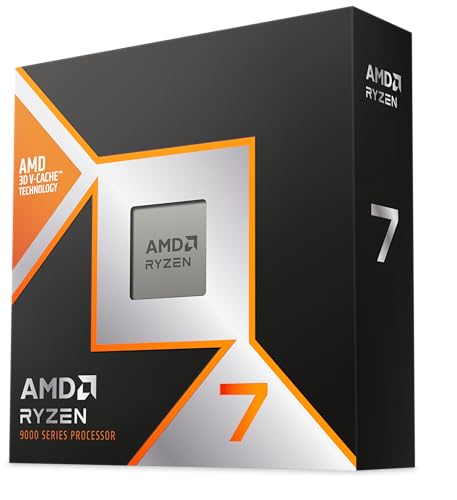
Best new gaming CPU: AMD Ryzen 7 9850X3D
The Ryzen 7 9850X3D launched in January 2026. It has eight Zen 5 cores, 16 threads, 8 MB of L2 and 96 MB of L3 with 3D V-Cache, and a 120 W TDP, all identical to the 9800X3D. The difference is a boost clock of 5.6 GHz instead of 5.2 GHz. GamersNexus found it at best about 4 percent faster than the 9800X3D in games, and sometimes identical. Club386 measured about a 7 percent improvement in single-threaded Geekbench scores.
That makes it the fastest gaming processor on sale, but only by a small margin. The honest recommendation is that it is the right chip if it costs close to the older model; otherwise the 9800X3D delivers nearly the same experience.
- Who it suits: competitive and high-refresh gamers who want the highest possible frame rates and the lowest stutter.
- Pros: best gaming performance available, efficient for its speed, plugs into existing AM5 boards with a BIOS update.
- Cons: only a small step over the 9800X3D; eight cores limits heavy rendering; at 4K the graphics card matters far more than the processor.
Best new enthusiast CPU: AMD Ryzen 9 9950X3D2 Dual Edition
Launched on April 22, 2026, the 9950X3D2 is the first desktop processor with 3D V-Cache on both chiplets. It has 16 cores, 32 threads, a 4.3 GHz base and 5.6 GHz boost clock, 192 MB of L3 (208 MB counting L2), and a 200 W TDP with a default package power limit of 270 W. The original 9950X3D only had cache on one chiplet, which meant games sometimes ran on the “wrong” chiplet unless Windows scheduling picked correctly. With cache on both, that quirk disappears.
The result is a chip that games almost as well as the best eight-core X3D parts while keeping the 16-core rendering muscle. It also runs hotter and uses more power than the older 9950X3D, so it needs a serious cooler.
- Who it suits: enthusiasts building a no-compromise AM5 system for gaming, streaming and rendering at once.
- Pros: consistent cache access on all cores, 16-core productivity, no scheduling quirks.
- Cons: premium positioning, higher power draw, gains over the 9950X3D are modest in most workloads.
Best new value CPU: Intel Core Ultra 7 270K Plus
Intel’s March 2026 refresh brought the Core Ultra 7 270K Plus. It has 8 performance cores up to 5.5 GHz and 16 efficiency cores up to 4.7 GHz (24 cores, 24 threads), 36 MB of L3 cache, DDR5-7200 support and a 125 W base and 250 W maximum power rating. Compared with the older Core Ultra 7 265K, it adds four efficiency cores and raises the cache from 30 MB to 36 MB. Intel also introduced a binary optimization tool aimed at improving a selection of games.
The appeal is clear: flagship-like multi-core performance in the mid-range tier, on boards you may already own. It does not beat AMD’s cache chips in games, but it is a fast, versatile all-rounder for people who spend more time in editing and rendering software than in games.
- Who it suits: creators and developers who also play games and want strong multi-core performance without flagship spending.
- Pros: 24 cores at a mid-range tier, works on existing 800-series boards, supports fast DDR5.
- Cons: runs warmer than AMD equivalents, trails X3D chips in gaming, and the LGA 1851 socket has no announced future chips beyond this generation.
Best new budget CPU: Intel Core Ultra 5 250K Plus
The Core Ultra 5 250K Plus is the entry point to the refresh. It has 6 performance cores up to 5.3 GHz and 12 efficiency cores up to 4.6 GHz (18 cores, 18 threads), 30 MB of L3 cache and a 125 W base and 159 W maximum turbo rating. TechSpot measured it about 2 to 3 percent faster than the Ryzen 5 9600X across 14 games, while Club386 saw results vary by title: Intel ahead in Cyberpunk 2077 and The Last of Us Part II, AMD ahead in Rainbow Six Siege and F1 25.
In productivity software the 250K Plus is far ahead of the six-core 9600X thanks to its extra efficiency cores. The 9600X still has advantages: it runs cooler, draws less power (65 W TDP), and sits on AM5, which will take newer chips later.
- Who it suits: first-time builders and budget gamers who also use the PC for editing, streaming or multitasking.
- Pros: excellent multi-core performance for the tier, competitive gaming, unlocked for overclocking.
- Cons: hot under heavy load, needs a good cooler, no future upgrade path on LGA 1851.
Best recent all-rounder: AMD Ryzen 9 9950X3D
If the 9950X3D2 is more than you need, the standard Ryzen 9 9950X3D remains an excellent chip. It has 16 cores, 32 threads, 5.7 GHz boost, 128 MB of L3 and a 170 W TDP. Tom’s Hardware measured it about 3 percent ahead of Intel’s Core Ultra 9 285K in multi-threaded work, and a large gap in gaming. It is the pick for anyone who wants to game on one chiplet and render on the other.
- Who it suits: mixed-use buyers: gamers who stream, edit video or compile code.
- Pros: strong gaming, strong productivity, mature drivers and BIOS support.
- Cons: high cost compared with 8-core X3D chips; in pure gaming it offers little over the 9850X3D.
Best recent gaming value: AMD Ryzen 7 9800X3D
Released in November 2024, the 9800X3D is no longer the newest, but it stays the most recommended gaming CPU in many 2026 buying guides because it delivers nearly the same frame rates as the 9850X3D. It has 8 cores, 16 threads, 5.2 GHz boost, 96 MB of L3 and a 120 W TDP. When it sells at a clear discount to the 9850X3D, it becomes the smart buy for almost any gamer.
- Who it suits: gamers who want the best performance per spend.
- Pros: elite gaming, efficient, cool, AM5 platform.
- Cons: eight cores limit heavy productivity; supply of older stock can vary.
Best new workstation CPU: AMD Ryzen Threadripper 9970X
The Threadripper 9000 series is the newest high-end desktop platform. The 9970X offers 32 cores, 64 threads, a 4.0 GHz base and 5.4 GHz boost, 128 MB of L3 cache and a 350 W TDP on the sTR5 socket. It supports quad-channel DDR5 and up to 80 lanes of PCIe 5.0. The larger sibling, the 9980X, has 64 cores and 128 threads for studios that bill for render time.
- Who it suits: professional video, 3D, engineering and development workstations.
- Pros: huge core count, memory bandwidth and PCIe lane budget.
- Cons: platform costs, high heat output, unnecessary for gaming or general use.
What is coming next
Intel has said its next desktop generation, Core Ultra 400 “Nova Lake,” arrives at the end of 2026. Industry reports point to first retail availability in the first quarter of 2027, on a new socket called LGA 1954, with some models rumored to reach 52 cores. Those timing details come from leaks and secondary reports, not an Intel announcement, so treat them as likely rather than certain. For buyers the takeaway is simple: if you want Intel and can wait a few months, a new platform is near; if you want a processor today, the current options are mature.
On the AMD side, AM5 remains the platform, and the company has used the first half of 2026 to refresh its X3D line. A next-generation architecture is expected later, but there is no confirmed release date to plan around.
Which new CPU fits your situation
| Your situation | Choose | Reason |
|---|---|---|
| Highest frame rates, money no object | Ryzen 7 9850X3D | Fastest gaming chip, 5.6 GHz boost |
| Best gaming value | Ryzen 7 9800X3D | Within a few percent of the 9850X3D |
| Game, stream and render | Ryzen 9 9950X3D or 9950X3D2 | 16 cores plus V-Cache |
| Creator on a mid-range budget | Core Ultra 7 270K Plus | 24 cores, existing boards |
| Entry-level build with room to multitask | Core Ultra 5 250K Plus | 18 cores at an entry tier |
| Professional workstation | Threadripper 9970X | 32 cores, quad-channel memory |
| Want to keep upgrading on one board | Any AM5 chip | AM5 has the longer upgrade path |
Worked example: is the newest chip worth the jump?
Take a gamer running a 144 Hz monitor with a mid-range graphics card. Suppose the Ryzen 7 9800X3D averages 190 frames per second in a CPU-limited title. A 4 percent improvement from the 9850X3D adds about 7.6 frames per second, giving roughly 198. On a 144 Hz display, both numbers are already above the refresh rate, so the extra frames are invisible. If the same player’s graphics card limits them to 120 frames, neither CPU matters.
Compare that with moving from a six-year-old six-core processor to any chip in this guide. In CPU-limited games the improvement can be 50 to 100 percent, and the 1 percent lows, which control how smooth a game feels, improve even more. The lesson is that a new chip is worth buying when it replaces something genuinely old, and not worth chasing when it replaces last year’s flagship.
Buying and ownership realities
- BIOS compatibility: the newest chips often need a firmware update on older boards. Check the board maker’s CPU support list, and consider a board with a flash-without-CPU feature.
- Cooling: chips with 250 W peak power need a 280 mm or larger liquid cooler or a high-end dual-tower air cooler. The eight-core X3D parts are easy to cool.
- Memory: DDR5-6000 with tight timings is the sweet spot for Ryzen. Intel’s refresh officially supports DDR5-7200 but needs good boards to reach it.
- Launch-week pricing: new chips often sell above recommended pricing for the first weeks. Waiting a month typically brings stock and discounts.
- Resale value: processors hold value best when they sit on a platform with a long future. AM5 chips tend to resell better than LGA 1851 chips for that reason.
How to read new-CPU reviews without being misled
Launch-week coverage is full of numbers that look decisive and are not. A few habits keep you from overpaying for hype.
- Check the test resolution. A processor comparison run at 1080p with a flagship graphics card exaggerates differences that vanish at 1440p or 4K. Ask whether the review matches how you will play.
- Look at 1 percent lows, not only averages. Smoothness depends on the slowest frames. Cache-heavy chips often win here even when the averages look close.
- Compare power under load. Two chips with equal frame rates can differ by 100 W in sustained productivity work, which changes the cooler, case airflow and noise you need.
- Note the memory used. A review that pairs one chip with fast memory and another with slow memory is not a fair comparison. Prefer reviews that use the same validated kit.
- Beware single-benchmark claims. A chip that is 30 percent faster in one rendering test may be level in another. Use the average across several workloads, and treat anything under 5 percent as a tie.
Platform and upgrade planning
A new processor is only as good as the board and memory around it. AM5 boards range from basic A-series models to full-featured X-series boards; for any chip in this guide, a mid-range B-series board with solid power delivery is enough, and the extra cost of a flagship board mostly buys connectivity rather than performance. On the Intel side, Z890 boards unlock overclocking and the fastest memory speeds, but the Plus chips run happily on cheaper 800-series boards when you do not need to overclock.
Think about the order of upgrades too. A processor swap on an existing board is the cheapest path when the board supports it, and the X3D chips are an especially cheap upgrade for AM5 owners who started with a lower-end Ryzen 5 or Ryzen 7. A graphics card upgrade, in contrast, usually changes frame rates more than a processor swap when the existing CPU is less than three years old. Spend where the bottleneck is: watch your CPU and GPU utilization during a typical gaming session, and if the graphics card sits near 100 percent, a new processor will not help.
Finally, plan the power supply. The refreshed Intel chips can spike to 250 W, and a flagship graphics card adds several hundred watts more. A quality 850 W unit is a comfortable choice for a high-end build with any chip in this guide, while the efficient eight-core X3D parts pair fine with a 650 W to 750 W supply and a mid-range graphics card.
Frequently Asked Questions
What is the newest desktop CPU released in 2026?
The newest releases include the Ryzen 7 9850X3D in January, the Core Ultra 7 270K Plus and Core Ultra 5 250K Plus in March, and the Ryzen 9 9950X3D2 Dual Edition in April. Intel’s Nova Lake generation is expected at the end of 2026 or early 2027.
Should I wait for Intel Nova Lake?
Only if you specifically want an Intel platform and are not in a hurry. Reports suggest availability in early 2027 on a new socket, and first-generation boards usually cost more. If your current processor is struggling, buying a current chip is the better decision.
Is the Ryzen 7 9850X3D worth it over the 9800X3D?
Only if the price difference is small. The 9850X3D has the same cores and cache with a 400 MHz higher boost clock, which produces gains of roughly 4 percent in games at best. Most players will not notice the difference.
Are the Intel Plus chips good for gaming?
Yes, they are competitive, especially the 250K Plus against the Ryzen 5 9600X. They do not match AMD’s X3D chips in most games, but they offer stronger multi-core performance for the same tier.
Do I need a new motherboard for these processors?
Not usually. The Ryzen chips work on AM5 boards, and the Intel Plus chips work on 800-series LGA 1851 boards, often after a BIOS update. Only the Threadripper parts require a dedicated workstation platform.
Does a new CPU matter at 4K?
Much less than at 1080p or 1440p. At 4K the graphics card is almost always the limit, so spending more on the GPU gives larger returns than moving from a mid-range CPU to a flagship.





Write Your Review
No reviews yet. Be the first to share your experience!