

Key takeaways
- The best micro SIM smartphones still sold today: four maker-verified Micro-SIM models from Samsung and LG, with honest notes on LTE bands and Android builds.
As an Amazon Associate, we earn from qualifying purchases made through links on this page.
Micro-SIM is a legacy card format. The card itself measures 15 by 12 millimetres, it was the mainstream size in phones launched between roughly 2010 and 2016, and it has since been replaced almost everywhere by the smaller Nano-SIM and by eSIM. No major maker has launched a new Micro-SIM phone in years, so this guide needs to be plain about what it is: a roundup of older models that are still listed for purchase on Amazon US, most of them refurbished or sold by third-party sellers, every one of them chosen because the maker’s own specification sheet names a Micro-SIM slot.
Why would anyone shop this way in 2026? The usual reason is a line that already lives on a Micro-SIM card: a long-held prepaid plan, a work line issued years ago, an international card kept for travel, or a spare-phone setup where swapping the card in seconds matters more than having a current handset. Moving that card into a Nano-SIM phone means a carrier replacement, a careful cut-down job, or an adapter going the wrong direction. A phone that natively fits the card you already own is sometimes the simpler path, as long as you accept the limits that come with decade-old hardware.
Two cautions frame everything below. First, every pick here is a 4G LTE model, because the 3G networks in the United States were shut down in 2022 and a 3G-only Micro-SIM phone can no longer register for normal service. Second, LTE alone is no longer enough: US carriers now carry voice calls over LTE (VoLTE), and each carrier keeps its own list of approved models. Bands and approval differ by exact model code, so confirm the code on the listing against your carrier’s current approved-device list before you buy. A phone can be genuinely unlocked and still be refused for voice service by a carrier whose list it is not on.
What to look for
The slot, from the maker’s sheet. SIM size is a hardware fact, and the only reliable source is the manufacturer’s specification for the exact model code. Listings are often wrong on this point — current phones are sometimes mislabelled with the wrong card size in marketplace data — so every pick below was checked against maker documentation for its model code, not against listing copy. If a variant of the same phone name shipped with a different slot, that variant does not belong here.
Model code and LTE bands. Legacy phones were built in many regional and carrier variants under one name. The model code decides which LTE bands the radio carries and whether your carrier will approve it for VoLTE calls. Prefer the US carrier or US unlocked codes named in each section, and treat international versions as a compromise: they may cover fewer of your carrier’s bands.
Android version and app support. These phones run Android builds from the Lollipop to Nougat era, and none of them receives security updates any more. Everyday basics such as calls, texts, email and web browsing still work, but a growing number of current apps set minimum Android versions above what these handsets can run, and banking and work apps are usually the first to refuse an old build. Treat any phone here as a calls-and-basics device, not as a full modern app platform.
Battery condition and removability. All four picks have user-replaceable batteries, which is a real advantage in old hardware: a tired cell can be swapped in seconds, and fresh third-party cells for these models remain easy to find. With refurbished units, assume the fitted battery is used and budget for a replacement cell as part of the true cost of getting the phone running well.
Condition channel. None of these models is in current production. Listings are refurbished programme units, used stock from third-party sellers, or leftover retail stock. Read the condition wording on the exact listing, check what warranty the seller or refurbishment programme attaches, and confirm the return window before ordering, because condition varies unit by unit in a way it never did when these phones were new.
Samsung Galaxy S5 (SM-G900A) — Renewed
The Galaxy S5 is the most straightforward answer to the Micro-SIM question. Samsung’s specification for the SM-G900A, the model built for AT&T and sold unlocked in large numbers, lists a Micro-SIM slot, and the phone pairs it with a radio that still makes sense on US GSM networks: quad-band GSM plus LTE in the bands AT&T and T-Mobile built their first LTE networks on. The listing linked here is the refurbished programme version of that exact model code.
See the Samsung Galaxy S5 (SM-G900A) on Amazon
The hardware around the slot holds up well for a 2014 flagship. The 5.1-inch Super AMOLED screen runs at 1920 by 1080, the Snapdragon 801 processor and 2 GB of memory handle calls, messaging, maps and light browsing without strain, and the 16 GB of storage expands by microSD card up to 128 GB. The 16-megapixel rear camera has phase-detection autofocus, the battery is a removable 2,800 mAh cell, and the sealed body is certified to IP67 for dust and water resistance — one reason these units survive refurbishment better than most phones of their age. There is also a fingerprint reader in the home button and a heart-rate sensor beside the camera flash.
Who it fits: anyone holding a Micro-SIM line on a GSM carrier who wants the most common, best-documented handset in this small pool, with cheap spare parts and batteries everywhere.
Limits, from the spec sheet: the phone tops out at Android 6.0.1, so a widening set of current apps will not install; the 16 GB of storage fills quickly once system files take their share; and VoLTE approval depends on the carrier — the G900A was an AT&T model, so AT&T-based service is the natural fit, while T-Mobile users should confirm approval for this exact code before relying on it for calls.
Samsung Galaxy Note 4 (SM-N910V) — Renewed
The Note 4 is the pick for people who want the biggest screen and the pen. Samsung’s specification for the SM-N910V lists a Micro-SIM slot, and around it sits hardware that was a class above the Galaxy S5: a 5.7-inch Super AMOLED display at 2560 by 1440, a Snapdragon 805 processor, 3 GB of memory and 32 GB of storage with microSD expansion up to 256 GB. The S Pen stylus lives in a silo in the frame, and the 16-megapixel rear camera adds optical image stabilisation that the S5 lacks.
See the Samsung Galaxy Note 4 (SM-N910V) on Amazon
The battery is a removable 3,220 mAh cell with fast charging by the standards of its day, and the front camera is a 3.7-megapixel unit with a wide selfie mode. The linked listing is a refurbished unit of the Verizon model code, which matters for the network discussion below.
Who it fits: Micro-SIM holders who want a large, sharp screen for reading and note-taking, and who value the stylus and the bigger battery over pocketability.
Limits, from the spec sheet: the N910V was built for Verizon, so its LTE band set is centred on Verizon’s network; Samsung lists GSM capability in the phone, but band coverage for AT&T and T-Mobile LTE is partial, and anyone outside Verizon should treat this as a check-the-bands-first purchase. Software ends at Android 6.0.1, with the same app-support ceiling as the S5, and at 176 grams with a metal frame it is a noticeably heavier carry than the other picks.
LG G4 (US991)
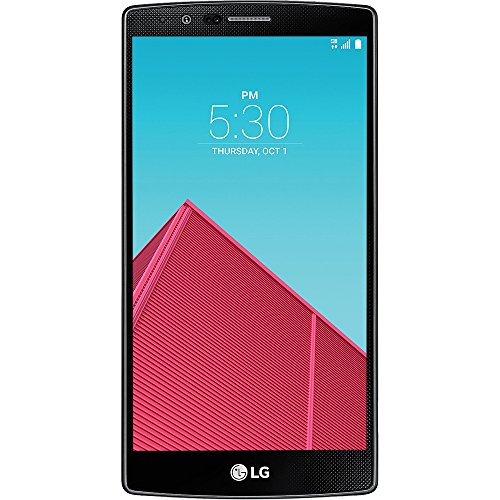
The G4 is the camera-led option and the only non-Samsung in this roundup. LG’s specification for the G4 lists a Micro-SIM slot across the range, and the US991 — the US unlocked model code — is the variant to look for, since LG documented it for use across US GSM and CDMA networks. The linked listing is that US model in its black leather finish.
See the LG G4 (US991) on Amazon
Its headline hardware is the camera: a 16-megapixel rear unit with an f/1.8 lens, optical image stabilisation and laser autofocus, backed by a colour spectrum sensor that was unusual at the time. The 5.5-inch IPS Quantum display runs at 2560 by 1440, the Snapdragon 808 processor is paired with 3 GB of memory, and the 32 GB of storage expands by microSD card — LG documented support for very large cards. The 3,000 mAh battery is removable, the back cover swaps, and the phone shipped with Android 5.1, with later builds reaching Android 7.0 on some variants.
Who it fits: Micro-SIM holders who still take a lot of photos and want the strongest camera hardware in this pool, plus a removable battery and generous storage expansion.
Limits, from the spec sheet: LG closed its smartphone business in 2021 and has since shut down its update servers, so this phone is frozen permanently at whatever build it runs today — more final than the Samsung picks, which at least ended their support cycle in the normal way. Check the exact unit’s Android build before buying, since it varies by variant history, and confirm the listing is truly the US991 code rather than an international H815 if US band coverage matters to you.
Samsung Galaxy S5 Active (SM-G870A) — Renewed
The S5 Active takes the Galaxy S5 formula and hardens it. Samsung’s specification for the SM-G870A lists the same Micro-SIM slot as the standard S5, the same 5.1-inch 1080p Super AMOLED screen, the same Snapdragon 801 and 2 GB of memory, and then adds a tougher brief: IP67 sealing plus MIL-STD-810G testing covering drops, vibration, humidity and temperature extremes, with physical navigation buttons that work with gloves and a dedicated side key that opens an activity dashboard.
See the Samsung Galaxy S5 Active (SM-G870A) on Amazon
Inside it is the familiar S5 package: 16 GB of storage with microSD expansion, a 16-megapixel rear camera, a removable 2,800 mAh battery and the heart-rate sensor. The linked listing is a refurbished unit of the AT&T model code, sold in its grey finish.
Who it fits: anyone whose Micro-SIM line lives in a work phone that gets knocked around — site work, warehousing, outdoor jobs — and who would rather have a hardened handset than a standard phone in a bulky case.
Limits, from the spec sheet: the rugged shell makes it thicker and heavier than the standard S5 for identical core performance, the software ceiling is again Android 6.0.1, and the G870A is an AT&T-centred model, so the same carrier-approval check applies before it becomes a caller’s main line on another network.
Phones we checked and left unlinked
Two more maker-verified Micro-SIM models deserve a mention even though no current Amazon US listing for them could be verified to the standard this guide requires. The Motorola Moto G (3rd generation, XT1540) is a 5-inch handset whose maker documentation lists a Micro-SIM slot and US LTE bands; it remains a sensible used-market buy, but in this check its Amazon listings could not be confirmed as live, so it is named here without a link. The Samsung Galaxy J7 (2016, SM-J710) pairs a Micro-SIM slot (dual slots on the /DS variants) with a 5.5-inch screen and a removable battery, but the Amazon US listings traced for it were either unavailable or too stale to stand behind. If a fresh listing for either model appears from a seller you trust, both fit this guide’s criteria.
Side-by-side comparison
| Model | SIM (maker spec) | Screen | Memory and storage | Battery | Final Android build |
|---|---|---|---|---|---|
| Samsung Galaxy S5 (SM-G900A) | Micro-SIM | 5.1 in, 1920 × 1080 AMOLED | 2 GB, 16 GB + microSD to 128 GB | 2,800 mAh, removable | 6.0.1 |
| Samsung Galaxy Note 4 (SM-N910V) | Micro-SIM | 5.7 in, 2560 × 1440 AMOLED | 3 GB, 32 GB + microSD to 256 GB | 3,220 mAh, removable | 6.0.1 |
| LG G4 (US991) | Micro-SIM | 5.5 in, 2560 × 1440 IPS | 3 GB, 32 GB + microSD | 3,000 mAh, removable | 7.0 on some variants |
| Samsung Galaxy S5 Active (SM-G870A) | Micro-SIM | 5.1 in, 1920 × 1080 AMOLED | 2 GB, 16 GB + microSD to 128 GB | 2,800 mAh, removable | 6.0.1 |
FAQ
Can I put my Micro-SIM in a modern Nano-SIM phone instead?
Not directly — the card is physically larger than the slot. The workable routes are a carrier-issued replacement card in the smaller size (many carriers issue triple-cut cards that cover all three sizes from one frame), or a precision cut-down, which risks damaging the contacts. An adapter tray solves the opposite problem — a smaller card in a larger slot — so it does not help here. Buying a native Micro-SIM phone, as in this guide, is the option that leaves your existing card untouched.
Will these phones still make calls in the US?
They are all 4G LTE models, which matters because US 3G networks closed in 2022. Voice calls now travel over LTE, and each carrier approves specific model codes for that service. An unlocked phone whose code is not on your carrier’s approved list may connect for data yet fail to place calls, so verify the exact model code — G900A, N910V, US991, G870A — with your carrier before you commit.
Why are there no newer phones in this guide?
Because the slot itself is the filter. Makers moved flagship lines to Nano-SIM from about 2012 onward and finished the transition in budget lines a few years later; no current-production smartphone with a maker-documented Micro-SIM slot could be found for this check. Every honest answer to this search is a legacy model, which is why condition, battery health and carrier approval matter more here than small differences in specification.
What should I check when a refurbished unit arrives?
Confirm the model code in the settings matches the listing, insert your Micro-SIM and place a test call to prove VoLTE registration on your carrier, check the battery health by watching drain over the first day, and verify the microSD slot and charging port work. Do all of this inside the return window, since condition is the one variable no specification sheet can promise.
Conclusion
The Micro-SIM pool in 2026 is small, old and honest about it. If your card and your carrier line up with AT&T-style GSM service, the Galaxy S5 in refurbished form is the default choice: common, documented, cheap to keep running. The Note 4 adds screen size, a stylus and a stronger camera for Verizon-leaning buyers, the LG G4 brings the best camera hardware and the widest US network brief in the group, and the S5 Active wraps the S5 in a shell built for rough work. Whichever you choose, run the two checks this guide keeps returning to — the maker’s sheet for the slot, and your carrier’s approved list for the model code — and a legacy phone will do the simple job it is being bought for.
More from Amazon
Programs that pair well with the guide above. Offers and eligibility are set by Amazon and may change.
Free shipping on eligible items, Prime Video and more. Eligible new members can start with a free trial.
Start a Prime free trialAd-free music streaming. Eligible new subscribers can start with a free trial.
Try Music Unlimited freeA Prime membership for ages 18-24 with a trial period. Eligibility is set by Amazon.
See Prime for Young AdultsAudiobooks and podcasts to listen to on the go. Eligible new members can start with a free trial.
Try Audible freeAs an Amazon Associate we earn from qualifying purchases.
Write Your Review
No reviews yet. Be the first to share your experience!