

Key takeaways
- If you buy one card here, buy the Sapphire Pulse RX 9060 XT 16GB — the best balance of VRAM, raster performance, power draw, and price for 1440p gaming under $600 in November 2026.
The best graphics card for 1440p gaming under $600 for most buyers is the Sapphire Pulse AMD Radeon RX 9060 XT 16GB. It pairs 16GB of video memory with low power draw and strong raster performance at 1440p, and it is the card most likely to stay inside the budget. For the best ray tracing and upscaling here, look at the ASUS Dual GeForce RTX 5060 Ti 16GB instead — but only near the catalog price below. An RTX 5070 at its $549 launch price is the fastest card in this guide.
In November 2026, prices are well above launch prices for several models here — a card launched at $429 can appear on Amazon for $829.99. Treat $600 as a street-price limit. Every price below is a snapshot from 17 November 2026 — check the price before you buy. We have not tested these cards.
Quick Picks
| Product | Best for | Key specs | Price note |
|---|---|---|---|
| Sapphire Pulse RX 9060 XT 16GB | Best overall | 16GB GDDR6, 2,048 stream processors, 160W | Check current price; US snapshots around $460–$500 in Nov 2026 |
| ASUS Dual RTX 5060 Ti 16GB OC | Best for ray tracing and DLSS 4 | 16GB GDDR7, 4,608 CUDA cores, 180W | Check current price; catalog showed $579.99, some listings far higher |
| MSI RTX 5070 Ventus 2X OC 12GB | Fastest at launch price | 12GB GDDR7, 6,144 CUDA cores, 250W | Check current price; $549 launch price, street often higher |
| PowerColor Reaper RX 9070 16GB | Best 16GB step-up | 16GB GDDR6, 3,584 stream processors, 220W | Check current price; $549 launch price, only buy under $600 |
| Acer Nitro Intel Arc B580 OC 12GB | Best budget entry to 1440p | 12GB GDDR6, 20 Xe-cores, 190W | Check current price; catalog showed $287.99, was $320 |
How to Choose a 1440p Graphics Card Under $600
Start with VRAM: 12GB is the floor, 16GB is safer. Buying an 8GB card for 1440p is the most expensive mistake in this price class in 2026. Modern games at 1440p with high-resolution textures can exceed 8GB, and frame times get worse when they do. Every card here has at least 12GB; the 16GB cards give the most headroom for texture packs, mods, and future games.
Match the GPU to your monitor. At 1440p 60Hz, the RX 9060 XT 16GB and the Arc B580 cover most games at high settings. At 1440p high refresh, the RTX 5070 is strongest, followed by the RX 9070 and the RTX 5060 Ti 16GB. None of these cards is a comfortable native-4K card for demanding AAA games.
Check the power supply first. Power draw ranges from 160W for the RX 9060 XT 16GB to 250W for the RTX 5070. Minimums are 450W for the RX 9060 XT 16GB, 600W for the RTX 5060 Ti 16GB and the Arc B580, and 650W for the RTX 5070 and the RX 9070. Most cards here use one 8-pin connector; the RTX 5070 uses a 16-pin connector or an adapter.
Check size and cooling. Dual-fan cards such as the ASUS Dual models and the Sapphire Pulse are usually around 240–250mm long. Triple-fan RTX 5070 and RX 9070 models can be 300mm or longer, so measure your case clearance first.
DLSS, FSR, and XeSS are part of the purchase. At 1440p, upscaling is how mid-range cards hold 60 frames per second in demanding games: NVIDIA uses DLSS 4, AMD uses FSR 4, and Intel uses XeSS 2. If you turn ray tracing on, or use CUDA or NVENC, pick NVIDIA; for rasterized games, AMD gives more VRAM and often more performance per dollar.
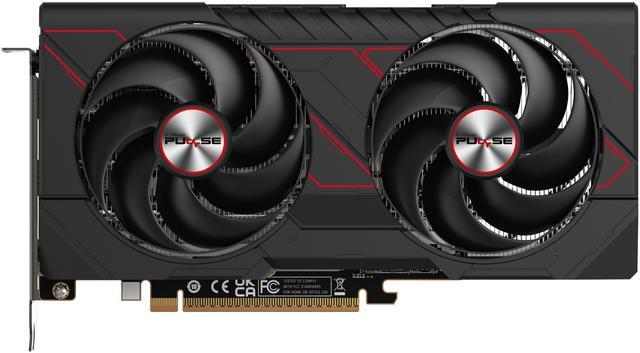
1. Sapphire Pulse RX 9060 XT 16GB — Best Overall
Best for: Most 1440p gamers who want 16GB of VRAM, low power draw, and the best value in this guide.
The Sapphire Pulse RX 9060 XT 16GB uses AMD’s RDNA 4 Navi 44 GPU with 32 compute units, 2,048 stream processors, 16GB of GDDR6, and a 160W board power rating. AMD lists a boost clock up to 3,130MHz, a 450W minimum power supply, DisplayPort 2.1a, HDMI 2.1b, and FSR 4 support.
In published testing, it sat within a few percent of the RTX 5060 Ti 16GB in rasterized 1440p gaming — about 9% behind at 1440p Ultra in Tom’s Hardware’s hierarchy, and about 1% behind in TechSpot’s 18-game suite. Its weakness is ray tracing, where TechSpot measured it about 20% behind the RTX 5060 Ti.
Specs: RDNA 4, 32 CUs, 2,048 stream processors; 16GB GDDR6, 128-bit, up to 320GB/s; boost up to 3,130MHz; 160W, one 8-pin, 450W minimum PSU; PCIe 5.0 x16; FSR 4.
Pros: 16GB of VRAM at the lowest price here; low 160W power draw; compact dual-fan design.
Cons: Weaker ray tracing than the RTX 5060 Ti 16GB; street prices vary by partner model.
Check price on Amazon — Sapphire Pulse RX 9060 XT 16GB
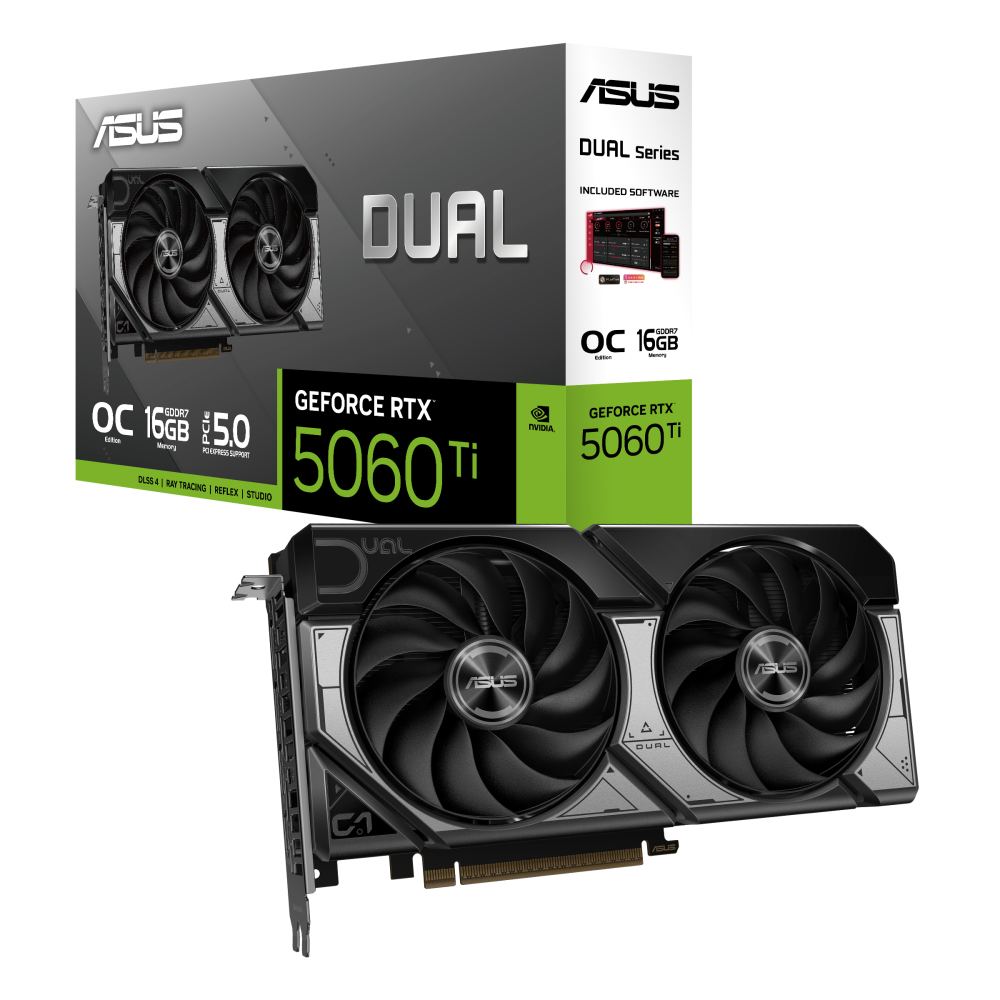
2. ASUS Dual GeForce RTX 5060 Ti 16GB OC — Best for Ray Tracing and DLSS 4
Best for: Gamers who turn ray tracing on, use DLSS 4, or run NVIDIA software such as CUDA or NVENC.
NVIDIA launched the RTX 5060 Ti 16GB at $429. Our catalog search on 17 November 2026 showed the ASUS Dual model at $579.99, inside the budget. Other Amazon listings tracked in November 2026 were far higher — one tracker listed the cheapest Amazon RTX 5060 Ti 16GB at $829.99. Buy this card only at or near $580. At $700 or more, skip it and look at the RTX 5070 or the RX 9070.
It uses NVIDIA’s Blackwell GPU with 4,608 CUDA cores, 16GB of GDDR7, and a 180W board power rating, with a 600W minimum system power. It supports DLSS 4 with Multi Frame Generation and leads the RX 9060 XT 16GB in ray tracing by roughly 10% in Cyberpunk 2077 at 1440p, per 2026 comparisons. The ASUS Dual is a 2.5-slot dual-fan card with a 0dB fan-stop mode.
Specs: Blackwell, 4,608 CUDA cores; 16GB GDDR7, 128-bit; OC boost up to 2,632MHz; 180W, 600W minimum system power; PCIe 5.0 x16; DLSS 4, ray tracing, NVENC.
Pros: Best ray tracing and upscaling here; 16GB of GDDR7; quiet dual-fan design.
Cons: Street prices were often far above the $429 launch price; only 3–9% faster than the RX 9060 XT 16GB in rasterized games.
Check price on Amazon — ASUS Dual GeForce RTX 5060 Ti 16GB OC
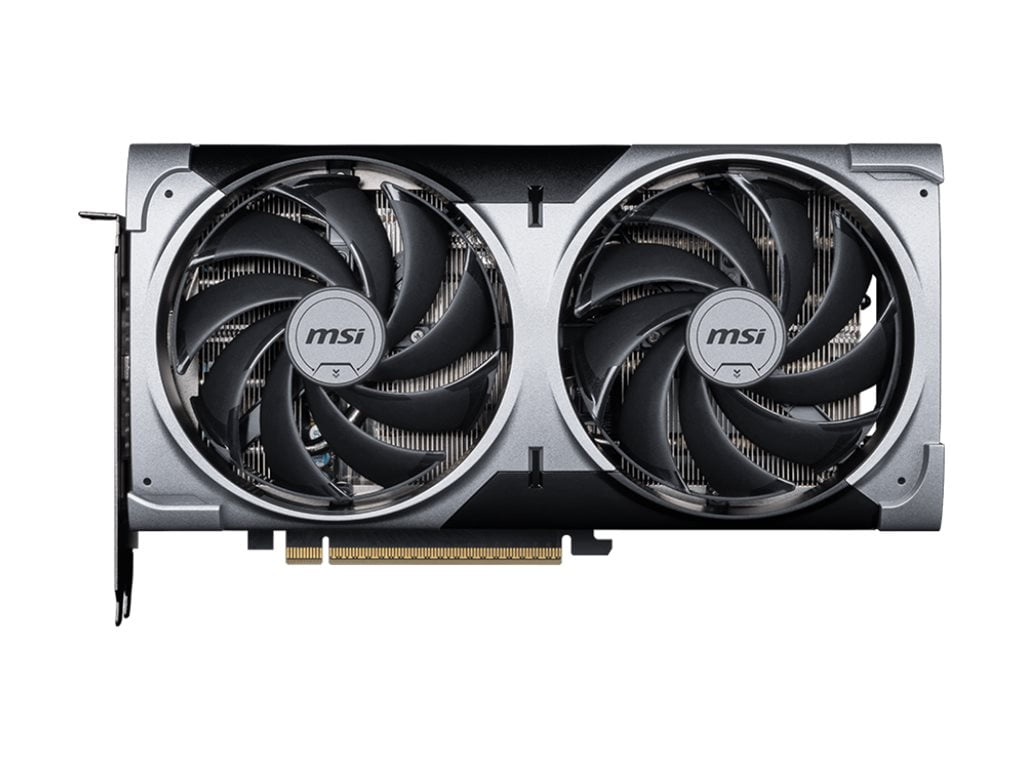
3. MSI RTX 5070 Ventus 2X OC 12GB — Fastest at Launch Price
Best for: High-refresh 1440p gaming, if you can find it at or near its $549 launch price.
The MSI RTX 5070 Ventus 2X OC is the fastest card here on paper, and the hardest to buy at its headline price. NVIDIA launched the RTX 5070 at $549, with 6,144 CUDA cores, 12GB of GDDR7, 672GB/s of bandwidth, and a 250W board power rating. Our catalog search on 17 November 2026 returned a GeForce RTX 5070 listing at $549. Street prices in Europe in October 2026 were far higher, so treat $549 as a target to hunt for.
In published testing, the RTX 5070 was about 36% faster than the RTX 5060 Ti 16GB at 1440p raster in one 2026 test suite. Its limitation is VRAM: 12GB is enough for most 1440p games today, but less future-proof than the 16GB cards. The Ventus 2X OC is a dual-fan model about 236mm long.
Specs: Blackwell GB205, 6,144 CUDA cores; 12GB GDDR7, 192-bit, 672GB/s; boost up to 2,512MHz; 250W, 650W minimum system power; PCIe 5.0 x16; DLSS 4, ray tracing, NVENC.
Pros: Fastest performance here at launch price; full DLSS 4 with Multi Frame Generation.
Cons: Only 12GB of VRAM; street prices were often well above $549.
Check price on Amazon — MSI GeForce RTX 5070 Ventus 2X OC 12GB
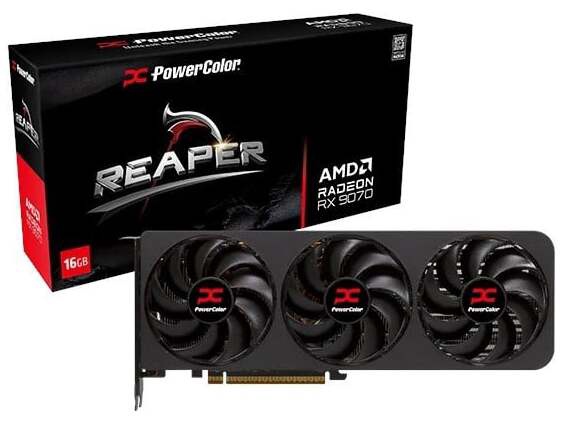
4. PowerColor Reaper RX 9070 16GB — Best 16GB Step-Up
Best for: Buyers who want 16GB and the strongest AMD raster performance under $600, if they find it at launch price.
AMD launched the RX 9070 at $549, with 56 compute units, 3,584 stream processors, 16GB of GDDR6 on a 256-bit bus, and a 220W board power rating. That wider 256-bit bus moves texture data faster than the 128-bit bus on the RX 9060 XT 16GB and the RTX 5060 Ti 16GB. In 2026 roundups, the RX 9070 was the top value alternative to the RTX 5070 at the same $549 launch price, with 16GB instead of 12GB and stronger raster performance in many games, at the cost of weaker ray tracing and no DLSS. It supports FSR 4.
Our catalog search did not return a reliable US RX 9070 listing under $600 on 17 November 2026. If you find one at $549–$599, it is a strong buy. If the only listings are $650 or more, buy the RX 9060 XT 16GB instead.
Specs: RDNA 4, 56 CUs, 3,584 stream processors; 16GB GDDR6, 256-bit; 220W, 650W minimum PSU recommended; PCIe 5.0 x16; FSR 4.
Pros: 16GB on a wide 256-bit bus; strongest AMD raster performance here.
Cons: No reliable under-$600 US listing verified in November 2026; weaker ray tracing than the RTX 5070.
Check price on Amazon — PowerColor Reaper RX 9070 16GB
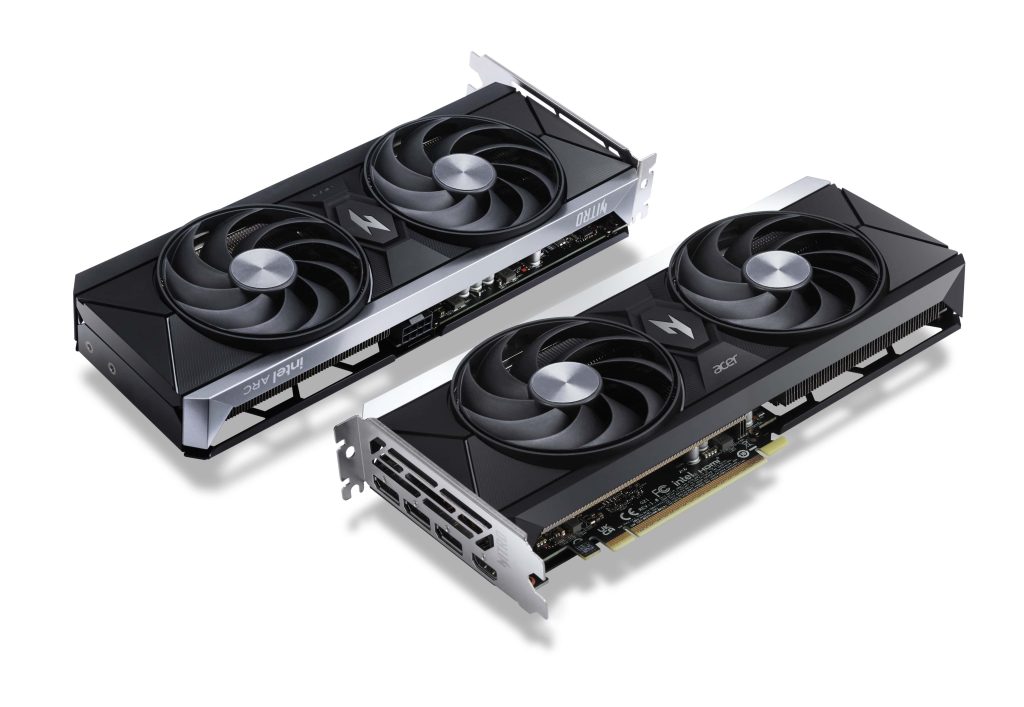
5. Acer Nitro Intel Arc B580 OC 12GB — Best Budget Entry to 1440p
Best for: Budget builds, entry-level 1440p gaming, and buyers who want 12GB for the lowest price in this guide.
Intel launched the Arc B580 at $249, with 20 Xe-cores, 12GB of GDDR6 on a 192-bit bus, 456GB/s of bandwidth, a 2,670MHz clock, and a 190W board power rating, with a 600W minimum power supply. Our catalog search on 17 November 2026 showed the Acer Nitro model at $287.99, down from $320, and other 2026 snapshots put partner B580 cards around $280–$310.
In Tom’s Hardware’s 17-game suite, the B580 was about 10% faster than the RTX 4060 at 1440p Ultra. It supports hardware ray tracing, XeSS 2 upscaling, and AV1 encoding for streaming, and its 12GB of VRAM is the key advantage over 8GB cards at a similar price.
Resizable BAR is effectively required — without it, performance drops noticeably. Performance still varies more by game than NVIDIA or AMD, and older CPUs can cost performance: one analysis found a Ryzen 5 5600 pairing reduced average performance by 18% versus a Ryzen 7 9800X3D setup. Check that your motherboard supports ReBAR first.
Specs: Xe2 Battlemage, 20 Xe-cores, 160 XMX AI engines; 12GB GDDR6, 192-bit, 456GB/s; graphics clock 2,670MHz; 190W, one 8-pin, 600W minimum PSU; PCIe 4.0 x8; XeSS 2, ray tracing, AV1 encode/decode.
Pros: Lowest price here by a large margin; 12GB of VRAM at a budget price; AV1 encoding.
Cons: Requires Resizable BAR and a modern CPU; performance varies more by game than NVIDIA or AMD.
Check price on Amazon — Acer Nitro Intel Arc B580 OC 12GB
What to Avoid
Do not buy an 8GB card for 1440p in 2026. One September 2026 snapshot found an 8GB RTX 5060 Ti at $499.99, the same price as a 16GB RX 9060 XT that morning, while falling well behind at 1440p Ultra. If a listing does not say 16GB or 12GB clearly, do not buy it for 1440p.
Do not pay launch-price money for a slower card. In November 2026, an RTX 5060 Ti 16GB at $829.99 costs more than an RTX 5070 at $549. Compare the live price against the launch prices in this guide — $349, $429, $549, $549, and $249 for the five cards, in order — and walk away if the gap is too large.
Do not ignore the power supply and the case. A 250W RTX 5070 on a 500W power supply, or a 300mm card in a case with 280mm of clearance, is a return waiting to happen. Check wattage, connectors, and length before you order. Also avoid used mining cards as a first 1440p card: you lose the warranty and cannot verify how hard it was run.
FAQ
Is 12GB of VRAM enough for 1440p gaming in 2026?
Yes, for most games at 1440p high settings. 16GB is safer for the next few years, especially with high-resolution textures and ray tracing, which is why three of the five cards here have 16GB.
What is the best graphics card for 1440p gaming under $600?
For most buyers, the Sapphire Pulse RX 9060 XT 16GB. It has 16GB of VRAM, low power draw, and strong raster performance, and it is the most likely card here to actually sell under $600 in November 2026. If you find an RTX 5070 at $549, it is faster. If ray tracing matters most, the RTX 5060 Ti 16GB is the better NVIDIA pick near $580.
Can the RX 9060 XT 16GB handle 1440p at 144Hz?
It can in many games, especially competitive titles, and in AAA games with FSR upscaling and high — rather than ultra — settings. In the most demanding AAA games at native 1440p Ultra, expect closer to 60 frames per second.
Do I need a new power supply for a graphics card under $600?
It depends on the card: 450W minimum for the RX 9060 XT 16GB, 600W for the RTX 5060 Ti 16GB, and 650W for the RTX 5070 and RX 9070. Check your current unit’s wattage, age, and connectors first. If it is more than five years old, or unbranded, budget for a replacement from a known maker.
Is the RTX 5060 Ti 16GB worth it over the RX 9060 XT 16GB?
It depends on price and on what you play. In rasterized 1440p gaming it is only about 3–9% faster than the RX 9060 XT 16GB in published 2026 comparisons. It is worth the premium if you use DLSS 4, ray tracing, CUDA, or NVENC, or if you find it close in price. It is not worth it if the only listings are $700 or more.
Verdict
If you buy one card here, buy the Sapphire Pulse RX 9060 XT 16GB — the best balance of VRAM, raster performance, power draw, and price for 1440p gaming under $600 in November 2026.
If your budget is tight, the Acer Nitro Intel Arc B580 OC is the best budget entry point — provided your system supports Resizable BAR. If you want the best ray tracing and DLSS 4, the ASUS Dual RTX 5060 Ti 16GB is the pick, but only near $580. And if you find an RTX 5070 or an RX 9070 at $549–$599, take it.
Whatever you choose, check the live price on Amazon before you buy.
As an Amazon Associate, we earn from qualifying purchases.
Suggested internal links for pcreviewer.org: /best-graphics-card-under-500/ · /best-gaming-pc-build-under-1500/ · /rtx-5060-ti-vs-rx-9060-xt/
More from Amazon
Programs that pair well with the guide above. Offers and eligibility are set by Amazon and may change.
Free shipping on eligible items, Prime Video and more. Eligible new members can start with a free trial.
Start a Prime free trialAd-free music streaming. Eligible new subscribers can start with a free trial.
Try Music Unlimited freeA Prime membership for ages 18-24 with a trial period. Eligibility is set by Amazon.
See Prime for Young AdultsAudiobooks and podcasts to listen to on the go. Eligible new members can start with a free trial.
Try Audible freeAs an Amazon Associate we earn from qualifying purchases.
Write Your Review
No reviews yet. Be the first to share your experience!