

Key takeaways
- Compare the best ip cameras for home and business: 4K PoE models with local storage, night vision, and smart detection. Find the right wired network camera.
As an Amazon Associate, we earn from qualifying purchases.
The Short Answer
The best IP cameras for most buyers are wired Power over Ethernet models from Reolink and Amcrest. Our top pick is the Reolink RLC-810A, a 4K bullet camera with person, vehicle, and pet detection, local microSD storage, and open RTSP and ONVIF support. If you want the same 4K image in a lower-profile housing, the Reolink RLC-820A turret is the matching choice. Buyers who want to spend less can step down to the 5MP Reolink RLC-510A, while the Amcrest IP5M-T1179EW-AI-V3 is the pick for anyone who prefers Amcrest firmware and built-in audio.
An IP camera is a network camera that sends video over an Ethernet cable or a local network, usually to a recorder, a computer, or an app. The models in this guide are wired PoE cameras, which means a single Ethernet cable carries both power and data. That wired connection is the main reason to choose an IP camera over a battery or Wi-Fi camera: the feed stays stable, the video stays sharp, and nothing depends on a wireless signal reaching the far corner of a building.
Our Top Picks
- Best overall: Reolink RLC-810A — 4K bullet PoE camera with smart detection and local storage.
- Best turret: Reolink RLC-820A — the same 4K image in a dome-style housing for eaves and ceilings.
- Best value: Reolink RLC-510A — a 5MP PoE bullet with the same detection features at a lower tier.
- Best Amcrest option: Amcrest IP5M-T1179EW-AI-V3 — a 5MP PoE turret with a built-in microphone and a wide field of view.
Quick Comparison
| Camera | Resolution | Power | Night Vision | Smart Detection | Local Storage | Form Factor |
|---|---|---|---|---|---|---|
| Reolink RLC-810A | 4K (3840×2160) | PoE or DC 12V | 100 ft infrared | Person, vehicle, pet | microSD up to 512GB | Bullet |
| Reolink RLC-820A | 4K (3840×2160) | PoE or DC 12V | 100 ft infrared | Person, vehicle | microSD up to 512GB | Turret |
| Reolink RLC-510A | 5MP (2560×1920) | PoE or DC 12V | 100 ft infrared | Person, vehicle, pet | microSD up to 512GB | Bullet |
| Amcrest IP5M-T1179EW-AI-V3 | 5MP (2592×1944) | PoE | 98 ft infrared | Human, vehicle | microSD up to 256GB | Turret |
How to Choose
Wired or wireless
IP cameras come in wired and wireless forms, but the strongest setups use a wired Ethernet connection. A wired camera never drops off a network because of a weak signal, and PoE removes the need for a separate power outlet at the mounting point. Choose wired PoE when you can run a cable, and reserve wireless cameras for spots where no cable can reach.
Resolution and what it actually shows
Resolution decides how much detail you can read from a recording. A 4K camera records far more detail than a 1080p camera, which matters when you need to read a face or a license plate at distance. A 5MP camera sits between the two and is plenty for a doorway, a porch, or a small room.
PoE power and what is not in the box
PoE cameras draw power through the Ethernet cable, but they need a PoE switch, a PoE injector, or a PoE NVR on the other end. Most single-camera listings do not include that hardware, so check the listing before you order. Some models also accept a DC 12V adapter, which is a useful fallback when only one camera needs power and a PoE switch feels like overkill.
Night vision range
Manufacturers list night vision range in feet, and the number describes the maximum distance at which infrared illumination still produces a usable image. A 100 ft rating does not mean faces are readable at 100 ft; it means the scene stays visible that far out.
Smart detection
Basic motion detection alerts you to anything that moves, including trees, rain, and passing headlights. Smart detection filters that noise by recognising people, vehicles, and pets, so alerts arrive only when something relevant happens. Every camera in this guide has on-device person and vehicle detection, which keeps alerts useful instead of constant.
Storage: card, recorder, or both
An IP camera can record to a microSD card inside the camera, to a network video recorder, or to a computer running surveillance software. Local card storage keeps footage on site with no monthly plan, while an NVR centralises several cameras in one place. Check the maximum card size on the listing, because it varies by model, and remember that the card is almost never included.
Open standards: RTSP and ONVIF
RTSP and ONVIF let a camera work with third-party software and recorders instead of locking you into one brand’s app. If you plan to use Blue Iris, Frigate, Home Assistant, or a Synology recorder, confirm that the camera supports these standards on the listing. Three of the four cameras in this guide are built for that kind of open setup; the RLC-510A supports RTSP and RTMP to recording software but its listing states it does not work with third-party NVRs, so exact compatibility can vary by firmware version.
Weather resistance and mounting
Outdoor cameras need a sealed housing that stands up to rain, dust, and temperature swings. Look for a weather resistance rating on the listing and mount the camera under an eave when you can, since shelter extends the life of any outdoor device. Bullet cameras suit walls and long sightlines, while turret and dome cameras sit neatly under soffits and ceilings and are harder to grab or knock out of alignment.
The Picks in Detail
1. Reolink RLC-810A — Best Overall

The RLC-810A is the default 4K PoE camera for a reason. It records 4K video at 25 frames per second through a fixed 4.0mm lens, with an 87-degree horizontal field of view that covers a driveway or a yard from a single mounting point. Infrared night vision reaches 100 ft, and on-device detection picks out people, vehicles, and pets, so motion alerts stay relevant. Footage can record to a microSD card up to 512GB, to a Reolink NVR, or to an FTP server, and the camera exposes RTSP and ONVIF streams for third-party recorders and home automation setups.
Power arrives over a single Ethernet cable from a PoE switch, injector, or NVR, with a DC 12V adapter as an alternative. The housing is built weather resistant for outdoor use; the listing states an IP67 rating, while some independent specification pages list IP66, so confirm the exact rating on the listing if it matters for your mounting spot.
Pros:
– Sharp 4K image with a wide 87-degree field of view
– Reliable wired PoE connection with no wireless dropouts
– Person, vehicle, and pet detection on the device
– Local microSD storage up to 512GB with no subscription
– RTSP and ONVIF support for third-party recorders
Cons:
– No two-way audio, so you cannot speak through the camera
– H.265-only streaming limits compatibility with some software
– PoE switch, injector, or NVR is not included
– Requires running an Ethernet cable to each camera
2. Reolink RLC-820A — Best Turret
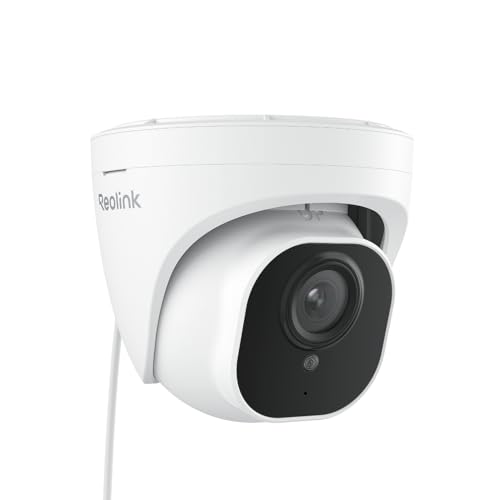
The RLC-820A is the same 4K camera as the RLC-810A in a turret housing. It records the same 3840×2160 video at 25 frames per second, uses the same 4.0mm lens and 87-degree horizontal field of view, and carries the same 100 ft infrared night vision and person and vehicle detection. Storage options match too: a microSD card up to 512GB, a Reolink NVR, or an FTP server, with RTSP and ONVIF available for third-party systems.
The difference is the shape. A turret mounts flush under a soffit or ceiling, sits lower than a bullet, and is harder to knock out of position. That makes it the better choice for covered porches, entryways, and indoor ceilings where a bullet would stick out. The listing describes audio recording support; confirm the exact audio features on the listing, since audio capability can vary by hardware revision. Weather resistance is listed as IP66 in the listing text, with some product information pages showing IP67, so confirm the exact rating on the listing before mounting it in an exposed spot.
Pros:
– Same 4K image quality as the RLC-810A in a lower-profile housing
– Turret shape mounts neatly under soffits and ceilings
– Person and vehicle detection on the device
– Local microSD storage up to 512GB with no subscription
– RTSP and ONVIF support for third-party recorders
Cons:
– No two-way audio, so you cannot speak through the camera
– PoE switch, injector, or NVR is not included
– H.265-only streaming limits compatibility with some software
– Requires running an Ethernet cable to each camera
3. Reolink RLC-510A — Best Value

The RLC-510A is the sensible step down for buyers who do not need 4K. It records 5MP video, which is a clear jump over 1080p and more than enough for a front door, a garage, or a small business interior. It keeps the features that matter most: person, vehicle, and pet detection, 100 ft infrared night vision, microSD storage up to 512GB, and PoE power over a single cable. It also supports the same recording paths as its 4K siblings, including a Reolink NVR and FTP.
Because it shares the RLC-810A’s bullet housing and detection engine, the experience of owning it is nearly identical apart from resolution. Like the other Reolink models here, it needs a PoE switch, injector, or NVR that is not included, and it accepts a DC 12V adapter as an alternative. Confirm the weather resistance rating and the exact frame rate on the listing before ordering.
Pros:
– Solid 5MP image quality for doors, porches, and rooms
– Same person, vehicle, and pet detection as the 4K models
– 100 ft infrared night vision
– Local microSD storage up to 512GB with no subscription
– PoE power over a single Ethernet cable
Cons:
– Lower resolution than the 4K picks, so fine detail at distance is weaker
– No two-way audio, so you cannot speak through the camera
– PoE switch, injector, or NVR is not included
– Requires running an Ethernet cable to each camera
4. Amcrest IP5M-T1179EW-AI-V3 — Best Amcrest Option

Amcrest IP5M-T1179EW-AI-V3 on Amazon
The Amcrest IP5M-T1179EW-AI-V3 is the pick for buyers who prefer Amcrest firmware and want audio in the recording. This 5MP PoE turret records 2592×1944 video with a wide 132-degree diagonal field of view (103 degrees horizontal), which covers more of a room or a yard from one mounting point than the narrower Reolink lenses. Infrared night vision reaches 98 ft, and a built-in microphone captures audio alongside the video. Human and vehicle detection, plus tripwire and intrusion rules, cut down on false alerts, and footage can record to a microSD card up to 256GB or to an Amcrest NVR.
Amcrest cameras have a reputation for stable ONVIF and RTSP behaviour across firmware updates, which matters if you run third-party recording software. The housing carries an IP67 weather resistance rating, and the turret shape suits ceiling and soffit mounting. The maximum card size is smaller than the Reolink models here, so plan on an NVR if you want weeks of continuous recording. Confirm the frame rate and the exact detection feature set on the listing, since Amcrest revises firmware and bundles across hardware versions.
Pros:
– Wide 132-degree diagonal field of view (103 degrees horizontal) covers more area per camera
– Built-in microphone records audio with the video
– Human and vehicle detection with tripwire and intrusion rules
– Stable ONVIF and RTSP support for third-party recorders
– IP67 weather resistant housing
Cons:
– 5MP resolution rather than 4K, so fine detail at distance is weaker
– MicroSD storage tops out at 256GB, less than the Reolink picks
– PoE switch, injector, or NVR is not included
– Requires running an Ethernet cable to the camera
Who Should Choose What
- Choose the Reolink RLC-810A if you want the sharpest image in this guide and a bullet camera for a wall mount over a driveway or yard.
- Choose the Reolink RLC-820A if you want the same 4K image in a turret that sits flush under a soffit or ceiling.
- Choose the Reolink RLC-510A if you are covering several angles and want the detection features and local storage at a lower tier, or if the camera watches a doorway where 5MP is plenty.
- Choose the Amcrest IP5M-T1179EW-AI-V3 if you want a wider field of view, audio in your recordings, or Amcrest firmware with steady third-party recorder support.
If you are building a multi-camera system, pick one brand and stick with it.
Common Mistakes
Buying the camera without the power hardware. A PoE camera needs a PoE switch, a PoE injector, or a PoE NVR. None of the cameras in this guide includes one, so add it to the order or the camera will not power on.
Choosing Wi-Fi when a cable is possible. Wireless cameras are convenient, but a wired PoE camera is steadier and never competes for bandwidth. Run the cable once and the camera stays connected for years.
Mounting too high or too far away. Mount at a height that captures faces at the distance you care about, and use a higher-resolution camera when the subject is far away.
Skipping the storage plan. A microSD card fills up fast on continuous recording. Decide before you install whether each camera records to a card, to an NVR, or to both, and check the maximum card size on the listing.
Ignoring the field of view. A narrow lens sees far but misses the sides, while a wide lens covers a room but shows less detail at distance. Check the field of view on the listing and match it to the space, not to the resolution alone.
Assuming every camera has audio. Several PoE cameras in this guide have no microphone and no speaker. If you need audio, confirm it on the listing rather than assuming it is included.
FAQ
What is an IP camera?
An IP camera is a network camera that sends video over a local network using the Internet Protocol. Wired models connect by Ethernet cable, often with Power over Ethernet, and send footage to an app, a recorder, or surveillance software.
Do IP cameras need a subscription?
Not necessarily. The cameras in this guide record to a local microSD card or to a network video recorder with no monthly plan. Some brands also sell optional cloud storage, but the cameras work without it.
What is the difference between PoE and Wi-Fi cameras?
A PoE camera receives power and data through one Ethernet cable, which gives it a stable connection and no batteries to charge. A Wi-Fi camera connects wirelessly and needs a separate power source, which makes it easier to place but more dependent on signal strength.
Can IP cameras work with third-party recorders?
Many can, through the RTSP and ONVIF open standards. Three of the four cameras in this guide support those standards for third-party recorders; the RLC-510A supports RTSP and RTMP to recording software but its listing states it does not work with third-party NVRs. Exact compatibility depends on the recorder and the camera firmware, so confirm on the listing before you buy.
How much storage does an IP camera need?
It depends on resolution, frame rate, and whether you record continuously or only on motion. Continuous 4K recording fills a card far faster than motion-only 5MP recording. The Reolink models here accept cards up to 512GB, while the Amcrest model accepts up to 256GB, so check the card limit on the listing and consider an NVR for longer retention.
Do I need an NVR for an IP camera?
No. A single camera can record to its own microSD card and work through the brand’s app. An NVR becomes worth having when you run several cameras, want centralised storage, or want recordings to survive even if a camera is damaged or removed.
Conclusion
The best IP cameras are wired PoE models with smart detection and local storage, and the Reolink RLC-810A leads this guide with its 4K image, reliable wired connection, and open recorder support. The RLC-820A matches it in a turret housing, the RLC-510A brings the same detection features to a lower tier, and the Amcrest IP5M-T1179EW-AI-V3 adds a wider view and built-in audio. Whichever you choose, budget for the PoE switch or injector, plan your storage before you mount anything, and confirm the exact specifications on the listing, since firmware and hardware revisions can change details over time.
More from Amazon
Programs that pair well with the guide above. Offers and eligibility are set by Amazon and may change.
Free shipping on eligible items, Prime Video and more. Eligible new members can start with a free trial.
Start a Prime free trialAd-free music streaming. Eligible new subscribers can start with a free trial.
Try Music Unlimited freeA Prime membership for ages 18-24 with a trial period. Eligibility is set by Amazon.
See Prime for Young AdultsAudiobooks and podcasts to listen to on the go. Eligible new members can start with a free trial.
Try Audible freeAs an Amazon Associate we earn from qualifying purchases.



Write Your Review
No reviews yet. Be the first to share your experience!