

Key takeaways
- Looking for the best cameras for recording videos? We compare five vlogging, hybrid, pocket, and action cameras so you can pick the right one with confidence.
As an Amazon Associate I earn from qualifying purchases.
The Short Answer
If you want one camera that handles most kinds of video recording well, the Sony ZV-E10 is the pick to start with. It pairs a large APS-C sensor with 4K video oversampled from 6K, a flip-out screen you can see while filming yourself, and autofocus that holds on faces and eyes.
There is no single best camera for every kind of recording, though. The Canon EOS R50 is the stronger all-rounder if you also want still photos. The DJI Osmo Pocket 3 is the easiest to carry and the steadiest for walking shots. The Panasonic Lumix G7 gives you real 4K video at the most accessible point in this lineup. And the GoPro HERO12 Black is the one to grab when water, dust, drops, and speed are part of the shoot.
Our Top Picks

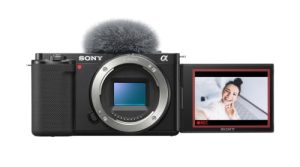
- Best overall for vlogging and YouTube: Sony ZV-E10 — large APS-C sensor, 4K oversampled from 6K, flip-out touchscreen, and subject tracking built for creators.
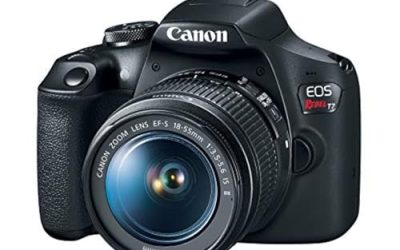
- Best hybrid for video and photos: Canon EOS R50 with RF-S 18-45mm Lens Kit — uncropped 4K from 6K, Dual Pixel autofocus, and a kit lens that covers everyday framing.
- Best pocket camera for smooth walking shots: DJI Osmo Pocket 3 — a 1-inch sensor on a 3-axis gimbal, with 4K recording at up to 120 frames per second.
- Best budget 4K camera: Panasonic Lumix G7 with 14-42mm Lens Kit — 4K UHD video, a fully articulating touchscreen, and a viewfinder at an approachable point in the lineup.
- Best action camera: GoPro HERO12 Black — 5.3K video, HyperSmooth stabilization, and a waterproof body built for rough conditions.
Quick Comparison
| Camera | Sensor | Top Video Resolution | Screen | Best For |
|---|---|---|---|---|
| Sony ZV-E10 | 24.2MP APS-C | 4K oversampled from 6K | 3-inch flip-out touchscreen | Vlogging and YouTube |
| Canon EOS R50 Kit | 24.2MP APS-C | 4K uncropped, oversampled from 6K | Vari-angle touchscreen | Video and photo hybrid use |
| DJI Osmo Pocket 3 | 1-inch CMOS | 4K at up to 120 fps | Rotating touchscreen | Walking shots and travel |
| Panasonic Lumix G7 Kit | 16MP Micro Four Thirds | 4K UHD at 30/24 fps | 3-inch fully articulating touchscreen | Budget 4K recording |
| GoPro HERO12 Black | 1/1.9-inch | 5.3K at 60 fps | Front and rear screens | Action, water, and sports |
How to Choose
Start with how you record, not with the spec sheet
The most common mistake in buying a video camera is shopping by resolution alone. A camera that records 4K but loses focus every time you move will frustrate you far more than a camera with a lower headline resolution that simply works. Think about your real sessions first. Do you sit in one place and talk to the lens? Do you walk and film? Do you shoot outdoors in weather? Do you need to see yourself while recording? The answers narrow the field fast.
Sensor size and low light
A larger sensor gathers more light, which usually means cleaner footage in dim rooms and softer background blur. The two APS-C cameras here, the Sony ZV-E10 and the Canon EOS R50, have the largest sensors in this guide and the strongest low-light performance. The DJI Osmo Pocket 3 uses a 1-inch sensor, a big step up from a phone sensor. The Lumix G7 uses a Micro Four Thirds sensor, smaller again but still far larger than a phone sensor. The GoPro uses the smallest sensor of the five and is at its best in bright outdoor light.
Autofocus matters more than most people expect
When you record yourself, you cannot watch the focus and adjust it by hand. Reliable autofocus that finds and holds a face or an eye is what keeps a talking-head video usable. Both Sony and Canon have strong subject tracking in this lineup, and the DJI Osmo Pocket 3 adds face and object tracking of its own. If your videos are mostly you speaking to the camera, put autofocus near the top of your list.
Stabilization, recording limits, and audio
If you walk while filming, stabilization decides whether the footage is watchable. The DJI Osmo Pocket 3 has a physical 3-axis gimbal, the most effective stabilization in this guide. The GoPro relies on electronic HyperSmooth stabilization, very capable for action. The mirrorless cameras depend on lens stabilization and, in some cases, digital stabilization, so a tripod or a gimbal is a sensible companion if you plan to move a lot.
Some cameras also stop recording after a set time. The Canon EOS R50 listing states recording longer than 30 minutes, a real advantage for long takes and interviews. For the other cameras, check the listing for any stated recording limits before you buy. Audio is the other half of video: built-in microphones are usable in a quiet room, but an external microphone makes a bigger difference to perceived quality than almost any camera upgrade. The Lumix G7 listing includes a 3.5mm microphone port. For the other cameras, confirm on the listing whether a microphone input is included or an adapter is needed.
Lenses, storage, and batteries
Interchangeable-lens cameras such as the Sony ZV-E10, the Canon EOS R50, and the Lumix G7 let you change lenses as your skills grow, and each one belongs to a different lens system. Sony E-mount has a very wide range of native and third-party lenses. Canon RF-S is newer and growing. Micro Four Thirds has a large catalog of compact lenses. The DJI Osmo Pocket 3 and the GoPro HERO12 Black have fixed lenses, so what you buy is what you get, and that simplicity is part of their appeal.
Video files are large, especially at 4K and above, so plan for at least two fast memory cards. The GoPro listing specifies microSD cards carrying a U3 or V30 speed class and above, and that guidance applies in spirit to every camera here.
The Picks in Detail
1. Sony ZV-E10 — Best Overall for Vlogging and YouTube
The ZV-E10 is a mirrorless camera designed around video creators from the start. Its 24.2MP APS-C sensor records 4K video oversampled from 6K with full pixel readout and no pixel binning, according to the listing, so the 4K image is built from more sensor data than a simple 4K readout. The flip-out 3-inch touchscreen faces forward so you can frame yourself, and Real-time Eye autofocus plus a Product Showcase mode help the camera shift focus smoothly between your face and an object you hold up to the lens.
The body-only listing keeps the entry point simple, and you add the lens that fits your shooting style. The body alone does not include a lens, so confirm what is included in the configuration you choose. The camera has a single SD card slot with UHS-I speeds, adequate for most creators but worth knowing if you record long sessions.
Pros:
- Large APS-C sensor with 4K oversampled from 6K
- Flip-out touchscreen and video-first controls
- Real-time Eye autofocus and Product Showcase mode
- Wide E-mount lens system with many options
Cons:
- Body-only listing means you need to add a lens
- No built-in viewfinder
- Single SD card slot with UHS-I speeds
2. Canon EOS R50 with RF-S 18-45mm Lens Kit — Best Hybrid for Video and Photos

Canon EOS R50 with RF-S 18-45mm Lens Kit
The EOS R50 is the camera to pick if your video camera also needs to be a capable photo camera. Its 24.2MP APS-C sensor and DIGIC X processor record uncropped 4K at up to 30 frames per second oversampled from 6K, and Full HD at up to 120 frames per second for slow motion. Dual Pixel CMOS AF II tracks subjects, and a Movie for Close-up Demo mode automatically switches focus to the closest subject, which is handy for unboxings and practical demonstrations.
The kit includes the RF-S 18-45mm f/4.5-6.3 IS STM lens, so it is ready to shoot out of the box, and the vari-angle touchscreen flips around for self-recording. One of the most useful details in the listing is recording longer than 30 minutes, which removes a limit that used to interrupt long takes on many cameras. The camera also supports UVC and UAC, so it can work as a webcam for streaming and video calls.
Pros:
- Uncropped 4K from 6K and Full HD at up to 120 fps
- Dual Pixel CMOS AF II with subject tracking
- Recording longer than 30 minutes
- Kit lens included, ready to shoot out of the box
Cons:
- Kit lens has a modest aperture range
- RF-S native lens range is narrower than older mounts
- No in-body stabilization is stated on the listing
3. DJI Osmo Pocket 3 — Best Pocket Camera for Smooth Walking Shots

The Osmo Pocket 3 is a different kind of video camera: a small handheld camera with a 1-inch CMOS sensor mounted on a 3-axis gimbal. It records 4K video at up to 120 frames per second, and the gimbal keeps the footage steady while you walk, which is the hardest thing to achieve with a regular camera. Face and object tracking keep your subject centered, and fast focusing helps the camera react when the scene changes.
The appeal here is portability. It fits in a jacket pocket, starts quickly, and needs no rig, no lens changes, and no separate stabilizer. That makes it a strong choice for travel, daily vlogging, and anyone who wants to film without carrying a bag of gear. The trade-off is the fixed lens and the small screen, which suit run-and-gun shooting but are less flexible than an interchangeable-lens camera for staged work. Confirm the included accessories and battery details on the listing before buying.
Pros:
- 3-axis gimbal for smooth footage while walking
- 1-inch sensor with 4K at up to 120 fps
- Face and object tracking built in
- Small enough to carry everywhere, no rig needed
Cons:
- Fixed lens limits framing options
- Small screen can be awkward for detailed framing
- Confirm battery life and accessories on the listing
4. Panasonic Lumix G7 with 14-42mm Lens Kit — Best Budget 4K Camera

Panasonic Lumix G7 with 14-42mm Lens Kit
The Lumix G7 is the most accessible route to real 4K video in this guide. Its 16MP Micro Four Thirds sensor records 4K UHD video at 30 and 24 frames per second, and the 3-inch fully articulating touchscreen plus a 2.36M-dot OLED viewfinder give you two ways to frame a shot. The kit includes the Lumix G Vario 14-42mm Mega O.I.S. lens, and the listing notes Wi-Fi connectivity, a 3.5mm microphone port, and a 2.5mm remote port.
The G7 is an older design than the other cameras here, and its autofocus does not match the speed of newer systems. Its Micro Four Thirds sensor is also smaller than the APS-C sensors in the Sony and Canon picks, which affects low-light performance and background blur. What it gives you in return is a complete, proven 4K camera with a viewfinder, a flip-out screen, and a microphone input at the most approachable point in this lineup. It is a sensible first camera for someone learning video.
Pros:
- 4K UHD video at 30 and 24 frames per second
- Fully articulating touchscreen plus a viewfinder
- 3.5mm microphone port for external audio
- Kit lens included, with a large Micro Four Thirds lens catalog
Cons:
- Older autofocus system, slower than newer cameras
- Smaller sensor than the APS-C picks
- Confirm availability on the listing, as this is an older model
5. GoPro HERO12 Black — Best Action Camera

The HERO12 Black is the camera for video in conditions where other cameras stay in the bag. It records 5.3K video at 60 frames per second with HDR, takes 27MP photos, and uses a 1/1.9-inch sensor with the GP2 processor. HyperSmooth 6.0 stabilization keeps action footage steady, and the waterproof body handles rain, rivers, and surf without a separate housing. The listing also notes live streaming and webcam use, plus GP-Log for creators who want more control in editing.
Battery life is a real strength here: the listing states up to twice the continuous recording time at 5.3K60 compared with the previous model, at 70 minutes, thanks to improved power management and the included Enduro battery. The camera records to microSD cards, and the listing specifies cards carrying a U3 or V30 speed class or higher, so buy a card that meets that standard. The small sensor means low-light footage will not match the mirrorless cameras in this guide. Confirm on the listing exactly which mounts and accessories are included, since GoPro sells the same camera in several bundles.
Pros:
- 5.3K60 video with HDR and HyperSmooth 6.0
- Waterproof body built for rain, water, and rough handling
- Longer continuous recording with the Enduro battery
- Live streaming and webcam modes add versatility
Cons:
- Small sensor means weaker low-light performance
- Fixed wide lens limits framing for interviews
- Confirm included mounts and accessories on the listing
Who Should Choose What
- You film yourself talking to the camera: the Sony ZV-E10, with its flip-out screen and eye autofocus, is built for exactly that.
- You want one camera for video and photos: the Canon EOS R50 kit covers both, with a lens included.
- You walk and film or travel light: the DJI Osmo Pocket 3, with its built-in gimbal, gives you the smoothest handheld footage with the least gear.
- You want 4K video on a modest budget: the Panasonic Lumix G7 kit is the most accessible entry point here.
- You film sports, water, or anything rough: the GoPro HERO12 Black is waterproof and built to be mounted and dropped.
Common Mistakes
Buying for resolution and ignoring autofocus. A 4K camera that cannot hold focus on your face produces unusable footage. Autofocus performance matters more for most creators than the difference between 4K and higher resolutions.
Forgetting audio. Viewers forgive a slightly soft image far more readily than they forgive bad sound. A microphone input, or at least a plan for clean audio, should be part of the decision, not an afterthought.
Skipping the memory card and battery budget. Video fills cards fast, and a single battery rarely lasts a full shoot. Buy fast cards that meet the camera’s stated standard and at least one spare battery before your first important recording session.
Assuming every listing is the same camera. Several of these cameras are sold in multiple configurations, such as body-only, kit, and accessory bundles. Read the listing carefully and confirm the included lens, battery, and accessories before buying.
FAQ
What is the best camera for recording videos for YouTube?
For most YouTube creators, the Sony ZV-E10 is the strongest starting point in this guide. It combines a large APS-C sensor, 4K video oversampled from 6K, a flip-out screen, and autofocus built for filming yourself. If you also take a lot of photos, the Canon EOS R50 is the better hybrid choice.
Do I need a 4K camera to record good videos?
Not necessarily, but 4K is now the standard for most platforms, and every camera in this guide records 4K or higher. More important than resolution are autofocus, stabilization, and audio.
Which camera is best for vlogging while walking?
The DJI Osmo Pocket 3. Its built-in 3-axis gimbal keeps footage smooth while you walk, and its small size means you will actually carry it.
Can these cameras record for more than 30 minutes at a time?
The Canon EOS R50 listing states recording longer than 30 minutes. For the other cameras, check the listing for any stated recording limits, since limits vary by model and by video format.
Do I need an external microphone?
For talking-head videos or interviews, an external microphone makes a noticeable difference. The Lumix G7 listing includes a 3.5mm microphone port. For the other cameras, confirm on the listing whether a microphone input is included or an adapter is needed.
Which camera is best for action and water sports?
The GoPro HERO12 Black. It is waterproof, records 5.3K video with HyperSmooth stabilization, and is designed to be mounted to helmets, boards, and bikes.
Conclusion
The best camera for recording videos is the one that fits how you actually shoot. The Sony ZV-E10 leads for vlogging and YouTube, the Canon EOS R50 is the best choice if photos matter as much as video, the DJI Osmo Pocket 3 is the smoothest and most portable option for walking shots, the Panasonic Lumix G7 is the most accessible way into real 4K video, and the GoPro HERO12 Black is the camera for action and water.
Before you buy, open the listing for your chosen camera and confirm the exact configuration, the included lens and accessories, and any stated recording limits.
More from Amazon
Programs that pair well with the guide above. Offers and eligibility are set by Amazon and may change.
Free shipping on eligible items, Prime Video and more. Eligible new members can start with a free trial.
Start a Prime free trialAd-free music streaming. Eligible new subscribers can start with a free trial.
Try Music Unlimited freeA Prime membership for ages 18-24 with a trial period. Eligibility is set by Amazon.
See Prime for Young AdultsAudiobooks and podcasts to listen to on the go. Eligible new members can start with a free trial.
Try Audible freeAs an Amazon Associate we earn from qualifying purchases.




Write Your Review
No reviews yet. Be the first to share your experience!