
Key takeaways
- Compare the 4 best non-contact voltage testers for safe checks, with real Amazon picks, specs, and what to check before you buy a tester pen.
A non-contact voltage tester is the first tool to reach for before opening a switch plate, swapping a light fixture, or tracing a wire. Held near a conductor, it lights up and beeps when alternating current is present, without touching bare metal. That speed makes it a daily carry for electricians and a useful bench companion for anyone who works around mains wiring.


The four testers below were chosen for bench and electronics-work checks: a kit that pairs a tester with a receptacle tester, a display model, an adjustable sensor, and a proven dual-range pen. Every one is a screening tool, not proof that a circuit is dead. This guide explains how to use them safely, what each range and rating means, and which pick fits each job.
As an Amazon Associate, we earn from qualifying purchases.
Quick Answer
Buy the Klein Tools NCVT5KIT for a tester plus a receptacle tester in one box. Pick the KAIWEETS HT100s for its signal-strength display, the Sperry VD6505 for adjustable sensitivity, or the Klein NCVT-2 for a simple dual-range pen. Always prove the tester on a known live source before and after each check.
Klein Tools NCVT5KIT Electrical Test Kit
The Klein Tools NCVT5KIT is the only kit in this round, and that earns it the top spot. The box pairs a non-contact voltage tester with the RT210 GFCI receptacle tester, so one purchase covers two common pre-work checks: confirming voltage at a wire, and confirming a receptacle is wired correctly. For a bench that sees mains-powered repairs, that pairing earns its keep.
The tester in the kit is the updated NCVT-5A. Klein issued a voluntary recall on the earlier model in this line because it could fail to detect voltage in certain duplex outlets on the higher voltage setting. The kit shipped here contains the updated NCVT-5A, which Klein states is not subject to that recall. When ordering, check that the listing names the NCVT-5A tester in the kit contents.
The NCVT-5A covers two ranges, 12 to 1000 V AC on the low setting and 70 to 1000 V AC on the standard setting, which suits low-voltage control wiring and ordinary household circuits. It gives simultaneous visual and audible indicators, so a warning is hard to miss in a noisy room. A bright integrated Class IIIa laser pointer is built in for marking a spot from a distance, and the tester runs on 2 AAA batteries.
| Brand | Product | ASIN | Key specs |
|---|---|---|---|
| Klein Tools | NCVT5KIT Electrical Test Kit (with NCVT-5A Tester) | B07L5L7TMD | Includes NCVT-5A tester and RT210 GFCI receptacle tester; dual range 12 to 1000 V AC low, 70 to 1000 V AC standard; visual and audible indicators; Class IIIa laser pointer, 630 to 670 nm, under 5 mW; 2 AAA batteries |
KAIWEETS HT100s Non-Contact Voltage Tester with LCD Display
The KAIWEETS HT100s stands out because its LCD display shows signal strength as a percentage, turning a simple yes-or-no beep into a graded reading. Moving the tip closer raises the reading, so the display helps separate a live wire from a nearby wire that is only picking up induced voltage — valuable when several conductors run together inside a box.
The tester covers dual range AC 12 V and 70 V to 1000 V, matching the Klein kit pen. It also works as a live and null wire tester, which helps when sorting conductors during a rewire, and it includes a wire breakpoint finder for tracing where a cable has gone open. A buzzer alarm sounds alongside the display, so the tester still warns clearly when attention is on the work, not the screen.
For bench use, the display model sits between a basic pen and a full meter. It cannot measure exact voltage, and it should never replace a contact tester for confirming a circuit is dead, but for finding live conductors and sorting wires it gives more feedback than any other pick here.
| Brand | Product | ASIN | Key specs |
|---|---|---|---|
| KAIWEETS | HT100s Non-Contact Voltage Tester with LCD Display | B0C2CNC624 | Dual range AC 12 V and 70 V to 1000 V; signal-percentage LCD display; live and null wire tester; buzzer alarm; wire breakpoint finder |
Sperry Instruments VD6505 Adjustable Non-Contact Voltage Sensor
The Sperry Instruments VD6505 is the adjustable pick of the round, and its sensitivity dial is the feature that justifies it. Turning the dial down reduces false alarms from adjacent conductors, while turning it up extends detection range when tracing a wire through a wall or inside a crowded panel. Few pens at this level offer that control, and it makes the VD6505 the best choice for tracing work.
Its range runs from 12 to 1000 V AC, covering household circuits and low-voltage control wiring. Audible and visual alerts fire together, with a 360-degree flashing red light that stays visible from any angle, which helps when the tester is held overhead or inside a dark cabinet. It carries CAT III 1000 V and CAT IV 600 V ratings, the strongest in this round, which matter near a service panel or a meter base.
The VD6505 is a straightforward sensor with no display and no extras, suiting buyers who want one job done well. Check the listing for a current offer before ordering.
| Brand | Product | ASIN | Key specs |
|---|---|---|---|
| Sperry Instruments | VD6505 Adjustable Non-Contact Voltage Sensor | B000GLAC5G | Adjustable sensor, 12 to 1000 V AC; sensitivity dial; audible and visual alerts with 360-degree flashing red light; CAT III 1000 V and CAT IV 600 V |
Klein Tools NCVT-2 Dual Range Non-Contact Voltage Tester
The Klein Tools NCVT-2 is the simple pen of the round, and the value pick. It detects low voltage from 12 to 48 V AC and standard voltage from 48 to 1000 V AC automatically, switching ranges without any input. That keeps the workflow fast: hold the tip near the conductor, watch for the light, listen for the tone, and move on.
A green LED shows the tester is working and doubles as a worklight, handy inside a dark switch box. Simultaneous visual and audible indicators make warnings hard to miss. The tester carries a CAT IV 1000 V rating, survives drops from 3 m, and is built from lightweight polycarbonate with a pocket clip, so it rides comfortably in a shirt pocket or a tool pouch. It runs on 2 included AAA batteries and carries a 2-year warranty.
One honest note: a newer version of this tester exists. The NCVT-2 remains a sound buy only if a live offer exists on the listing when you order, so check for a current offer before buying. If no offer is shown, skip it and choose one of the other three picks.
| Brand | Product | ASIN | Key specs |
|---|---|---|---|
| Klein Tools | NCVT-2 Dual Range Non-Contact Voltage Tester | B004FXJOQO | Dual range, auto-detects 12 to 48 V AC low and 48 to 1000 V AC standard; visual and audible indicators; green LED worklight; CAT IV 1000 V; 3 m drop protection; pocket clip; 2 AAA batteries included; 2-year warranty |
How to Choose
Start with the voltage range. A dual-range tester that starts at 12 V AC covers low-voltage control wiring as well as household circuits, while a single high range can miss low-voltage signals. All four picks here start at 12 V AC, the right floor for bench and home work. For household circuits only, any of them will do; if control wiring is in play, the dual-range models are the safer choice.
Look at the indicators next. Every pick here gives both a light and a tone, and that redundancy matters because one indicator can be missed in a bright room or a noisy workshop. A display that shows signal strength, like the KAIWEETS screen, adds a further layer. An adjustable sensitivity dial, like the Sperry dial, helps when several wires run close together and a fixed-sensitivity pen keeps alarming on the wrong conductor.
Check the safety rating before buying. CAT ratings describe how much transient overvoltage a tester can survive, and the rating should match the work. CAT IV covers service entrances and meter bases, while CAT III covers distribution panels and fixed installations. The Sperry and the Klein NCVT-2 carry CAT IV ratings, the right level for work near a panel. Never use a tester rated below the circuit it will meet.
Think about the form the work takes. A kit with a receptacle tester suits someone setting up a bench or a home tool kit from scratch. A display model suits tracing and sorting wires, an adjustable sensor suits crowded boxes and panels, and a simple pen suits quick checks and pocket carry. Match the tool to the job; none of these testers proves a circuit is dead.
Who Should Skip
Anyone who needs to prove a circuit is dead should not rely on a non-contact tester alone. These tools indicate that voltage is present, but they never prove its absence. A tester can stay silent on a live wire if its battery is low, its tip is too far from the conductor, or the field is shielded. Always confirm with a contact tester or a multimeter before touching conductors, proving the tester on a known live source before and after every check.
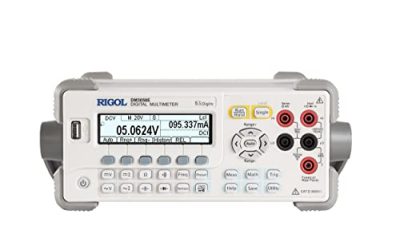
Buyers who need exact voltage readings should also look elsewhere. A non-contact tester answers one question, whether voltage is present, and a display model only grades the strength of the field. Measuring a precise value, checking continuity, or testing resistance all need a multimeter. If the work calls for numbers rather than a yes-or-no answer, that is the right tool.
Finally, anyone shopping for a tester to use on a service entrance or a meter base should check the CAT rating first. A tester rated below the circuit it will meet is the wrong tool for that job, whatever its other features. The CAT IV picks in this round suit that work.
FAQ
Can a non-contact voltage tester prove a circuit is dead?
No. A non-contact tester can only show that voltage is present. It can stay silent on a live conductor if the battery is weak, the tip is held too far away, or the field is shielded by metal. Always follow the live-dead-live routine: prove the tester on a known live source, test the circuit, then prove the tester again. Confirm with a contact tester or a multimeter before touching any conductor.
What does dual range mean on a voltage tester?
Dual range means the tester watches two voltage bands. The low band, starting at 12 V AC, catches low-voltage control and doorbell wiring, while the standard band covers household circuits up to 1000 V AC. Some models switch bands automatically. A dual-range tester is the safer choice when the work mixes control wiring with mains circuits.
Should I buy the kit or a single tester pen?
Buy the kit if the bench or tool kit is being built from scratch, because the receptacle tester in the Klein kit checks wiring faults that a voltage pen cannot see. Buy a single pen if the only need is finding live conductors, choosing the display model for tracing work or the adjustable sensor for crowded boxes.
How do I test that my tester is working?
Prove it on a known live source, such as a switched-on lamp cord, before starting work. The tester should light up and sound. Then test the circuit in question, and after finishing, prove the tester again on the same live source. If it fails either proof test, replace the batteries and try again, and if it still fails, retire the tester.
Final Verdict
For most buyers, the Klein Tools NCVT5KIT is the best starting point, pairing a capable dual-range tester with a receptacle tester in one box. The KAIWEETS HT100s is the best choice for tracing and sorting wires, thanks to its signal-strength display. The Sperry VD6505 suits crowded panels and boxes, where its sensitivity dial and CAT IV 600 V rating earn their keep. The Klein NCVT-2 is the simple value pen, provided a live offer is listed when you order. Whichever pick fits, treat it as a screening tool, prove it before and after every check, and confirm with a contact tester first.
Product and ASIN Reference
| Product | ASIN |
|---|---|
| Klein Tools NCVT5KIT Electrical Test Kit (with NCVT-5A Tester) | B07L5L7TMD |
| KAIWEETS HT100s Non-Contact Voltage Tester with LCD Display | B0C2CNC624 |
| Sperry Instruments VD6505 Adjustable Non-Contact Voltage Sensor | B000GLAC5G |
| Klein Tools NCVT-2 Dual Range Non-Contact Voltage Tester | B004FXJOQO |
More from Amazon
Programs that pair well with the guide above. Offers and eligibility are set by Amazon and may change.
Free shipping on eligible items, Prime Video and more. Eligible new members can start with a free trial.
Start a Prime free trialAd-free music streaming. Eligible new subscribers can start with a free trial.
Try Music Unlimited freeA Prime membership for ages 18-24 with a trial period. Eligibility is set by Amazon.
See Prime for Young AdultsAudiobooks and podcasts to listen to on the go. Eligible new members can start with a free trial.
Try Audible freeAs an Amazon Associate we earn from qualifying purchases.




Write Your Review
No reviews yet. Be the first to share your experience!