

Key takeaways
- Looking for the best cheapest digital cameras? Compare simple, compact cameras for travel, family photos, and everyday shooting without overspending.
Searching for the best cheapest digital cameras is a smart move if you want better photos than a phone gives you without stepping into the world of expensive interchangeable-lens systems. A simple digital camera still has real advantages: a proper optical zoom, a dedicated shutter button, a grip that fits your hand, and a sensor and lens combination tuned for one job only. For travel snapshots, family gatherings, school events, and everyday moments, a modest compact camera is often the most enjoyable tool to use.
The cameras in this guide are all straightforward point-and-shoot models. None of them require you to learn manual exposure, buy extra lenses, or carry a heavy bag. They turn on quickly, focus reliably, and produce clear, colorful images in daylight and in ordinary indoor light. They are also easy to share: most of them connect to a phone or a computer without fuss, and all of them record video as well as still photos.
The key to choosing well in this category is to focus on the features that change your photos. Optical zoom matters far more than digital zoom. A wide-angle lens matters when you photograph groups and landscapes. Image stabilization matters when you shoot in dim light or at full zoom. And simple controls matter more than a long list of scene modes you will never open. The sections below explain each of those choices, then compare four cameras that cover the main needs in this category.
How to Choose
1. Optical Zoom and Lens Range
Optical zoom is the single most important feature on an affordable digital camera. It uses the lens itself to bring distant subjects closer, so image quality stays sharp. Digital zoom only crops and enlarges the image, which quickly turns photos soft and grainy. A camera with 4x or 5x optical zoom is plenty for everyday shots, portraits, and travel scenes. A 12x zoom reaches much further and is useful for school performances, wildlife, and sports from the sidelines. A long bridge-style zoom of 40x is a different kind of tool entirely, suited to anyone who wants to photograph distant subjects without carrying a second lens.
2. Sensor and Image Quality
Most affordable compact cameras use a small sensor with a resolution between 16 and 20 megapixels. That is more than enough for prints, social sharing, and viewing on a screen. Do not chase the highest megapixel count; in this category, the lens and the image processing matter more. A camera with a good lens and reliable autofocus will produce better photos than a higher-resolution camera with a weak lens. Look for a model that handles color naturally and keeps noise under control in indoor light, since those are the conditions where cheap cameras struggle most.
3. Image Stabilization
Image stabilization keeps your photos sharp when your hands move slightly, which happens more than most people realize. It matters most at full zoom, in dim light, and when you shoot video while walking. Optical stabilization, which moves a lens element to counteract shake, works better than electronic stabilization alone. If you plan to shoot a lot of video or photograph in the evening, put stabilization near the top of your list. It is one of those features you barely notice when it works and badly miss when it does not.
4. Screen, Controls, and Ease of Use
A camera you enjoy using is a camera you will actually carry. Look for a screen of at least 2.7 inches with a clear, bright display that is easy to see outdoors. Buttons should be large enough to find by touch, and the menu should be simple to navigate. A dedicated button for video recording is a useful touch, since it lets you start filming without digging through menus. If the camera will be used by children or by someone who dislikes fiddly gadgets, favor the simplest model with the fewest settings.
5. Battery and Power
Affordable cameras use one of two power systems: a rechargeable lithium-ion battery or standard AA batteries. A rechargeable battery is lighter and cheaper over time, but it needs charging before a trip. AA batteries are heavier and cost more in the long run, yet they can be replaced anywhere in the world, which is a real advantage on long trips or in places where charging is inconvenient. Check how many shots the camera manages on a single charge or a fresh set of batteries, and carry a spare battery or a spare set of AAs on important days.
6. Video and Connectivity
Almost every modern compact camera records Full HD video, which is plenty for family clips and travel memories. If you plan to share videos online, look for a model with a microphone that picks up clear sound and stabilization that keeps footage smooth. Wi-Fi connectivity is worth having if you like to move photos to your phone quickly, since it removes the need for a cable or a card reader. NFC pairing, where offered, makes that connection even faster. A camera with a standard memory card slot and a USB connection covers the basics for everyone else.
Top Picks
KODAK PIXPRO FZ45 Digital Camera

KODAK PIXPRO FZ45 Digital Camera
The KODAK PIXPRO FZ45 is the simplest camera in this guide, and that is exactly its strength. It offers a 16-megapixel sensor, a 4x optical zoom with a 27mm wide-angle lens, and a 2.7-inch LCD screen in a compact body that slips into a jacket pocket. There is nothing to learn and nothing to configure: point the camera, press the shutter, and you get a clear, well-exposed photo. The wide-angle lens is genuinely useful for group photos, interiors, and landscapes, since it fits more into the frame from the same spot.
The FZ45 records 1080p Full HD video, so it covers family clips and travel footage as well as still photos. The controls are large, clearly labeled, and easy to learn, which makes this a good choice for a first camera or for someone who wants photography without a learning curve. The black finish looks neat and understated, and the camera is light enough to carry all day without noticing it.
Who it is for: beginners, families, and travelers who want a pocketable camera for everyday photos and do not want to think about settings.
Caveats: the 4x zoom is modest, so distant subjects stay distant. The camera lacks Wi-Fi, so photos move to a phone or computer through a cable or a card reader. Low-light performance is acceptable for casual use but not a strength, so expect softer results indoors without a flash.
Canon PowerShot ELPH 360 HS
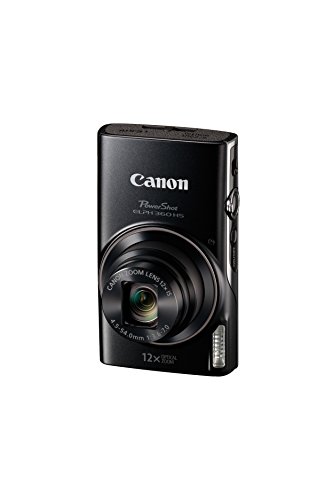
The Canon PowerShot ELPH 360 HS is the most versatile compact camera in this guide. It combines a 20.2-megapixel sensor with a 12x optical zoom and built-in Wi-Fi and NFC, all in a slim body that fits in a pocket. The 12x zoom reaches far enough for school events, zoo visits, and travel details, while the wide end of the lens handles groups and scenery. Canon’s image processing gives photos natural color and pleasing skin tones, which is one reason this line has stayed popular for so long.
Wi-Fi is the feature that changes how you use this camera day to day. Photos move to a phone quickly, so sharing takes seconds rather than waiting until you get home. The camera records 1080p Full HD video with image stabilization, and the autofocus is quick and reliable for a camera in this class. The slim design and light weight make it easy to carry everywhere, which matters more than any specification: the best camera is the one you have with you.
Who it is for: travelers, parents, and everyday photographers who want a pocket camera with a long zoom, wireless sharing, and dependable image quality.
Caveats: the small sensor shows its limits in dim indoor light, where photos can look grainy without a flash. The battery is small, so a spare is worth having on long days out. The menu system has many options, and new users may need a short while to find the settings they use most.
Sony DSC-W800 Cyber-shot

The Sony DSC-W800 is a classic compact camera that has earned its place through sheer simplicity. It offers a 20.1-megapixel sensor, a 5x optical zoom, and a 2.7-inch LCD screen in a tiny body that weighs almost nothing. Sony’s SteadyShot image stabilization helps keep photos sharp at full zoom and in dim light, and the camera includes fun extras like panorama mode for wide landscape shots and simple picture effects for creative photos.
The W800 is the easiest camera in this guide to carry. It fits in a small pocket or a purse without a bulge, and its one-handed operation makes it ideal for quick snapshots. The camera records 720p HD video, which is enough for casual clips and family memories. The controls are minimal and intuitive, with a clear mode dial and a simple menu that anyone can learn in minutes.
Who it is for: anyone who wants the smallest, lightest camera possible for snapshots, parties, and holidays, and who values simplicity above all else.
Caveats: video tops out at 720p HD rather than Full HD, so footage is less detailed than from the other picks. There is no Wi-Fi, so photos transfer by cable or card reader. The 5x zoom is useful but shorter than the Canon’s 12x, so distant subjects are harder to reach.
KODAK PIXPRO AZ405 Astro Zoom

The KODAK PIXPRO AZ405 is a bridge-style camera, which means it looks and handles more like a larger camera while keeping the simplicity of a point-and-shoot. Its headline feature is a 40x optical zoom with a 24mm wide-angle lens, paired with a 20-megapixel sensor and optical image stabilization. That zoom reaches subjects far beyond the range of any pocket camera, from birds in a garden to players on a distant field. The 3-inch LCD screen is larger than the screens on the compact picks, which makes framing and checking shots easier.
The AZ405 runs on AA batteries, which is a practical advantage on long trips: a fresh set of batteries is available almost anywhere. It records 1080p Full HD video and includes a comfortable grip that steadies the camera at full zoom. The bridge design also gives you a proper viewfinder-style stance, with both hands on the camera, which helps keep long-zoom shots sharp.
Who it is for: nature watchers, sports spectators, and travelers who want a very long zoom without the cost or complexity of an interchangeable-lens camera.
Caveats: the AZ405 is much larger and heavier than the pocket cameras in this guide, so it needs a bag rather than a pocket. AA batteries add ongoing cost and weight compared with a rechargeable pack. The long zoom demands steady hands or a support, even with stabilization, and the camera is overkill for anyone who only takes everyday snapshots.
Comparison Table
| Camera | Sensor | Optical Zoom | Screen | Video | Connectivity |
|---|---|---|---|---|---|
| KODAK PIXPRO FZ45 | 16 MP | 4x | 2.7-inch LCD | 1080p Full HD | USB |
| Canon PowerShot ELPH 360 HS | 20.2 MP | 12x | 3-inch LCD | 1080p Full HD | Wi-Fi, NFC, USB |
| Sony DSC-W800 | 20.1 MP | 5x | 2.7-inch LCD | 720p HD | USB |
| KODAK PIXPRO AZ405 | 20 MP | 40x | 3-inch LCD | 1080p Full HD | USB |
Which One Is Right for You?
If you want the simplest camera possible, the KODAK PIXPRO FZ45 is the right choice. It does the basics well, fits in a pocket, and never asks you to learn anything. It is the camera for people who want to point, shoot, and enjoy the day.
If you want one camera that does almost everything, the Canon PowerShot ELPH 360 HS is the pick. Its 12x zoom, Wi-Fi sharing, and reliable image quality cover travel, family events, and everyday photography in a single slim body. It is the most balanced choice in this guide.
If size and weight matter most, the Sony DSC-W800 is the smallest and lightest option here. It is the camera to slip into a pocket on the way out the door, and its simplicity makes it a good first camera for a younger photographer or a gift.
If distant subjects are your priority, the KODAK PIXPRO AZ405 is in a different league. Its 40x zoom reaches birds, wildlife, and sports action that the pocket cameras cannot touch, and the AA batteries make it a practical companion for long trips away from power outlets.
A final tip: whichever camera you choose, buy a memory card and a spare battery or a set of spare AA batteries at the same time. A camera with no storage and no power is a paperweight, and having spares ready means you will never miss a shot.
Frequently Asked Questions
Is a cheap digital camera still better than a phone camera?
For many everyday situations, yes. A dedicated camera offers a real optical zoom, a proper grip, and a shutter button, which make it easier to frame and capture distant or moving subjects. Phone cameras are excellent in good light, but a compact camera with a long optical zoom still wins for travel, school events, and wildlife. A camera also keeps your photos separate from your phone, which some people prefer.
What does optical zoom mean, and why does it matter?
Optical zoom moves the lens elements to magnify the scene before the sensor captures it, so image quality stays sharp. Digital zoom only enlarges part of the image the sensor already captured, which makes photos look soft and grainy. When comparing cameras, look at the optical zoom number and ignore the digital zoom figure entirely.
How many megapixels do I need?
For prints, sharing online, and viewing on a screen, 16 to 20 megapixels is more than enough. Higher megapixel counts do not automatically mean better photos, especially on small sensors. The lens, the stabilization, and the image processing have a bigger effect on how your photos look than the megapixel count alone.
Should I choose a camera with Wi-Fi?
Wi-Fi is worth having if you share photos from your phone often, since it moves images to your phone in seconds. If you usually transfer photos to a computer at home, a cable or a card reader works just as well and you can skip Wi-Fi without losing anything. For travel, Wi-Fi is a genuine convenience that many owners use every day.
Disclosure: As an Amazon Associate, we may earn from qualifying purchases.
More from Amazon
Programs that pair well with the guide above. Offers and eligibility are set by Amazon and may change.
Free shipping on eligible items, Prime Video and more. Eligible new members can start with a free trial.
Start a Prime free trialAd-free music streaming. Eligible new subscribers can start with a free trial.
Try Music Unlimited freeA Prime membership for ages 18-24 with a trial period. Eligibility is set by Amazon.
See Prime for Young AdultsAudiobooks and podcasts to listen to on the go. Eligible new members can start with a free trial.
Try Audible freeAs an Amazon Associate we earn from qualifying purchases.



Write Your Review
No reviews yet. Be the first to share your experience!