

Key takeaways
- The best blood glucose monitors pair a clear display with simple strips and app tracking. Compare meters by sample size, memory and ease of use before you buy.
Checking blood sugar at home is a daily routine for millions of people, and the meter you pick shapes how easy that routine feels. A good monitor needs only a tiny blood sample, shows the result in seconds, and stores the readings so patterns are easy to follow. The real decision is which meter fits your hands, your eyesight, and the way you like to track results over time.
This guide is for people who test daily and want a dependable meter, for those starting out and needing a simple first device, and for anyone who wants readings synced to a phone app. The products below were chosen from the names and specifications on their Amazon pages, with a focus on ease of use, strip handling, and tracking features. Read the whole guide before you buy, since the right meter is the one you will reach for every day without a second thought.
Quick Picks
As an Amazon Associate we earn from qualifying purchases.
| Product | Best for | Key spec from title |
|---|---|---|
| Contour NEXT ONE | App tracking and range alerts | Bluetooth blood glucose monitoring system |
| Contour NEXT GEN | Newest all-in-one kit | All-in-one kit with 20 test strips |
| Accu-Chek Guide Kit | Easy strip handling | Guide Me meter with 100 test strips |
| OneTouch Verio Flex | Color range indicator | Bluetooth blood glucose monitoring system |
How to Choose
Look for a small sample size and fast results
A meter that needs only a tiny drop of blood makes testing less painful and less likely to fail. Most modern meters work with a small sample and show a result in about five seconds, which keeps the routine quick. If a test fails for lack of blood, some meters let you add more blood to the same strip within a minute, which saves strips and frustration. Check the listing for the sample size and the result time before you buy, because both shape the daily experience. A forgiving design saves strips and frustration in the first month of daily use.
Check the display and the strip handling
A clear, well lit display matters when testing early in the morning or late at night. Some meters add a light at the strip port and a backlit screen, which helps in dim rooms. Strip handling matters too: a meter with a strip ejector lets you remove a used strip without touching it, and a spill resistant vial keeps strips safe in a bag. If your hands are unsteady or your eyesight is weak, a wide strip and a large display are worth more than extra features. A meter you can read without glasses in a dark room gets used more often than one you must squint at.
Decide how you want to track readings
Some meters store hundreds of readings on the device and show averages for a week or a month, which is enough for many people. Others sync by Bluetooth to a phone app, where readings form charts and can be shared with a doctor or a family member. App tracking suits people who like graphs and reminders, while on-device memory suits those who prefer a simple meter with no phone involved. Pick the tracking style you will actually use every week. A shared log also helps at appointments, since the doctor sees weeks of readings instead of a single number.
Count the ongoing cost of strips and lancets
The meter itself is only the start, because test strips and lancets are bought again and again. Check which strips the meter uses, whether they are easy to find, and how many come in the kit. Some kits include a generous strip supply and a lancing device with lancets, which covers the first weeks of testing. A meter whose strips are hard to find or come only in small packs will cost more attention over time, so factor the supply chain into the choice. Ask the seller or the listing which strips fit, and buy a spare box before the kit supply runs out.
The 4 Best Options
Contour NEXT ONE
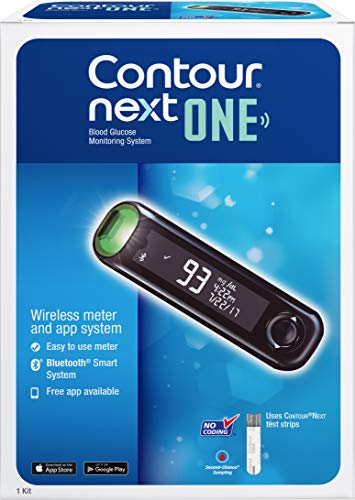
The Contour NEXT ONE is a slim Bluetooth meter built for people who want their readings on a phone. Its smartLIGHT target range indicator glows to show whether a reading sits in, above, or below the target range, and Second-Chance sampling lets you add more blood to the same strip within a minute if the first sample falls short. The meter needs no coding, works with Contour Next test strips, and pairs with the free Contour Diabetes app for charts and logs. The meter pairs quickly with a phone, and the app keeps a log that is easy to review at the end of each week.
Specs
- Bluetooth blood glucose monitoring system
- smartLIGHT target range indicator
- Second-Chance sampling within 60 seconds
- No coding required
- Pairs with the Contour Diabetes app
- Uses Contour Next test strips
Best for: People who track readings in a phone app.
Watch out for: Needs Contour Next strips, which are specific to this meter family.
ASIN: B06W53ZLTK
Contour NEXT GEN
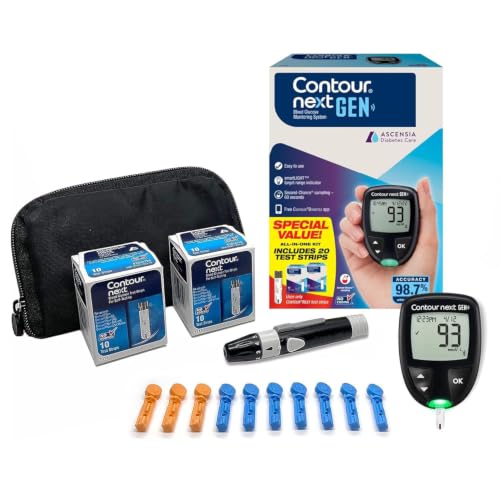
The Contour NEXT GEN is the newest all-in-one kit in the Contour line, and it arrives with the meter, strips, lancets, and a lancing device in one box. It keeps the smartLIGHT range indicator and Second-Chance sampling of the earlier model, with a simple setup and no coding step. The kit suits a first-time buyer who wants everything needed to start testing right away, and the app pairing keeps readings organized from the first day. The box includes everything needed for the first tests, so a new user can start the same day it arrives.
Specs
- All-in-one kit with 20 test strips
- smartLIGHT target range indicator
- Second-Chance sampling within 60 seconds
- No coding required
- Pairs with the Contour Diabetes app
- Includes lancing device and lancets
Best for: First-time buyers who want a complete starter kit.
Watch out for: The 20-strip supply runs out fast with daily testing.
ASIN: B0CWSFV5SS
Accu-Chek Guide Kit
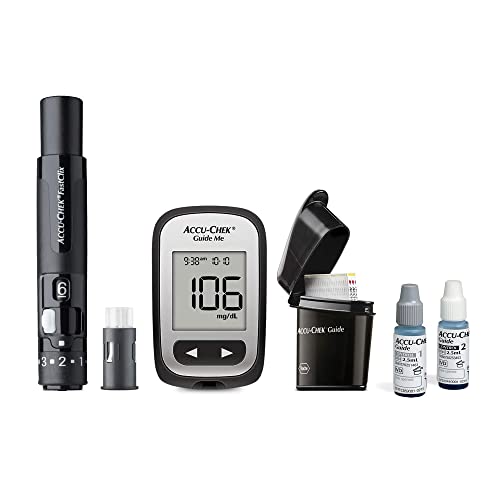
The Accu-Chek Guide kit centers on easy strip handling, with a one-click strip ejector that removes a used strip without touching it and a spill resistant SmartPack vial that releases one strip at a time. The Guide Me meter has an illuminated strip port for night testing and gives results in under four seconds. The kit includes the lancing device, lancets, and 100 Guide test strips, and it connects to the mySugr app for tracking. The kit covers the first weeks of testing, and the wide strip makes loading easy even with unsteady hands.
Specs
- Guide Me meter with FastClix lancing device
- 100 Guide test strips included, plus 108 lancets
- One-click strip ejector
- Spill-resistant SmartPack vial
- Illuminated strip port, results in under 4 seconds
- Connects to the mySugr app
Best for: People who value clean, simple strip handling.
Watch out for: Works only with Accu-Chek Guide test strips.
ASIN: B08GNRK2Y8
OneTouch Verio Flex

The OneTouch Verio Flex is a compact Bluetooth meter with a color range indicator that shows at a glance whether a reading is low, in range, or high. It needs only a tiny blood sample and shows results in about five seconds, and it pairs with the OneTouch Reveal app for logs and pattern summaries. The meter is small enough to carry in a pocket, and its simple two-step testing suits people who want the fewest steps between finger prick and result. The meter slips into a pocket or a purse, and the carrying case keeps strips and lancets together in one place.
Specs
- Bluetooth blood glucose monitoring system
- ColourSure range indicator
- Results in about 5 seconds
- Small blood sample required
- Pairs with the OneTouch Reveal app
- Includes lancing device, lancets, and carrying case
Best for: Quick checks with a clear color range signal.
Watch out for: Works only with OneTouch Verio test strips.
ASIN: B01K22FAZU
Which One Fits Your Situation
Testing every day and tracking trends on a phone
The Contour NEXT ONE fits this routine best, because its Bluetooth sync and smartLIGHT indicator turn each reading into a logged data point with an instant range signal. The app charts the results over weeks, which makes patterns easy to spot at the next doctor visit. Keep a steady strip supply, and the meter handles the rest. The charts make patterns visible without extra work.
Starting out and needing everything in one box
The Contour NEXT GEN all-in-one kit is the simplest start, since it includes the meter, strips, lancets, and lancing device together. The smartLIGHT indicator teaches the target range from the first test, and Second-Chance sampling forgives a short sample. Buy extra strips early, because the included 20 run out quickly with daily testing. The indicator lights teach the target range from day one.
Testing at night or with unsteady hands
The Accu-Chek Guide kit suits this situation, because the illuminated strip port and wide strip make night testing easier, and the ejector keeps used strips away from fingers. The spill resistant vial keeps strips safe in a bag or drawer. The mySugr app adds tracking for those who want it, while the meter stays simple on its own. The ejector keeps fingers away from used strips entirely.
Quick checks on the go
The OneTouch Verio Flex is small, fast, and clear, which suits a pocket or a purse. The color indicator gives an instant read on the result without studying numbers, and the Bluetooth sync logs readings for later. Carry the case with strips and lancets together, and testing takes only a few seconds anywhere. The case keeps the whole kit together in one pocket.
Common Mistakes
- Buying a meter without checking that its strips are easy to find.
- Mixing strips from another meter family, which will not work.
- Testing with cold hands, which can make blood flow slower and samples short.
- Throwing away the lancing device settings instead of adjusting the depth.
- Skipping the app setup and losing the long-term pattern in the readings.
Frequently Asked Questions
Do blood glucose meters need coding?
Most modern meters need no coding, including the Contour NEXT ONE, Contour NEXT GEN, and OneTouch Verio Flex in this guide. Older meters asked users to enter a code from the strip vial, and a wrong code gave wrong readings. If a meter still needs coding, follow the vial instructions exactly and check the code every time you open a new vial.
How often should I replace the lancet?
Change the lancet with every test, because a used lancet dulls and makes the prick more painful. Reusing lancets also raises the chance of soreness and skin irritation at the fingertip. Keep a fresh supply of lancets with the strips, and rotate fingertips so no single spot takes every test.
Can I share my readings with my doctor?
Yes, meters with Bluetooth sync send readings to a phone app, where they form charts and averages that can be shown at a visit. The Contour Diabetes app, mySugr, and OneTouch Reveal all store readings and summaries in one place. Bring the phone to the appointment, or print the summary from the app before you go.
What should I do if a test fails for lack of blood?
Warm your hands first, then try again with a fresh strip and a slightly deeper lancet setting. Some meters, like the Contour models in this guide, allow Second-Chance sampling, which lets you add more blood to the same strip within a minute. If tests keep failing, talk to a healthcare professional about technique and lancet depth.
More from Amazon
Programs that pair well with the guide above. Offers and eligibility are set by Amazon and may change.
Free shipping on eligible items, Prime Video and more. Eligible new members can start with a free trial.
Start a Prime free trialAd-free music streaming. Eligible new subscribers can start with a free trial.
Try Music Unlimited freeA Prime membership for ages 18-24 with a trial period. Eligibility is set by Amazon.
See Prime for Young AdultsAudiobooks and podcasts to listen to on the go. Eligible new members can start with a free trial.
Try Audible freeAs an Amazon Associate we earn from qualifying purchases.


Write Your Review
No reviews yet. Be the first to share your experience!