

Our Top Picks
At 240Hz, a monitor asks your PC for a new frame every 4.17 milliseconds, and at 360Hz the budget is 2.78 milliseconds. In esports games, that budget is almost always spent by the processor, which is why the best CPU for esports is usually a Ryzen X3D chip with its large stacked cache and a strong clock speed. The Ryzen 7 9850X3D and 9800X3D lead this list, the 7800X3D remains a proven alternative, and non-X3D chips such as the 9600X and 7600X cover tighter budgets. Nobody on the team used or measured these units, so this guide ranks them on published specifications and general platform knowledge, not recorded results.
Top picks at a glance

AMD Ryzen 7 7800X3D 8-Core, 16-Thread Desktop Processor


As an Amazon Associate we earn from qualifying purchases. Product prices and availability are accurate as of the date/time indicated.
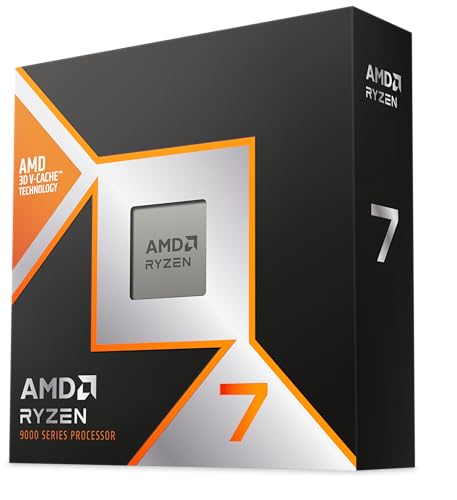
AMD RYZEN 7 9800X3D 8-Core, 16-Thread Desktop Processor


As an Amazon Associate we earn from qualifying purchases. Product prices and availability are accurate as of the date/time indicated.

AMD Ryzen 7 5800X3D 8-core, 16-Thread Desktop Processor with AMD 3D V-Cache Technology


As an Amazon Associate we earn from qualifying purchases. Product prices and availability are accurate as of the date/time indicated.

AMD Ryzen™ 7 9700X 8-Core, 16-Thread Unlocked Desktop Processor


As an Amazon Associate we earn from qualifying purchases. Product prices and availability are accurate as of the date/time indicated.

AMD Ryzen™ 5 9600X 6-Core, 12-Thread Unlocked Desktop Processor


As an Amazon Associate we earn from qualifying purchases. Product prices and availability are accurate as of the date/time indicated.
AMD Ryzen™ 7 9850X3D Desktop Processor
As an Amazon Associate we earn from qualifying purchases. Product prices and availability are accurate as of the date/time indicated.

AMD Ryzen 9 9950X3D 16-Core Processor


As an Amazon Associate we earn from qualifying purchases. Product prices and availability are accurate as of the date/time indicated.

AMD Ryzen™ 9 9900X 12-Core, 24-Thread Unlocked Desktop Processor


As an Amazon Associate we earn from qualifying purchases. Product prices and availability are accurate as of the date/time indicated.
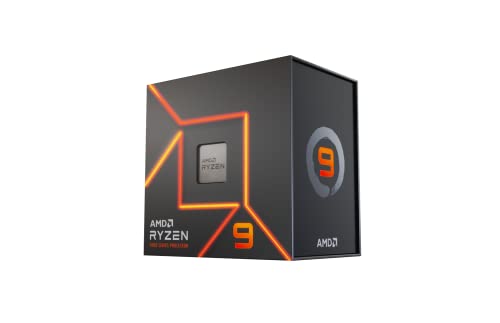
AMD Ryzen 9 7900X 12-Core, 24-Thread Unlocked Desktop Processor
As an Amazon Associate we earn from qualifying purchases. Product prices and availability are accurate as of the date/time indicated.

AMD Ryzen 5 7600X 6-Core, 12-Thread Unlocked Desktop Processor


As an Amazon Associate we earn from qualifying purchases. Product prices and availability are accurate as of the date/time indicated.
| Processor | Key point from the title | Price tier | Best for |
|---|---|---|---|
| Ryzen 7 9850X3D | X3D desktop processor, short title | Premium | Highest-fps 1080p play on AM5 |
| Ryzen 7 9800X3D | 8 cores, 16 threads, X3D | Premium | Top-tier esports build |
| Ryzen 7 7800X3D | 8 cores, 16 threads, X3D | Mid to premium | Proven X3D value on AM5 |
| Ryzen 9 9950X3D | 16 cores, X3D | Premium | Esports plus streaming and creative work |
| Ryzen 7 5800X3D | 8 cores, 16 threads, 3D V-Cache | Mid (check seller) | Upgrading an existing AM4 PC |
| Ryzen 7 9700X | 8 cores, 16 threads, unlocked | Mid | Fast cores without X3D cost |
| Ryzen 5 9600X | 6 cores, 12 threads, unlocked | Budget to mid | Lean competitive build |
| Ryzen 5 7600X | 6 cores, 12 threads, unlocked | Budget | Entry AM5 esports |
| Ryzen 9 9900X | 12 cores, 24 threads, unlocked | Mid to premium | Gaming plus heavy multitasking |
| Ryzen 9 7900X | 12 cores, 24 threads, unlocked | Mid | Multitasking on a previous-generation chip |
Why esports CPUs are judged differently
Esports games are light on graphics and heavy on simulation, so the GPU finishes its frame early and waits for the CPU. When a game is limited by the processor, a faster card barely changes frame rate, while a faster CPU does. That is why this list looks different from a general gaming list: cores matter less than per-core speed, cache and memory behavior.
AMD’s X3D chips stack extra L3 cache on top of the core die. The 7800X3D, 9800X3D and 5800X3D each list 96MB of L3 on AMD’s pages, and the 9950X3D lists 128MB across its two core dies. The extra cache keeps more game data close to the cores, which helps frame rates and, often more importantly, 1% lows. Treat these as published specifications and confirm them on AMD’s product pages.
How these ten were picked
The editorial team worked from listing titles, published specifications, manufacturer documentation and buyer reviews. Each chip is judged on cache design, core count relative to esports needs, platform cost and what the title does or does not tell you. Where a title is short, the guide says so. No benchmark figures are given for individual chips, and cooler, motherboard and memory requirements should be confirmed on each maker’s page.
AMD Ryzen 7 9850X3D
The listing title is short: a Ryzen 7 9850X3D desktop processor. AMD’s published specifications describe it as an 8-core, 16-thread Zen 5 chip with 96MB of L3 cache and a maximum boost of up to 5.6GHz, with a 120W TDP. That is a higher boost than the 9800X3D, which is the point of the refresh. For a player who wants the highest clock on an 8-core X3D chip, this is the one to look at.
Because the title omits the details, confirm the cooler situation, since many X3D chips are sold without one, and make sure your motherboard supports the chip with a current BIOS. The gap over the 9800X3D is small in clock terms, so check the price difference before paying a premium.
- Pros: highest boost clock among the 8-core X3D chips here; 96MB L3; AM5 platform with upgrade path.
- Cons: sparse title; premium cost; no cooler is typical for this class, so confirm in the listing.
Scenario: a competitive player on a 360Hz panel who has already tuned memory and wants every last frame. Here the higher clock is a small but real step, and the AM5 socket keeps future upgrades open. For a 144Hz screen, though, the same money would do more in a better GPU or monitor, so match the chip to the display.
Question to ask before buying: is the extra boost clock worth the price gap over a 9800X3D for your monitor’s refresh rate?
AMD Ryzen 7 9800X3D
The title states 8 cores and 16 threads. AMD lists this chip with 96MB of L3, an unlocked multiplier and a boost clock of up to 5.2GHz. It is the benchmark that other esports chips get compared to, because the cache configuration and per-core speed suit games limited by the processor. If you want a single recommendation for high-refresh play, this is it.
Pair it with fast DDR5 and a decent tower cooler. The chip is far more than most 144Hz players need, so the real audience is competitive players on 240Hz or higher monitors, or anyone who wants the chip to stay relevant across several GPU upgrades.
- Pros: large cache; unlocked for tuning; strong 1% low behavior in CPU-bound games per published reviews.
- Cons: premium cost; pricing can swing with demand; cooler not typically included.
Scenario: a player upgrading from an older 6-core chip who finds their frame rate stuck in CS2-style games no matter how low the graphics go. That is the classic sign of a processor limit, and this chip is aimed squarely at it. Buyers on 1440p with demanding visuals will see less difference, because the GPU becomes the limit there.
Question to ask before buying: does your monitor refresh rate and GPU justify this much CPU?
AMD Ryzen 7 7800X3D
The title lists 8 cores and 16 threads. The 7800X3D uses the earlier Zen 4 design with 96MB of L3, and its multiplier is locked, so there is no manual overclocking, though memory tuning is available. It has been a common recommendation for esports builds because it delivers most of what the newer X3D chips do at a lower platform cost, and DDR5 motherboards for it are plentiful.
If the newer 9800X3D costs a lot more in your market, this is the value choice among the 8-core X3D chips. It runs cool relative to chips with higher power limits, which keeps cooler choices simple. Check stock and seller details, since this is a previous-generation part.
- Pros: 96MB L3; AM5 platform; modest cooling needs; widely supported.
- Cons: locked multiplier; slower than the newer X3D chips; supply may vary.
Scenario: a first AM5 build for 240Hz play where the saved money goes to a better monitor and a solid cooler. Because supply of previous-generation parts can thin out, check the seller and warranty rather than assuming new stock. Memory tuning is still worth doing here, since the multiplier is locked but RAM is not.
Question to ask before buying: how big is the price gap to the 9800X3D today?
AMD Ryzen 9 9950X3D
The title says “16-Core Processor” and nothing else. It is an AMD X3D chip with two core dies, and AMD lists 128MB of L3 in total, with the extra cache stacked on one die. That makes it a hybrid: strong for games when the system places game threads on the cache die, and strong for rendering and editing thanks to the second die. For pure esports play, it adds cost beyond what the 8-core X3D chips deliver.
Choose it if the PC is a combined workstation and gaming machine, or if you stream with a software encoder while playing. Keep chipset drivers current, because the scheduling of game threads across the two dies depends on driver and OS behavior.
- Pros: 16 cores for streaming and creative work; X3D cache for games; AM5 platform.
- Cons: expensive for pure esports; scheduling across two dies adds complexity; heat output is higher.
Scenario: a streamer who plays a competitive shooter, runs a software-encoded stream, a chat overlay and a recording tool at once. The extra cores absorb the background work, so the game threads stay undisturbed. For someone who only plays, the second die sits mostly idle and the money is better spent elsewhere.
Question to ask before buying: do you actually use all 16 cores for work, or would an 8-core X3D chip serve you?
AMD Ryzen 7 5800X3D
The title states 8 cores, 16 threads and AMD 3D V-Cache technology. This is the AM4 option, which uses DDR4 memory and works with many existing motherboards. It carries 96MB of L3, and AMD does not support multiplier overclocking on it. For someone sitting on an AM4 system with an older chip, this can be a significant jump in a CPU-limited game without replacing the motherboard and memory.
It is not the choice for a fresh build, since AM4 is a dead-end platform. The chip is also no longer in regular production, so check the seller, the condition and the warranty terms. Confirm your motherboard’s BIOS supports it before ordering.
- Pros: drop-in upgrade for AM4; 96MB L3; reuses DDR4.
- Cons: end-of-line platform; locked multiplier; availability and seller risk.
Scenario: a player with a B550 board and an older Ryzen 5 who wants better lows in a CPU-bound game without a full rebuild. The swap is quick, but plan the BIOS update first and keep the old chip handy in case the update needs it. If you are starting from nothing, price an AM5 build instead.
Question to ask before buying: does your motherboard’s BIOS list this chip as supported?
AMD Ryzen 7 9700X
The title lists 8 cores, 16 threads and an unlocked design. AMD lists it at a 65W TDP with 32MB of L3 and a boost up to 5.5GHz. Without the X3D cache, it relies on core speed and memory tuning, and in cache-sensitive games it generally trails the X3D chips. It makes sense when you want strong single-thread speed, a cool-running chip and a lower price.
It is a good fit for a player who also does general productivity work and does not want to pay the X3D premium. Faster DDR5 with a tuned profile will help it more than it helps the X3D chips.
- Pros: low power draw; fast cores; costs less than X3D parts.
- Cons: smaller cache; trails X3D chips in many CPU-bound games; cooler typically not included.
Scenario: a player who mixes esports with office work and video calls and wants a quiet, cool PC. With a modest tower cooler the chip stays easy to live with, and tuned DDR5 narrows the gap in some titles. If your main game is known to reward cache, look at an X3D chip first.
Question to ask before buying: is the gap to an X3D chip worth the price difference for your games?
AMD Ryzen 5 9600X
The title lists 6 cores and 12 threads, unlocked. AMD lists a 65W TDP, 32MB of L3 and a boost up to 5.4GHz. Six fast cores are enough for most esports titles, since the games rarely use more than a handful of threads. It is the efficient choice for a lean competitive build where the budget goes to the GPU and monitor.
The trade-off is headroom: with a streaming app, a browser, voice chat and a game running together, six cores are used more heavily than eight. For a dedicated gaming PC, that is not usually a problem.
- Pros: low power; strong single-thread speed; affordable AM5 entry.
- Cons: 6 cores limit multitasking; no X3D cache; cooler typically not included.
Scenario: a Valorant or CS2 player on a 240Hz monitor with a dedicated gaming PC and little else running. Six fast cores are plenty there, and the savings can move to a better GPU or a higher-refresh display. If you add streaming software later, plan to watch CPU usage and consider the 8-core options instead.
Question to ask before buying: do you run many apps alongside the game?
AMD Ryzen 5 7600X
The title lists 6 cores and 12 threads, unlocked. It is the earlier Zen 4 equivalent of the 9600X, and AMD lists a 105W TDP with 32MB of L3 and a boost up to 5.3GHz. It tends to draw more power than the 9600X for similar performance, which affects cooling and noise, but pricing on previous-generation chips can make it attractive.
It suits a first AM5 build where every dollar counts. If the 9600X is only slightly more expensive, the newer chip is the more efficient pick. Check the price difference and the seller before deciding.
- Pros: low entry price on AM5; high boost for six cores; DDR5 platform.
- Cons: higher power than newer equivalents; 6 cores; no X3D cache.
Scenario: a student build where the total budget is fixed and the monitor is 144Hz. The chip clears that refresh rate in many esports titles, and platform costs such as the motherboard and DDR5 matter as much as the chip itself. Compare whole-build totals rather than chip prices alone.
Question to ask before buying: how much cheaper is it than the 9600X right now?
AMD Ryzen 9 9900X
The title lists 12 cores and 24 threads, unlocked. AMD lists a 120W TDP, 64MB of L3 and a boost up to 5.6GHz. Twelve cores are more than most esports games use, but the chip suits a player who streams with software encoding, edits video or runs many background tasks. Game frame rates in cache-sensitive titles are typically below those of an X3D chip.
It is a sensible pick for a mixed-use PC where gaming is only one job. For a dedicated competitive machine, the money is better spent on an X3D chip with fewer cores.
- Pros: 12 cores for multitasking; high boost; AM5 platform.
- Cons: pricier than the 8-core chips with no esports advantage; higher power; cooler typically not included.
Scenario: a creator who plays ranked matches after a day of video editing on the same PC. The cores shorten export times, and the gaming side stays comfortable. The cost of that flexibility is a bigger power draw and a bigger bill than an 8-core X3D chip, which would game faster for less.
Question to ask before buying: will you really use the extra cores?
AMD Ryzen 9 7900X
The title lists 12 cores and 24 threads, unlocked. It is the Zen 4 generation, and AMD lists a 170W TDP with 64MB of L3. It is a previous-generation multitasking chip, so it makes sense only when it is priced well below the 9900X. Its higher power rating means a stronger cooler is advisable.
For esports itself, the 12 cores are not needed, and the lack of X3D cache puts it behind cheaper 8-core X3D options in CPU-bound games. It earns a place here as a lower-cost route into a 12-core AM5 build.
- Pros: 12 cores; AM5 platform; potentially good price on older stock.
- Cons: high power rating; no X3D cache; older design than the 9900X.
Scenario: a buyer who finds older-generation stock at a clear discount and needs 12 cores for rendering. Make sure the cooler is rated for the heat, and compare against the 9900X after factoring in power use. If you only game, skip both and look at the 8-core X3D chips.
Question to ask before buying: is it cheaper than the 9900X by enough to justify the older design?
How to choose an esports CPU
Single-thread speed
Look at boost clocks and architecture generation. A newer design often reaches higher frame rates at a similar clock, which is why a 9600X can compete with older, higher-core-count chips. Boost clocks on a listing are maximums, and real sustained clocks depend on cooling and power limits.
X3D cache
The extra L3 on X3D parts helps most in games whose data does not fit in normal cache. It also tends to lift 1% lows, which is what you feel as consistency.
Memory speed
AM5 chips use DDR5, and a kit near 6000 MT/s with an EXPO profile is a common target. Check your motherboard’s supported memory list. AM4 chips use DDR4.
1% lows
Averages hide stutter. Read reviews that report 1% lows, because those numbers reflect the dips you notice in a firefight. A chip with a slightly lower average but steadier lows often feels smoother in play.
Coolers and platform
Confirm whether a cooler is included, which is typically not the case for these chips, and choose a motherboard with a current BIOS. Follow the manufacturer’s installation instructions for cooler mounting and thermal paste.
| Spec concept | What to look for | Why it matters in esports |
|---|---|---|
| L3 cache | 96MB or more on X3D chips | Higher and steadier frame rates |
| Boost clock | Highest in your price band | Faster per-thread work per frame |
| Core count | 6 to 8 for pure gaming | Extra cores rarely lift fps |
| Memory type | DDR5 on AM5, DDR4 on AM4 | Platform cost and bandwidth |
| Power rating | 65W to 120W for easy cooling | Quiet, simple cooling |
Worked example: how many milliseconds do you have?
Frame time is 1000 divided by the refresh rate. The table shows the time the whole PC has to prepare a frame. The CPU’s portion is a share of that, and the assumptions are stated in the last column. This is arithmetic, not a measurement.
| Monitor | Frame budget | Assumption for a CPU-bound game |
|---|---|---|
| 144Hz | 6.94 ms | Most modern 6-core chips can fit |
| 240Hz | 4.17 ms | Fast 8-core chips preferred |
| 360Hz | 2.78 ms | X3D class and tuned memory help |
| 500Hz | 2.00 ms | Only the top chips in lighter games |
To check whether your own PC is CPU-limited, lower the game’s resolution and graphics settings as far as they go. If your frame rate barely rises, the processor is the limit and a faster CPU will help. If it rises sharply, the GPU was the bottleneck and a new CPU would add little.
Which chip for which player
| Player | Look at |
|---|---|
| 240Hz or higher, no compromise | 9850X3D or 9800X3D |
| Strong value on AM5 | 7800X3D |
| Upgrading an AM4 PC | 5800X3D (verify the seller) |
| Lean budget build | 9600X or 7600X |
| Esports plus streaming and editing | 9950X3D or 9900X |
Mistakes buyers make
| Mistake | Fix |
|---|---|
| Paying for 12 or 16 cores for pure esports | Choose an 8-core X3D chip |
| Forgetting the cooler | Budget for a tower cooler |
| Mixing AM4 and AM5 parts | Match chip, board and memory |
| Ignoring BIOS support | Check the board’s CPU list |
| Chasing averages | Look at 1% lows |
Related guides
- How To Apply Thermal Paste How Much And Which Pattern
- How To Choose Power Supply Wattage For A Pc Build
- Cpu Coolers For Small Form Factor Cases
Frequently asked questions
Which CPU is best for esports games like CS2 and Valorant?
A Ryzen X3D chip is the strongest fit, because the large stacked cache helps keep frame rates and 1% lows high in games that are limited by the processor. The Ryzen 7 9800X3D and 9850X3D sit at the top of this list, with the 7800X3D close behind. A 6-core or 8-core non-X3D chip is a reasonable budget option if you play at 144Hz to 240Hz.
Do I need a 12-core or 16-core CPU for esports?
Usually not. Most esports titles lean on a few fast cores rather than many, so extra cores add cost without raising frame rates much. They make sense if you also stream, edit video or run heavy background tasks on the same PC. For pure competitive play, spend the difference on a faster GPU, a high-refresh monitor or quicker memory instead.
Is the Ryzen 7 5800X3D still worth buying?
It can be if you already own an AM4 motherboard and DDR4 memory, since it is a drop-in upgrade without changing the platform. For a new build, AM5 is the better foundation because it supports DDR5 and newer chips. The 5800X3D is also no longer in regular production, so check the seller, the warranty terms and the price against AM5 alternatives.
Does memory speed matter for esports frame rates?
It can, especially for chips without extra cache. Faster memory with tighter timings can lift averages and 1% lows in CPU-bound games, while X3D chips are less sensitive because the cache absorbs more of the memory traffic. On AM5, a DDR5 kit around the 6000 MT/s mark with an EXPO profile is a common balance. Confirm the kit is on your motherboard’s supported list.
Do these Ryzen processors come with a cooler?
Many of the unlocked X and X3D desktop chips on this list are sold without a bundled cooler, so budget for a separate air cooler or liquid cooler. The listing titles here do not say what is in the box, so check each one before you buy. A solid mid-range tower cooler is enough for most 8-core chips in esports, which rarely load every core.
Will an X3D chip help if my monitor is only 144Hz?
Possibly in the games where your frame rate dips below 144, since the cache lifts 1% lows. If you already sit at or above your refresh rate with room to spare, the extra cost buys little. A 9600X or 9700X may serve a 144Hz screen well, with money left over for the GPU. Run the resolution-drop check above before spending on a premium chip.



Write Your Review
No reviews yet. Be the first to share your experience!