

Key takeaways
- Absorption. Foam or bitumen sheets bonded to the inside of the panels soak up mid and high frequency noise such as fan whine and coil buzz. They do little for low frequency hum, which travels through metal.
- Blocking. Solid front doors and sealed top panels remove direct paths for sound to escape. The downside is that those same panels restrict air intake.
- Enabling slow fans. A case with ample space and mounts for large 140 mm fans lets you run each fan at a lower rotation speed for the same airflow, and lower speed means less noise. For many builders this is the biggest effect, and it is the reason a well-ventilated case with good fans can sound quieter than a dampened case with cramped airflow.
The best silent PC case for most builders in 2026 is the Fractal Design Define 7, because its bitumen-lined panels, sealed front door and swappable ventilated top cover let you choose between near-silent operation and better airflow. The be quiet! Silent Base 802 is the closest rival and the better pick if you plan to run a large radiator, while the Fractal Design North is the right choice if you want a quiet-sounding build that relies on good fans and open airflow rather than foam.
A silent case does not make a computer silent on its own. Noise comes from the fans, the graphics card cooler, the CPU cooler, the power supply and sometimes the hard drives. What a case can do is absorb part of that sound with dampening material, keep air moving so fans do not need to spin fast, and offer layouts that let you mount large, slow fans. This guide covers seven cases that handle those jobs well, with published dimensions and clearances taken from manufacturer product sheets and reputable review outlets such as Tom’s Hardware, TechPowerUp and KitGuru. It also explains the trade-off at the heart of every quiet case: sound insulation traps heat, and heat makes fans louder.
Our top picks

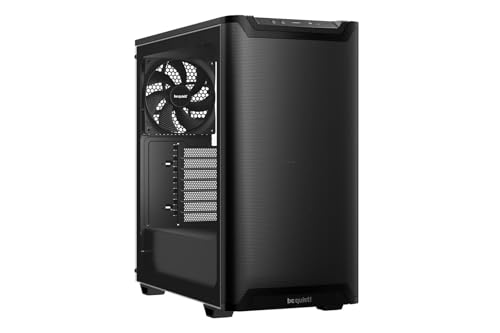

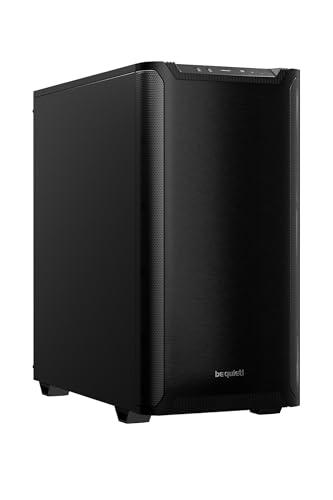
As an Amazon Associate we earn from qualifying purchases at no extra cost to you.
Quick comparison of the seven picks
| Pick | Best for | Motherboards | Max GPU length | Max CPU cooler | Radiator support | Price tier |
|---|---|---|---|---|---|---|
| Fractal Design Define 7 | Best overall silent case | E-ATX to mini-ITX | 491 mm open layout, 315 mm with drive cage | 185 mm | Up to 420 mm top, 360 mm front | Upper mid-range |
| be quiet! Silent Base 802 | Silent or airflow in one case | ATX to mini-ITX | 432 mm without HDD cage | 185 mm | 420 mm front, 360 mm top | Upper mid-range |
| Fractal Design Define 7 Compact | Smaller silent build | ATX, micro-ATX, mini-ITX | 360 mm | 169 mm | 360 mm front, 240 mm top | Mid-range |
| Fractal Design Define 7 XL | Big builds and storage | E-ATX to mini-ITX | 549 mm open layout, 359 mm with cages | 185 mm | Up to 480 mm front or top | Premium |
| Antec P101 Silent | Value dampening | E-ATX to ITX | 450 mm without HDD tray, 270 mm with | 180 mm | 360 mm front | Budget to mid-range |
| be quiet! Pure Base 500DX | Balanced airflow and low noise | ATX, micro-ATX, mini-ITX | 369 mm | 190 mm | 360 mm front, 240 mm top | Mid-range |
| Fractal Design North | Quiet through airflow, not foam | ATX, micro-ATX, mini-ITX | 355 mm | 170 mm | 360 mm front, 240 mm top | Mid-range |
How a case makes a PC quieter
Understanding the mechanics helps you choose sensibly, because marketing often promises more silence than physics can deliver. A quiet case reduces noise in three ways.
- Absorption. Foam or bitumen sheets bonded to the inside of the panels soak up mid and high frequency noise such as fan whine and coil buzz. They do little for low frequency hum, which travels through metal.
- Blocking. Solid front doors and sealed top panels remove direct paths for sound to escape. The downside is that those same panels restrict air intake.
- Enabling slow fans. A case with ample space and mounts for large 140 mm fans lets you run each fan at a lower rotation speed for the same airflow, and lower speed means less noise. For many builders this is the biggest effect, and it is the reason a well-ventilated case with good fans can sound quieter than a dampened case with cramped airflow.
The practical lesson is that you should choose a case based on how hot your parts run. A system with a modest 65 W processor and a mid-range graphics card produces little heat and thrives in a fully sealed dampened case. A system with a high-end graphics card drawing several hundred watts needs a lot of air, and the best silent approach is to choose a case with a ventilated option, then rely on large slow fans and a good fan curve.
Best overall: Fractal Design Define 7
The Define 7 is the case most roundups treat as the benchmark for quiet builds in 2026, and with good reason. It measures 547 x 240 x 475 mm and weighs 13.5 kg per the manufacturer’s specification, which gives it enough mass to resist panel vibration. The front door, side panel and top panel carry dampening material, and the door can be hinged on either side. The top panel is the clever part: the ModuVent system lets you swap a solid dampened cover for a ventilated one, so you can build a silent PC first and open it up later if temperatures demand.
Clearance is generous. In the open layout, graphics cards up to 491 mm fit, or 467 mm with a front fan, and with the storage layout installed the limit falls to 315 mm. CPU coolers can be up to 185 mm tall. The case supports radiators up to 360 mm or 280 mm in the front, up to 420 mm at the top, 240 or 280 mm at the bottom, and 120 mm at the rear. Three 140 mm fans come in the box. Retailer figures for GPU clearance differ a few millimetres from the manufacturer’s sheet, so check your card’s length against the lower number if it is close.
Who it suits: anyone who wants a quiet workstation or gaming PC with room for good cooling and plenty of drives. Main trade-off: the dampened panels restrict intake, so with a hot high-end graphics card you may need to switch to the ventilated top cover, which gives up some noise isolation.
Best for large radiators and flexibility: be quiet! Silent Base 802
The Silent Base 802 is the case that most closely matches the Define 7 in reputation. Its signature feature is interchangeable front and top panels. In silent mode both are sealed and dampened; in airflow mode you swap to mesh panels included in the box, which turns the case into a high-airflow design in a few minutes. Reviewers, including those at KitGuru, regard it as one of the most flexible cases in its class.
Specifications from the manufacturer and retailer sheets: it supports graphics cards up to 432 mm without the hard drive cage and 287 mm with it, CPU coolers up to 185 mm, a 420 mm radiator in the front, a 360 mm radiator at the top and a 140 mm radiator at the rear. It can host up to eight 140 mm fans. Three 140 mm Pure Wings 2 fans are supplied, with two at the front and one at the rear. Those fans are low speed and sensible, but they are not premium units, and some owners replace them with higher quality fans to get lower noise at the same airflow.
Who it suits: builders who want both a silent and a high-airflow mode, and anyone planning a 360 mm or 420 mm radiator. Main trade-off: the stock fans are modest, and if you fit a long graphics card you must give up the hard drive cage.
Best compact silent case: Fractal Design Define 7 Compact
The Define 7 Compact takes the same acoustic approach in a smaller body that measures 427 x 210 x 474 mm. It supports ATX, micro-ATX and mini-ITX boards, so it fits the majority of builds while using less desk space. Silence-focused construction with dampened panels and a swappable top cover carries over from its larger sibling.
The clearances are tighter. Graphics cards up to 360 mm fit with a 240 mm top radiator, or about 341 mm with a front fan fitted, and the figure drops to around 305 mm if you install a 360 or 280 mm front radiator. CPU coolers can be up to 169 mm tall, so check your cooler against that limit before buying. Radiator support is 360 or 280 mm at the front, 240 mm at the top, and 120 mm at the rear and bottom.
Who it suits: small-space builders, home office users and anyone with a moderate-heat system who wants the Define look and acoustics without the bulk. Main trade-off: a large graphics card plus a thick front radiator will not fit together, and airflow is more limited than in the full-size case.
Best for large builds and storage: Fractal Design Define 7 XL
The Define 7 XL is the full-tower version, at 240 x 566 x 604 mm (width by height by depth). It supports EE-ATX, E-ATX, ATX, micro-ATX and mini-ITX boards, with a big open interior that handles dual-radiator custom loops or workstation builds. In the open layout graphics cards up to 549 mm fit, or 524 mm with a front fan, and with the storage cages installed the limit is 359 mm. Radiators go up to 480 mm at the front or top, and up to 280 mm at the base. It has room for nine 140 mm or eleven 120 mm fans, and three 140 mm fans are included. CPU coolers can be up to 185 mm tall.
The front, top and side panels are dampened, and the ModuVent top panel can be swapped for a ventilated option. Storage is the headline: with all the drive trays fitted it holds a large number of drives, which suits a network storage machine or a content-creation workstation that keeps big libraries on local disks.
Who it suits: workstation builders, owners of E-ATX boards, and anyone who needs many drives and wants the machine quiet. Main trade-off: size and weight, and availability. Some resellers list it as end of life, so confirm stock before planning a build around it.
Best value dampened case: Antec P101 Silent
The Antec P101 Silent is the older-school pick, but it remains one of the least expensive ways to get real dampening. It measures 527 x 232 x 506 mm, weighs about 11.8 kg, and uses foam on the top, front and side panels. It supports E-ATX, ATX, micro-ATX and ITX boards. It ships with three 120 mm fans at the front and one 140 mm fan at the rear.
Graphics cards up to 450 mm fit when the hard drive tray is removed, or 270 mm when it is installed. CPU coolers can be up to 180 mm and power supplies up to 290 mm long. Tom’s Hardware describes the P101 as old-school cool and quiet. It supports a radiator up to 360 mm in the front and 140 mm at the rear.
Who it suits: builders on a tighter budget who still want a properly dampened case, particularly for an office or media PC with a modest graphics card. Main trade-off: a more traditional design with less refined cable management and a less capable airflow path than modern mesh-front cases, so pair it with a processor and graphics card that do not run hot.
Best balanced airflow and noise: be quiet! Pure Base 500DX
The Pure Base 500DX is not a fully sealed silent case, and it should not be bought as one. It is a mid-tower with a mesh front, a tempered glass side and three removable dust filters, designed to keep parts cool while the included fans run at gentle speeds. It supports ATX, micro-ATX and mini-ITX boards and measures 463 x 231 x 450 mm.
It supports graphics cards up to 369 mm (Tom’s Hardware lists this figure), CPU coolers up to 190 mm, a 360 mm radiator in the front and a 240 mm radiator at the top. Three 140 mm Pure Wings 2 fans are supplied. Because intake is less restricted, temperatures stay lower than in sealed cases and fans can stay slow, which is the other route to a quiet machine.
Who it suits: gamers with a mid-range or high-end graphics card who want a quieter machine without putting up with the heat of a fully enclosed case. Main trade-off: less sound absorption than the Define 7 or Silent Base 802, so fan and component noise will be more audible.
Best quiet through airflow: Fractal Design North
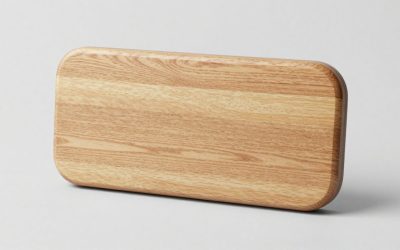
The Fractal Design North takes the opposite approach to a dampened case. It has a real wood front panel backed by a mesh, tempered glass or mesh side panel and an open airflow path. It is not sound dampened, and Fractal does not claim it is. Its quietness comes from two 140 mm Aspect PWM fans, good airflow and low component temperatures that let those fans spin slowly.
Dimensions are about 447 x 215 x 469 mm. It supports ATX, micro-ATX and mini-ITX boards, graphics cards up to 355 mm, CPU coolers up to 170 mm (and slightly less with the side fan bracket fitted), power supplies up to 255 mm, radiators of 360 or 280 mm at the front and 240 mm at the top, and 30 mm of cable management depth. Front I/O includes USB-A, a USB-C port and audio jacks.
Who it suits: people who value appearance, run a processor and graphics card that run cool, and are happy to pay attention to fan selection and tuning. Main trade-off: open mesh means more noise leaks out of the case. For a very quiet room, a dampened case is better.
Worked example: choosing by heat output
The right case depends on how many watts your parts turn into heat. Consider three typical systems.
| System | Approx. heat output | Case type that works | Why |
|---|---|---|---|
| Home office PC, 65 W CPU, integrated or entry GPU | 80 to 120 W | Antec P101 Silent or Define 7 Compact | Low heat, so sealed panels cost nothing in temperature |
| Mid-range gaming PC, 105 W CPU, 200 W GPU | 300 to 350 W | Define 7 or Silent Base 802 | Dampened panels, with ventilated top available if needed |
| High-end gaming or creator PC, 170 W CPU, 350 W GPU | 520 W or more | Silent Base 802 in airflow mode, Pure Base 500DX or North | Heat dominates, so airflow and slow large fans matter most |
A simple rule: roughly every extra 100 W of continuous heat requires more air to be moved through the case. If your intake path is blocked by a solid door, the fans must spin faster to compensate, and the noise saved by foam is lost in the whirr of fans. For machines above about 400 W of combined component power, favour ventilated or mesh layouts and invest in quality 140 mm fans.
How to choose a silent case
- Measure your longest part. Check graphics card length against the clearance figures above, remembering that drive cages reduce room.
- Check CPU cooler height. Large tower coolers can exceed 165 mm, so compare with the case limit.
- Decide your radiator plan. If you want a 360 mm liquid cooler, check whether the front or top mount accepts one without blocking the graphics card.
- Estimate heat output. Use the table above to decide how much ventilation you really need.
- Plan the rest of the noise chain. A quiet case with a loud power supply or a whining graphics card is still a loud PC. Choose a power supply with a semi-passive fan mode and a graphics card with a large cooler.
Ownership realities: what changes the noise over time
- Dust. Filters clog and raise fan speeds. Clean them every month or two.
- Fan wear. Fan bearings develop noise over years. Replacing the included fans with higher quality ones is the most effective upgrade for noise.
- Fan curves. In the BIOS or fan-control software, set gentle curves that stay low until temperatures actually climb. A ramp that reacts to every short spike produces constant noise.
- Vibration. Rubber mounts on drives and fans reduce humming. Tighten loose screws and cables that rattle against blades.
- Panel seals. Dampening foam can peel over time, so reattach it with an appropriate adhesive if corners lift.
Frequently Asked Questions
What is the quietest PC case?
The Fractal Design Define 7 and the be quiet! Silent Base 802 are the cases most roundups name as the quietest, because both pair dampened panels with a sealed front. The real-world result also depends on your fans, graphics card and power supply, so no case can guarantee silence on its own.
Does sound dampening foam hurt cooling?
The foam itself has little effect, but the solid panels it sits on restrict airflow. That can raise temperatures in a hot system. Cases such as the Define 7 and Silent Base 802 include ventilated alternatives so you can reclaim airflow.
Is a mesh case louder than a silent case?
Usually, yes, because noise escapes through the open front. However, a mesh case keeps components cooler, so fans can run slower. For a cool system the difference may be small, and for a hot system a mesh case can end up quieter than a sealed one.
Do I need a silent case for a quiet PC?
Not always. A quiet processor cooler, a graphics card with a large heatsink, a high-efficiency power supply and a sensible fan curve can make a PC quiet in almost any decent case. A silent case adds a further margin, especially for rooms where you hear the computer all day.
Can a quiet case fit a large graphics card?
Yes, but check the numbers. The Define 7 fits up to 491 mm in the open layout and the Define 7 XL up to 549 mm. Smaller cases such as the Define 7 Compact and Fractal North top out near 360 mm, which rules out some triple-fan flagship cards.
Is the Define 7 XL worth it over the Define 7?
Only if you need E-ATX or EE-ATX board support, a 480 mm radiator, or many drives. For a normal ATX build, the Define 7 offers nearly the same acoustics in a size that is easier to live with.

Write Your Review
No reviews yet. Be the first to share your experience!